
Introduction: The Truth Behind High-Earning Ethical Hackers

“Earn $50,000 per month as a hacker.”
You’ve probably seen headlines like this floating around social media, usually followed by vague advice, screenshots with no context, or promises that collapse the moment you ask how. Most of that content either exaggerates reality or completely ignores how cybersecurity actually works in the real world.
At Bugitrix, we don’t sell fantasies. We break systems, not trust.
The truth is simple: earning $50,000+ per month as an ethical hacker is rare, difficult, and absolutely possible—but only for those who understand how money flows in cybersecurity and who treat hacking as a profession, not a lottery.
This level of income does not come from:
Running automated tools without understanding them
Copy-pasting payloads from GitHub
Relying on a single bug bounty program
Chasing shortcuts or viral “hacker tricks”
Instead, it comes from deep technical skill, proven impact, professional reputation, and stacked income streams.
Ethical hackers who reach this level are not just finding vulnerabilities. They are:
Solving expensive security problems
Preventing business-critical losses
Trusted by companies with real risk
Operating at the intersection of technical excellence and business value
In this article, we will break down:
What earning $50,000 per month actually means in cybersecurity
How top ethical hackers structure their income
Why most hackers never reach this level
And what a realistic path looks like if you want to pursue it seriously
No hype. No fake success stories. Just real hacker economics.
1: What $50,000/Month Really Means in Cybersecurity

Before talking about how ethical hackers earn $50,000 per month, we need to clarify what that number actually represents—because this is where most people get it wrong.
$50,000/Month Is Not a Salary
One of the biggest misconceptions is assuming this income comes from a single job. In reality, almost no ethical hacker earns $50,000 per month from a traditional salary.
Even highly paid cybersecurity roles typically fall into these ranges:
| Role | Typical Monthly Income (Before Tax) |
|---|---|
| Junior Security Analyst | $3,000 – $6,000 |
| Mid-Level Pentester | $6,000 – $10,000 |
| Senior Security Engineer | $10,000 – $15,000 |
| Security Architect / Lead | $15,000 – $20,000 |
These are solid, respectable incomes—but they don’t reach $50K/month.
So how do some ethical hackers cross that threshold?
The Reality: Stacked Income, Not a Single Source
High-earning ethical hackers don’t depend on one paycheck. They stack multiple high-leverage income streams that work together.
A realistic $50,000 month often looks like this:
| Income Source | Approx. Monthly Contribution |
|---|---|
| Bug bounty (private programs) | $8,000 – $15,000 |
| Pentesting contracts | $15,000 – $20,000 |
| Consulting retainers | $5,000 – $10,000 |
| Tools / SaaS / digital products | $3,000 – $8,000 |
| Education or content income | $2,000 – $5,000 |
This is not guaranteed income. Some months are higher, some are lower. What matters is consistency over time, not viral screenshots.
Important truth:
Ethical hackers who reach $50K/month think like professionals, not employees.
Why This Income Level Is Rare—but Real
Let’s be honest: most hackers will never reach this level, and that’s not a bad thing. Not everyone wants the responsibility, pressure, and discipline that comes with elite-level work.
Here’s why it’s rare:
It requires years, not weeks
Mistakes are expensive
Reputation takes time to build
Clients don’t trust unproven hackers
The work goes far beyond scanning and exploiting
But it is real because:
Companies lose millions from security failures
Skilled hackers prevent those losses
Businesses pay well for proven expertise
Trust compounds over time
Job Mindset vs Hacker Mindset
The biggest difference between average earners and top earners in cybersecurity is how they think about value.
| Job Mindset | Hacker Professional Mindset |
|---|---|
| “How much do I get paid?” | “How much damage did I prevent?” |
| Fixed monthly salary | Variable, scalable income |
| Follow instructions | Identify and solve problems |
| Replaceable | Hard to replace |
| Skill-based only | Skill + trust + impact |
Ethical hackers who earn at this level don’t sell hours. They sell risk reduction, insight, and reliability.
The Bugitrix Reality Check
At Bugitrix, we are clear about one thing:
Ethical hacking is not a shortcut to money.
It is a long-term profession where income follows competence.
If your goal is fast cash, cybersecurity will disappoint you.
If your goal is to become genuinely dangerous (ethically) and trusted, the financial rewards come naturally.
And in the next section, we’ll break down the exact income streams that make $50,000+ months possible—without breaking the law or burning out.
2: The 5 Real Income Streams That Make $50,000/Month Possible

Ethical hackers who reach elite income levels do not rely on luck, viral writeups, or a single platform. They design their income the same way they approach security: layered, resilient, and scalable.
Below are the five legitimate income streams that consistently show up in the lives of high-earning ethical hackers.
2.1 Bug Bounty at an Elite Level
Bug bounty is the most misunderstood income stream in cybersecurity.
Most beginners enter bug bounty expecting quick payouts, only to face silence, duplicates, or low-severity findings. Elite hackers operate in a completely different environment.
They focus on:
Private programs
High-impact vulnerabilities
Repeat trust with security teams
Typical bug bounty income distribution looks like this:
| Level | Monthly Income Reality |
|---|---|
| Beginner | $0 – $500 |
| Intermediate | $1,000 – $5,000 |
| Advanced | $5,000 – $15,000 |
| Elite (private programs) | $10,000 – $30,000+ |
Elite bug bounty hunters:
Spend more time on manual testing than automation
Understand business logic flaws, not just technical bugs
Build relationships with program owners
Receive early access to scopes others never see
Bug bounty alone rarely sustains $50K every month, but it becomes a powerful foundation when combined with other streams.
2.2 High-Ticket Penetration Testing Contracts
This is where income becomes predictable and professional.
Independent pentesters charge per engagement, not per hour. Companies pay for:
Web application pentests
API security assessments
Mobile application testing
Cloud and infrastructure reviews
Typical contract values:
| Type of Pentest | Common Contract Range |
|---|---|
| Web Application | $5,000 – $15,000 |
| API / Microservices | $8,000 – $20,000 |
| Mobile App | $6,000 – $18,000 |
| Cloud Security Review | $10,000 – $30,000 |
Top ethical hackers:
Deliver clear, business-focused reports
Explain impact, not just payloads
Get rehired without bidding wars
Work fewer engagements for higher pay
This income stream is one of the strongest pillars for reaching $50K/month because it scales with trust, not effort alone.
2.3 Security Consulting & Advisory Retainers
Once companies trust your judgment, they don’t want one-time tests—they want ongoing access.
Consulting retainers are monthly agreements where a hacker acts as:
Application Security Advisor
Incident Response Consultant
Security Architecture Reviewer
Trusted external security engineer
Retainer pricing typically looks like this:
| Client Type | Monthly Retainer |
|---|---|
| Early-stage startup | $2,000 – $5,000 |
| Growing SaaS | $5,000 – $10,000 |
| Enterprise / Regulated | $10,000 – $20,000 |
Retainers are powerful because:
They create stable income
They require fewer hours over time
They deepen technical exposure
They often lead to emergency or premium work
Most hackers never reach this stage because it requires communication, maturity, and consistency, not just technical skill.
2.4 Building & Selling Hacker Tools, Scripts, or SaaS
Elite hackers eventually stop relying only on services and start building products.
These can include:
Recon automation tools
Security scanners for niche problems
Internal pentesting frameworks
Bug bounty workflow tools
Compliance or monitoring utilities
Revenue models vary:
| Model | Example Outcome |
|---|---|
| One-time sales | $50 – $500 per user |
| Subscriptions | $20 – $200/month |
| Enterprise licensing | Custom pricing |
The key advantage:
Tools scale without proportional time
Credibility drives adoption
Niche problems outperform generic tools
Most successful hacker tools solve one painful problem extremely well.
2.5 Education, Content & Authority-Driven Income
Teaching is not a fallback—it’s a force multiplier.
Ethical hackers with real experience monetize authority through:
Paid courses and labs
Private communities
Corporate workshops
Sponsored content (carefully selected)
Affiliate recommendations (ethical tools only)
This income stream works because:
Trust converts better than marketing
Practical knowledge has high demand
Teaching reinforces your own mastery
For many hackers, this stream starts small but grows into a long-term asset that compounds over years.
3: Skills That Actually Pay at the Top Level
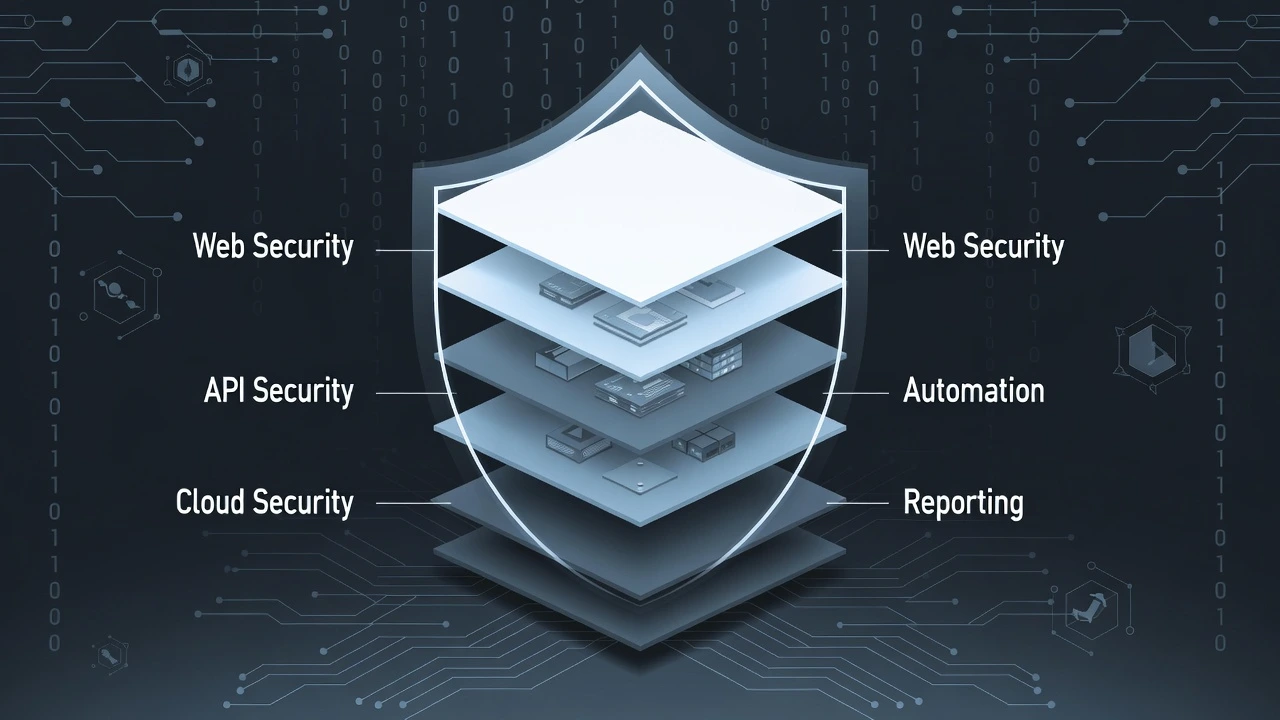
High income in ethical hacking is not about knowing more tools. It’s about mastering high-impact skills that businesses desperately need.
Below are the skills that consistently separate average hackers from elite earners.
3.1 Web & API Exploitation Mastery
Modern companies run on web applications and APIs. This makes them the highest-value attack surface.
High-paying skills include:
Authentication and authorization flaws
Access control bypasses
Business logic vulnerabilities
Race conditions
API abuse and mass assignment issues
Why this pays well:
These bugs are hard to automate
They often lead to severe impact
They directly affect revenue and data
Elite hackers don’t just find bugs—they understand application behavior.
3.2 Cloud & Modern Infrastructure Security
Cloud security expertise dramatically increases earning potential.
Critical areas include:
Identity and Access Management (IAM) abuse
Misconfigured storage services
CI/CD pipeline vulnerabilities
Container and orchestration weaknesses
Why cloud skills command premium rates:
Cloud mistakes scale quickly
Breaches are expensive
Few hackers truly understand cloud internals
Companies pay more because the blast radius is massive.
3.3 Advanced Recon & Automation
Reconnaissance is where elite hackers gain unfair advantage.
Advanced recon focuses on:
Asset discovery at scale
Shadow IT exposure
Subdomain and API mapping
Reducing noise and false positives
Automation is not about speed—it’s about focus.
Hackers who automate boring tasks spend more time on:
Manual testing
Logic analysis
Creative exploitation
This is where consistency beats luck.
3.4 Reporting, Communication & Proof of Impact
This is the most underrated high-income skill in hacking.
Elite hackers:
Write reports executives understand
Explain business risk clearly
Provide remediation guidance
Communicate without ego
A well-written report can be the difference between:
A $500 payout
And a $15,000 contract
At the top level, clarity equals money.
The Bugitrix Standard
At Bugitrix, we focus on skills that:
Create real-world impact
Build long-term trust
Scale income ethically
Keep hackers relevant in a changing industry
Tools change. Trends fade.
Fundamentals, judgment, and credibility endure.
4: The Realistic Timeline to Reach $50,000/Month
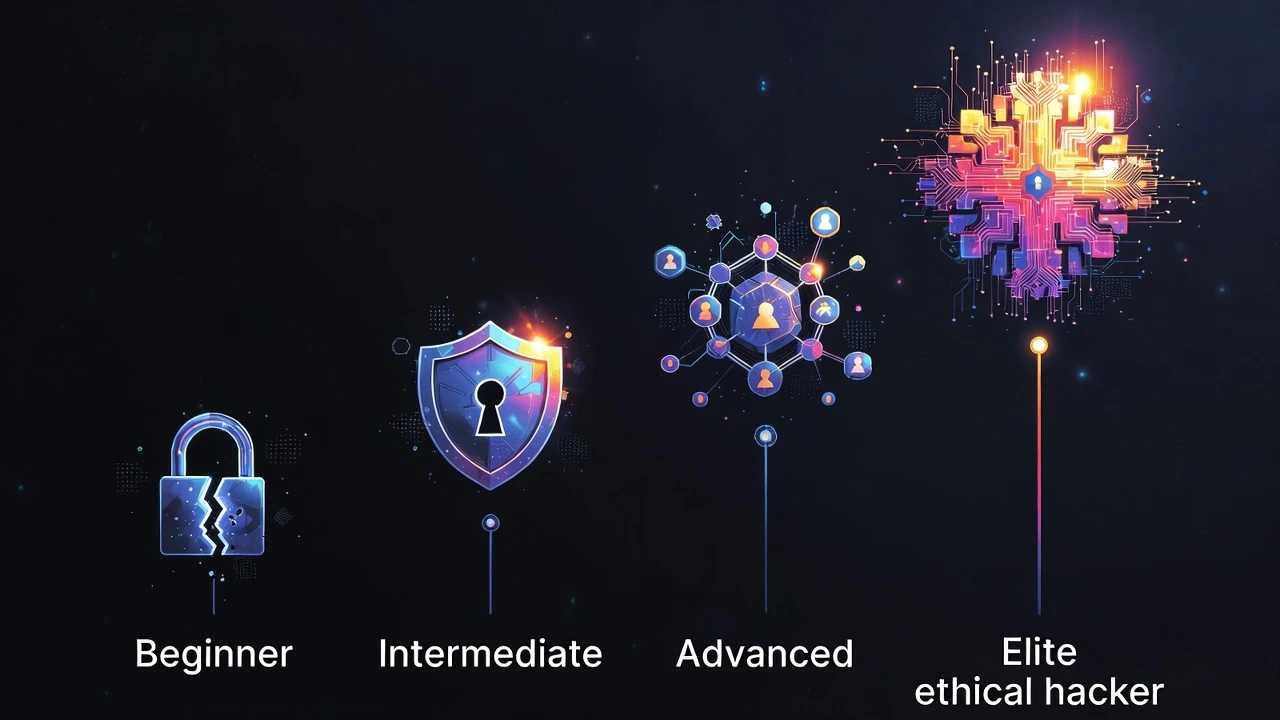
One of the most damaging myths in cybersecurity is the idea of instant success. Ethical hacking rewards patience, depth, and consistency—not speed.
Earning $50,000 per month is not about reaching a finish line. It’s about progressive leverage built over years.
Below is a realistic timeline based on how real-world ethical hackers grow.
Phase 1: Foundation Phase (0–12 Months)
This phase is where most people quit—not because it’s impossible, but because it’s uncomfortable.
What this phase actually looks like:
Learning networking, HTTP, DNS, Linux, and basic scripting
Understanding how web applications work internally
Reading vulnerability reports and real-world breach analyses
Submitting bugs and getting rejected
Earning little to no money
Typical income during this phase:
$0 to $1,000/month (often $0)
Key focus:
Skill acquisition
Building intuition
Learning how systems fail
At this stage, money is feedback, not income.
Phase 2: Professional Phase (1–3 Years)
This is where things start to become real.
Hackers in this phase:
Consistently find valid vulnerabilities
Understand at least one domain deeply (web, API, cloud, mobile)
Start receiving positive responses from security teams
Build a portfolio of writeups or documented experience
Typical income:
$3,000 – $10,000/month (combined sources)
Common paths here:
Full-time cybersecurity job
Stable bug bounty income
Freelance pentesting projects
This phase is about reliability.
You are no longer “trying hacking”—you are doing it.
Phase 3: Elite Phase (3–5+ Years)
This is where income starts to scale.
Hackers at this level:
Receive private bug bounty invitations
Get direct client referrals
Negotiate contracts instead of applying for them
Operate multiple income streams simultaneously
Typical income:
$15,000 – $50,000+/month (variable but consistent over time)
Key shift:
Your name carries weight
Trust replaces cold outreach
Experience becomes leverage
At this level, ethical hacking becomes a business, not just a skillset.
A Critical Reality Check
Time alone doesn’t create elite hackers.
Focused effort, reflection, and adaptation do.
Many hackers spend years stuck at the same level because they repeat the same mistakes instead of evolving.
5: Why Most Hackers Never Reach This Level
Understanding failure is just as important as understanding success.
Here are the real reasons most ethical hackers never come close to elite income.
5.1 Tool Dependency Without Understanding
Many hackers:
Run scanners
Copy payloads
Depend on templates
But they never ask:
Why does this vulnerability exist?
What logic failed here?
How would a developer accidentally introduce this bug?
Without understanding, growth stops.
5.2 Chasing Shortcuts and Trends
Every year has a new hype:
New tools
New platforms
New “easy money” methods
Elite hackers:
Ignore noise
Invest in fundamentals
Build long-term expertise
Trends fade. Fundamentals compound.
5.3 Poor Communication and Reporting
Many skilled hackers lose opportunities because they:
Write unclear reports
Focus only on technical detail
Fail to explain business impact
Sound arrogant or dismissive
Companies don’t just pay for bugs.
They pay for clarity and confidence.
5.4 Quitting Too Early
Most people quit right before progress becomes visible.
Reasons include:
Rejections
Low payouts
Imposter syndrome
Comparison with others
Elite hackers are not immune to doubt—they just persist longer.
5.5 Relying on a Single Income Source
Depending on one platform or one client is fragile.
When that source dries up:
Income collapses
Motivation drops
Growth stalls
High earners design redundancy into their income.
6: Certifications — Which Help and Which Don’t
Certifications are one of the most misunderstood parts of cybersecurity careers.
They do not create elite hackers—but they can support credibility when used correctly.
Certifications That Can Help (Contextually)
These certifications help in specific situations:
Enterprise trust
Consulting credibility
Job-based roles
Examples:
OSCP for pentesting credibility
Cloud security certifications for enterprise environments
Compliance-related certs for regulated industries
Their value:
Signal baseline competence
Reduce friction in hiring
Support consulting negotiations
Certifications That Don’t Increase Income Alone
Certifications do not:
Replace hands-on experience
Guarantee bug bounty success
Automatically raise pay
Create authority without proof
Many certified professionals earn less than non-certified hackers with real-world results.
The Correct Way to View Certifications
Certifications are amplifiers, not foundations.
They work best when combined with:
Proven vulnerabilities
Client results
Clear communication
Real impact
Elite hackers are respected for what they’ve done, not what they’ve passed.
The Bugitrix Position on Certifications
At Bugitrix, certifications are treated as:
Optional tools
Not career shortcuts
Not skill replacements
If you need one to unlock an opportunity, get it.
If not, focus on building real capability.
7: The Legal, Ethical, and Mental Reality of High-Earning Hackers
Earning serious money in ethical hacking comes with responsibilities that most beginners never think about. At higher levels, mistakes are no longer small—they can affect businesses, reputations, and your own freedom.
This section matters because elite hackers survive long-term, not just financially, but legally and mentally.
7.1 Legal Boundaries Are Non-Negotiable
High-earning ethical hackers operate strictly within clear legal frameworks.
This includes:
Only testing assets you are explicitly authorized to test
Respecting scope definitions in bug bounty programs
Avoiding data exfiltration beyond proof of concept
Reporting vulnerabilities responsibly
Crossing legal lines doesn’t make you elite—it makes you unemployable.
Companies that pay well care deeply about:
Professional conduct
Documentation
Predictability
Risk management
One reckless action can erase years of reputation.
7.2 Ethics Protect Long-Term Income
Short-term gains through unethical behavior always backfire.
Examples include:
Withholding vulnerability details to negotiate higher payouts
Publicly shaming companies for attention
Exploiting gray-area access
Using fear as leverage
Elite hackers don’t burn bridges—they build trusted relationships.
Trust leads to:
Private invitations
Direct contracts
Retainers
Referrals
And trust compounds faster than skill alone.
7.3 Mental Load at the Top Level
High-level hacking is mentally demanding.
Common challenges include:
Long hours of deep focus
Constant problem-solving
Pressure to deliver accurate results
Responsibility for high-impact findings
Burnout is real, especially when:
Income depends on performance
Multiple clients rely on you
Mistakes have serious consequences
Elite hackers learn to:
Pace themselves
Say no to bad projects
Build systems instead of overworking
Protect mental clarity as a professional asset
Sustainability is a skill.
7.4 Consistency Over Intensity
Many hackers work in bursts—intense periods followed by exhaustion.
High earners work differently:
They build routines
They document processes
They automate low-value tasks
They prioritize health and clarity
The goal is not heroic effort.
The goal is repeatable performance.
8: The Bugitrix Perspective — Building Hackers, Not Hype
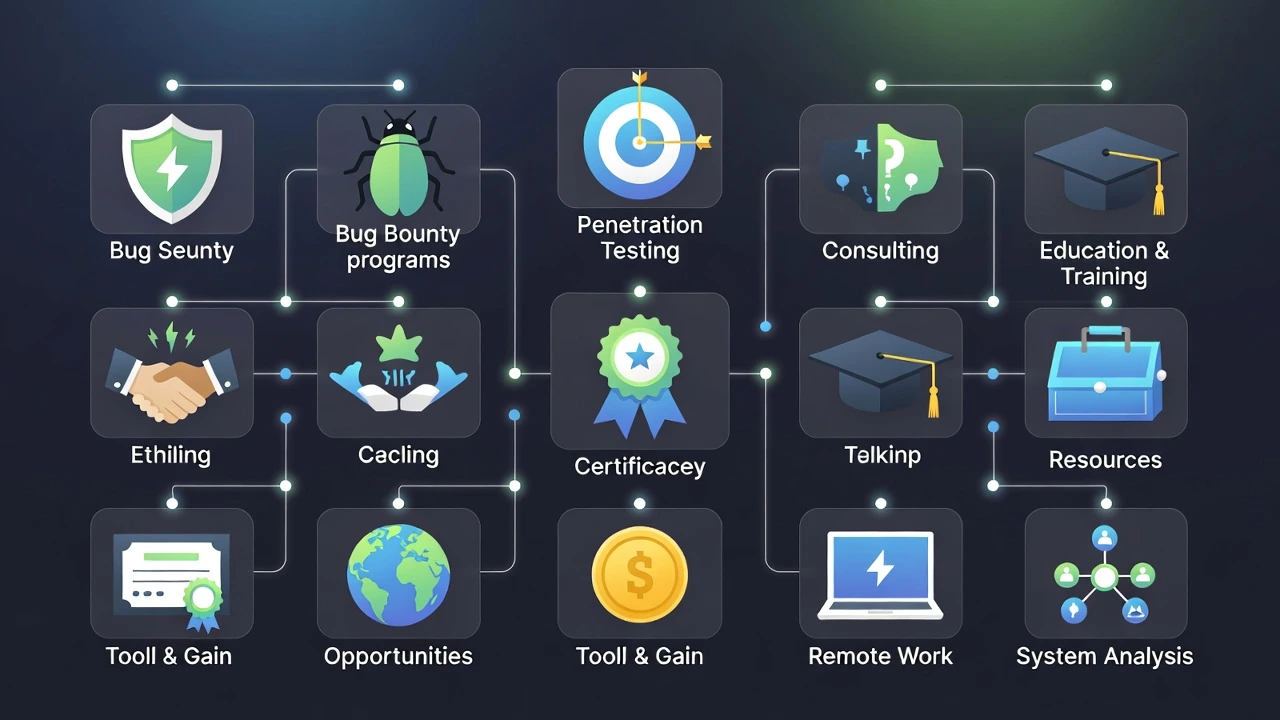
At Bugitrix, we don’t believe in selling dreams. We believe in building dangerous thinkers with ethical discipline.
This article isn’t about convincing you that $50,000 per month is easy. It’s about showing you what’s required if you want to pursue it honestly.
Why Most Cybersecurity Content Gets This Wrong
A lot of content online:
Focuses on tools instead of thinking
Sells shortcuts instead of skill
Glorifies screenshots instead of systems
Promotes income without responsibility
That approach creates frustration, not professionals.
The Bugitrix Philosophy
Bugitrix is built on a few core principles:
Skills before income
Understanding before automation
Trust before scale
Long-term thinking over viral success
We care less about how fast you make money
and more about whether you can still be here in five years—respected, relevant, and trusted.
Ethical Hacking Is a Profession, Not a Gamble
If you approach ethical hacking like gambling:
You’ll chase payouts
You’ll burn out
You’ll quit early
If you approach it like a profession:
You’ll invest in fundamentals
You’ll build credibility
You’ll grow steadily
Income will follow naturally
The highest-earning ethical hackers aren’t lucky.
They’re disciplined, patient, and trusted.
Final Reality Check
Not everyone should aim for $50,000 per month—and that’s okay.
But if you want:
Technical mastery
Financial freedom
Professional respect
Long-term sustainability
Then ethical hacking, done right, is one of the few fields where skill still matters more than credentials or background.
And if you choose to walk that path,
Bugitrix exists to guide—not hype—you along the way.
Frequently Asked Questions (FAQs)
Can an ethical hacker really earn $50,000 per month?
Yes, but it is rare and earned over time. Ethical hackers who reach this level usually combine multiple income streams such as private bug bounty programs, penetration testing contracts, consulting retainers, tools, and education-based income. This level of income is not a beginner outcome and typically takes several years of focused, professional experience.
How long does it take to earn high income in ethical hacking?
For most people, it takes 3 to 5 years of consistent learning and real-world practice to reach high-income levels. The timeline depends on skill depth, specialization, communication ability, and how early trust and reputation are built. Quick success stories are usually incomplete or misleading.
Is bug bounty alone enough to earn $50K per month?
In most cases, no. Bug bounty alone can produce strong income, especially in private programs, but it is unpredictable. High-earning ethical hackers usually treat bug bounty as one part of a larger income system that includes consulting, contracts, or products.
Do I need a degree to become a high-earning ethical hacker?
No. A formal degree is not required to succeed in ethical hacking. Companies and clients care more about proven skills, real vulnerabilities found, and professional communication. Many top hackers are self-taught, but they are highly disciplined learners.
Which skills are most important for earning more in cybersecurity?
High-paying skills include:
Web and API security
Business logic vulnerability analysis
Cloud security (AWS, Azure, GCP)
Advanced reconnaissance and automation
Clear reporting and communication
These skills directly relate to real-world business risk, which is why companies pay more for them.
Are certifications required to earn well in ethical hacking?
Certifications are not mandatory, but they can help in specific situations such as corporate jobs or consulting. Certifications support credibility but do not replace hands-on experience. Many high-earning hackers rely more on portfolios, writeups, and client trust than certifications.
Is ethical hacking legal?
Yes, ethical hacking is legal only when done with explicit permission. This includes bug bounty programs, contracts, and written authorization. Testing systems without permission is illegal and can permanently damage your career.
What is the biggest mistake beginners make in ethical hacking?
The most common mistake is focusing only on tools instead of understanding how systems work. Many beginners also quit too early, chase shortcuts, or compare themselves to others instead of building real skills steadily.
Can beginners start earning money in ethical hacking?
Beginners can earn small amounts through bug bounty programs, labs, or freelance tasks, but significant income comes later. Early stages should focus on learning and validation rather than money. Income increases as accuracy, impact, and trust improve.
Is ethical hacking stressful as a career?
It can be mentally demanding, especially at higher levels where mistakes have serious consequences. However, experienced hackers manage stress by building systems, setting boundaries, and avoiding unsustainable workloads. Long-term success depends on balance, not constant intensity.
What makes Bugitrix different from other cybersecurity platforms?
Bugitrix focuses on real skills, ethical discipline, and long-term growth, not hype or shortcuts. The goal is to build professionals who understand systems deeply, communicate clearly, and earn trust—because in cybersecurity, trust is what scales income.
Conclusion: High Income Is a Side Effect of High Trust

Earning $50,000+ per month as an ethical hacker is not about luck, secret tools, or viral tricks. It is the side effect of years spent mastering systems, understanding risk, communicating clearly, and earning trust.
The hackers who reach this level are not chasing money every day.
They are solving real security problems, building long-term relationships, and operating with discipline and ethics.
If there is one takeaway from this guide, it’s this:
Ethical hacking rewards depth, not shortcuts.
The deeper your understanding and the stronger your reputation, the higher your earning potential.
Not everyone needs to aim for $50K/month—but everyone who wants a serious cybersecurity career should aim for:
Real skills
Real impact
Real professionalism
Money follows those who stay consistent long enough.
At Bugitrix, our mission is simple:
to help you grow into a hacker who is respected, trusted, and future-proof—not just another tool runner chasing payouts.
Join the Bugitrix Hacker Ecosystem
If you’re serious about ethical hacking and want to grow with real guidance, not hype, here’s how to take the next step.
🔥 Join the Bugitrix Telegram Community
Stay updated with:
Bug bounty insights
Real-world hacking discussions
Learning resources
Cybersecurity career guidance
👉 Join now: https://t.me/bugitrix
📘 Checkout eBook: Bug Bounty for Hackers
If you want a structured, beginner-to-intermediate guide that explains how bug bounty actually works in the real world, start here.
👉 Access the eBook:
https://www.bugitrix.com/slides/bug-bounty-for-hackers-7
🧠 Access Free Cybersecurity Resources (Just Sign In)
Bugitrix provides free learning resources, guides, and tools to help you build strong fundamentals and practical skills.
No gimmicks. No spam.
Just sign in and start learning.
👉 Explore free resources: https://www.bugitrix.com/resources