
1. Why Every Hacker Needs a Home Lab

If you want to grow in cybersecurity, reading blogs and watching videos is not enough. Real hackers learn by doing. This is where a cybersecurity home lab becomes your best weapon.
A home lab is your personal practice playground where you can safely attack, break, analyze, and secure systems without any legal risk. Instead of guessing how tools work, you see results with your own eyes. You fail, you fix, you learn — that’s real skill-building.
For beginners, a home lab removes fear. For bug bounty hunters, it sharpens exploitation skills. For blue team learners, it builds detection and defense knowledge. This is exactly the mindset we promote at Bugitrix — learning cybersecurity through hands-on practice, not theory alone.
Every scan you run, every vulnerability you exploit, and every mistake you make inside your lab prepares you for real-world challenges. This is how confidence is built. This is how hackers are made.
2. What You Need Before Building a Cybersecurity Home Lab

Building a home lab doesn’t require expensive hardware. You don’t need a powerful server or advanced setup to start. A basic laptop or desktop is enough if it can handle multiple systems running together.
Your system should have enough memory and storage to run virtual machines smoothly. More memory means better performance, but even modest setups work well for beginners. A stable internet connection helps with updates and learning resources, but your lab itself should remain isolated for safety.
The most important requirement isn’t hardware — it’s mindset. You must be ready to experiment, break things, and troubleshoot problems. Cybersecurity is not about perfection; it’s about curiosity and persistence.
At Bugitrix, we believe the best hackers are built by consistent practice, not expensive tools. Start with what you have. Build, break, repeat — and level up your skills the right way.
3. Choosing the Right Virtualization Platform
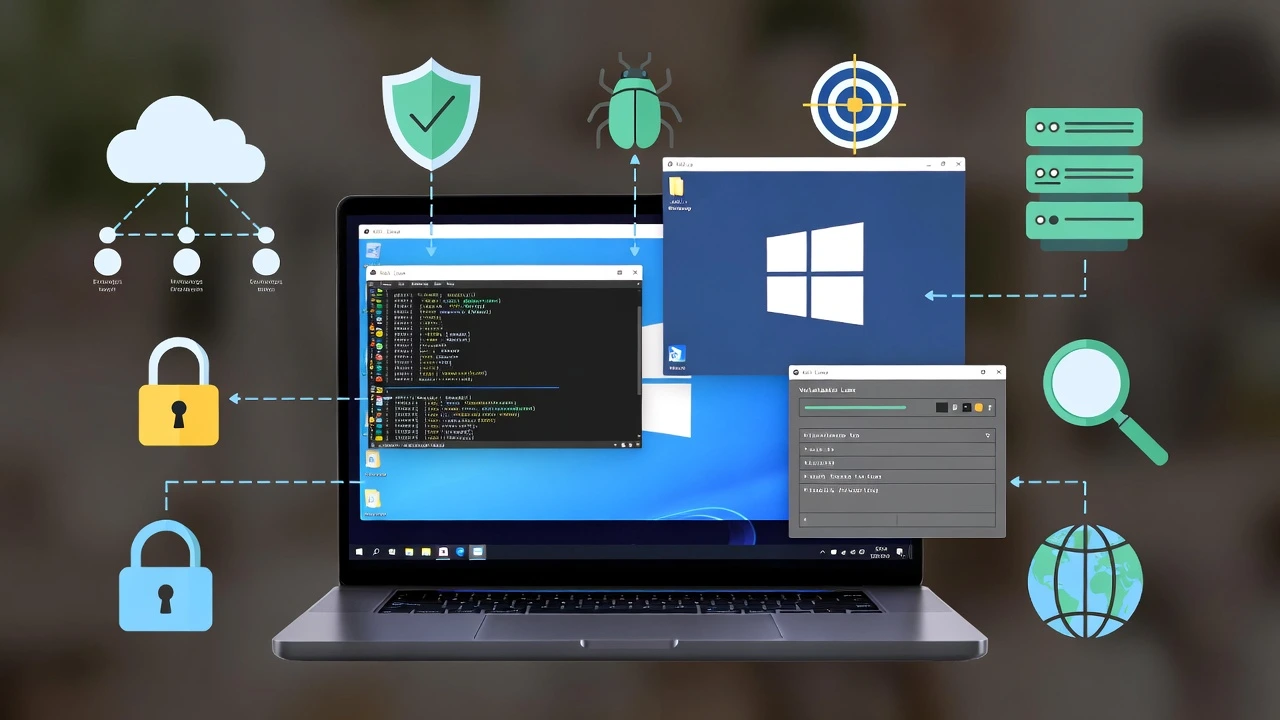
To build a cybersecurity home lab, you need a way to run multiple operating systems on one machine. This is done using virtualization. A virtualization platform allows you to create virtual machines (VMs) that behave like real computers but stay safely inside your system.
Virtual machines are critical in cybersecurity because they let you practice attacks and defenses without risking your main operating system. If something breaks, you simply reset the VM and continue learning.
Here are the most commonly used virtualization platforms in cybersecurity:
| Platform | Best For | Why Hackers Use It |
|---|---|---|
| VirtualBox | Beginners | Free, stable, and widely supported |
| VMware Workstation | Advanced users | Better performance and snapshots |
| KVM (Linux) | Power users | Near-native speed on Linux systems |
VirtualBox is often the starting point because it’s simple and works on most systems. VMware is popular in professional labs due to its advanced networking and snapshot features. No matter which one you choose, the core concept remains the same: safe, repeatable, isolated practice.
This isolation is what makes home labs powerful. You can scan, exploit, crash, and rebuild systems as many times as needed — exactly how real hackers learn.
4. Essential Operating Systems for Your Home Lab
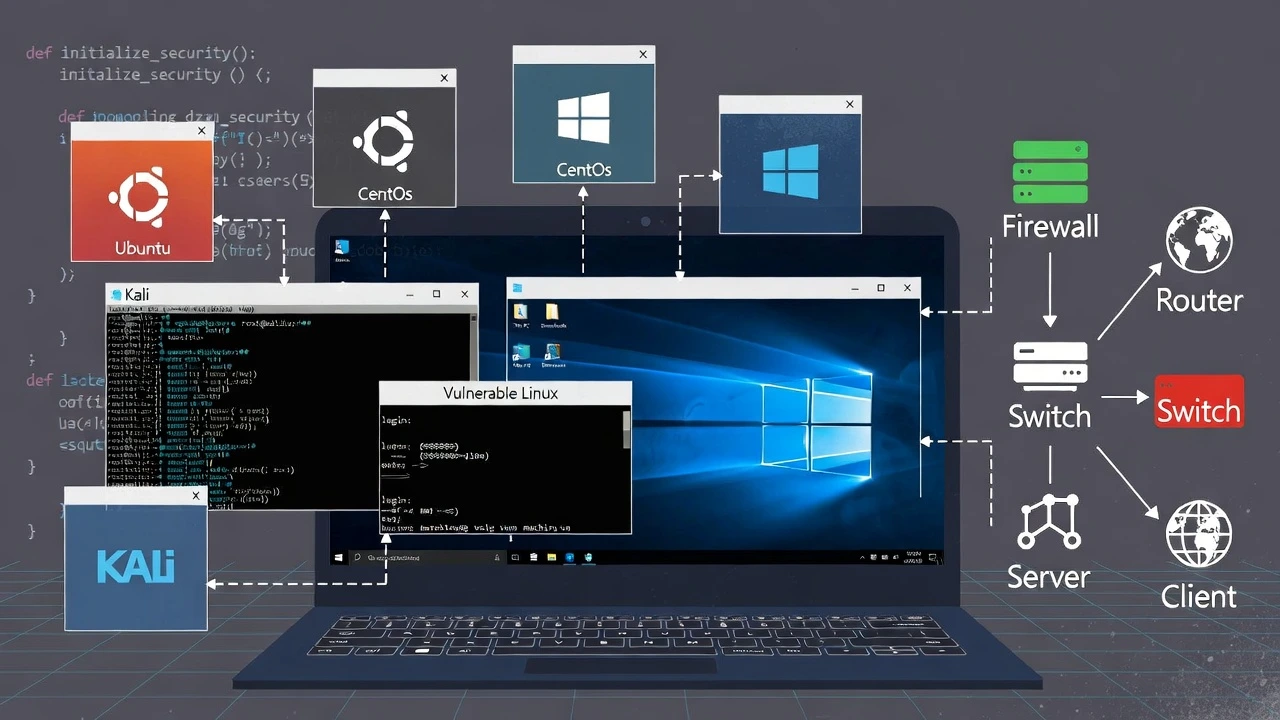
A strong cybersecurity lab needs two types of systems: an attacker machine and target machines. This setup simulates real-world scenarios where one system performs testing and the others contain vulnerabilities.
Attacker Machine
Kali Linux is the industry-standard operating system for ethical hacking and penetration testing. It comes preloaded with hundreds of security tools used for scanning, exploitation, web testing, and password analysis. Kali is not magic — it’s powerful only when you understand how to use the tools correctly.
Target Machines
Target machines are intentionally vulnerable systems designed for practice. They help you learn how attacks work in a controlled and legal environment.
| Target System | Purpose | Skill You Learn |
|---|---|---|
| Metasploitable | Exploitation practice | Vulnerability exploitation |
| DVWA | Web app testing | SQL injection, XSS, auth flaws |
| Windows Test VM | Real-world exposure | Privilege escalation, misconfigs |
Using vulnerable machines teaches you how vulnerabilities exist, not just how to exploit them. This knowledge is essential for bug bounty, red teaming, and defensive roles.
At Bugitrix, we emphasize understanding systems from both sides — attacker and defender. When you know how something breaks, you learn how to secure it properly. That’s real cybersecurity skill.
5. Setting Up a Safe and Isolated Lab Network

Networking is one of the most important parts of a cybersecurity home lab. If your lab is not properly isolated, you may accidentally expose vulnerable machines to your real network — which is risky and unnecessary.
In a home lab, isolation means your attacker and target machines can communicate only with each other, not with your personal devices or the public internet.
There are two common virtual network modes used in cybersecurity labs:
| Network Mode | What It Does | When to Use |
|---|---|---|
| NAT | Allows internet access through host | Tool updates and downloads |
| Host-Only | Lab-only communication | Safe attack and testing practice |
A common and safe approach is to use Host-Only networking while practicing attacks and switch to NAT only when you need updates. This ensures your scans and exploits never reach real systems.
Proper lab networking helps you understand how attackers move within internal networks. You learn how machines discover each other, how ports are exposed, and how services communicate. These concepts directly apply to real-world penetration testing and SOC analysis.
At Bugitrix, we treat lab safety as part of ethical hacking. A good hacker knows not just how to attack, but how to control the environment responsibly.
6. Must-Have Tools to Practice Real Cybersecurity Skills

Tools do not make you a hacker — understanding them does. A good home lab focuses on why tools work, not just running commands.
Some tools are essential because they teach core cybersecurity concepts used across bug bounty, red teaming, and blue teaming.
| Tool Type | Example | What You Learn |
|---|---|---|
| Network Scanning | Nmap | Port discovery, service detection |
| Exploitation | Metasploit | Vulnerability chaining, payloads |
| Web Testing | Burp Suite | Request analysis, web flaws |
| Password Attacks | Hydra | Authentication weaknesses |
| Monitoring | System logs | Detection and defense basics |
Using Nmap teaches how systems expose services. Metasploit shows how vulnerabilities turn into real compromise. Burp Suite helps you understand how web applications process requests and where logic fails.
These tools also build defensive awareness. When you see how attacks work, you naturally start thinking about prevention, logging, and monitoring. This dual mindset is critical in modern cybersecurity roles.
Bugitrix focuses on skill-building, not tool dependency. Tools change, but fundamentals stay the same. Your home lab is where those fundamentals become real.
7. What You Can Practice in Your Cybersecurity Home Lab

A home lab gives you real freedom to practice cybersecurity the right way. Instead of memorizing commands, you learn how attacks and defenses actually work.
You can start with vulnerability scanning, where you identify open ports, services, and outdated software. This teaches you how attackers discover entry points. From there, you move into exploitation, learning how misconfigurations and weak services are abused.
Web application testing is another major area. By practicing on intentionally vulnerable apps, you understand issues like input validation flaws, authentication weaknesses, and insecure session handling. These skills are essential for bug bounty hunting.
Your lab also allows post-exploitation learning such as privilege escalation and system enumeration. On the defensive side, you can analyze logs, understand alerts, and see how attacks leave traces behind.
At Bugitrix, we believe real mastery comes when you understand both the attack and the impact. A home lab turns theory into muscle memory.
8. How a Home Lab Builds Real-World Cybersecurity Skills
Employers and clients don’t look for tool runners — they look for problem solvers. A cybersecurity home lab trains you to think critically under real conditions.
When something fails in your lab, you troubleshoot it yourself. This builds the same mindset used by penetration testers, SOC analysts, and security engineers. You learn patience, logical thinking, and attention to detail.
A home lab also helps bridge the gap between learning paths. Whether you’re preparing for certifications, bug bounty platforms, or entry-level jobs, lab experience gives you confidence. You don’t just say you know something — you’ve done it.
This hands-on exposure is what separates serious learners from casual ones. At Bugitrix, we encourage building skills that can be explained, demonstrated, and trusted.
9. The Bugitrix Approach – Learn, Break, Secure
Bugitrix is built on one core belief: cybersecurity is learned by practice, not shortcuts. A home lab perfectly reflects this philosophy.
We promote ethical hacking with responsibility. Everything you practice inside your lab is legal, controlled, and educational. This builds not just technical skills, but professional ethics.
Bugitrix focuses on understanding systems deeply — why vulnerabilities exist, how they are exploited, and how they can be prevented. This balanced mindset prepares learners for bug bounty, red teaming, and defensive security roles alike.
Your lab is not just a setup. It’s your personal training ground, and Bugitrix stands for making that journey practical, structured, and impactful.
10. Conclusion – Start Small, Hack Smart

You don’t need a perfect setup to begin your cybersecurity journey. Start small, stay consistent, and keep experimenting. Every scan, every failure, and every fix improves your understanding.
A home lab gives you freedom — freedom to learn without fear, to break without risk, and to grow at your own pace. Over time, these small efforts turn into real skills.
At Bugitrix, we believe hackers are not born — they are built. Build your lab, sharpen your mindset, and hack smart. The skills you develop today will define your cybersecurity future.
🚀 Join the Bugitrix Telegram Channel

Want daily hands-on cybersecurity insights, bug bounty tips, home lab tricks, and real-world hacking knowledge?
Join the Bugitrix Telegram community and learn cybersecurity the practical way — no fluff, no fake hype.
🔗 Join now: https://t.me/bugitrix
Learn. Break. Secure.
Bugitrix — where real hackers are built.