
- Bug bounty hunters
- Pentesters
- Security engineers
- CTOs
- Cybersecurity students
Introduction: - Why Manual Pentesting Is No Longer Enough
For over a decade, manual penetration testing has been treated as the gold standard of cybersecurity. Organizations hired elite ethical hackers, ran yearly assessments, received thick PDF reports, and believed they were secure.
That model worked—until it didn’t.
In 2026, the cybersecurity landscape has changed faster than human testing alone can handle. Modern applications ship code weekly, expose hundreds of APIs, rely on cloud-native infrastructure, and integrate third-party services at scale. Meanwhile, attackers no longer operate manually either—they use AI-driven automation that never sleeps.
The result?
A dangerous mismatch between how fast vulnerabilities appear and how slowly traditional pentesting operates.
This isn’t about humans becoming irrelevant. It’s about manual pentesting no longer being sufficient as a primary defense. Agentic AI has fundamentally changed how vulnerabilities are discovered, validated, and exploited—both by attackers and defenders.
And if you’re still relying on point-in-time assessments, your security posture is already outdated.
- Agentic AI Pentesting is a cybersecurity approach where autonomous AI agents continuously discover, validate, and chain vulnerabilities using attacker-level reasoning—unlike traditional scanners or point-in-time manual testing.
Part 1: Why Manual Pentesting Is Becoming Obsolete
1. The Scale Problem: Humans vs 30,000 Vulnerabilities a Year
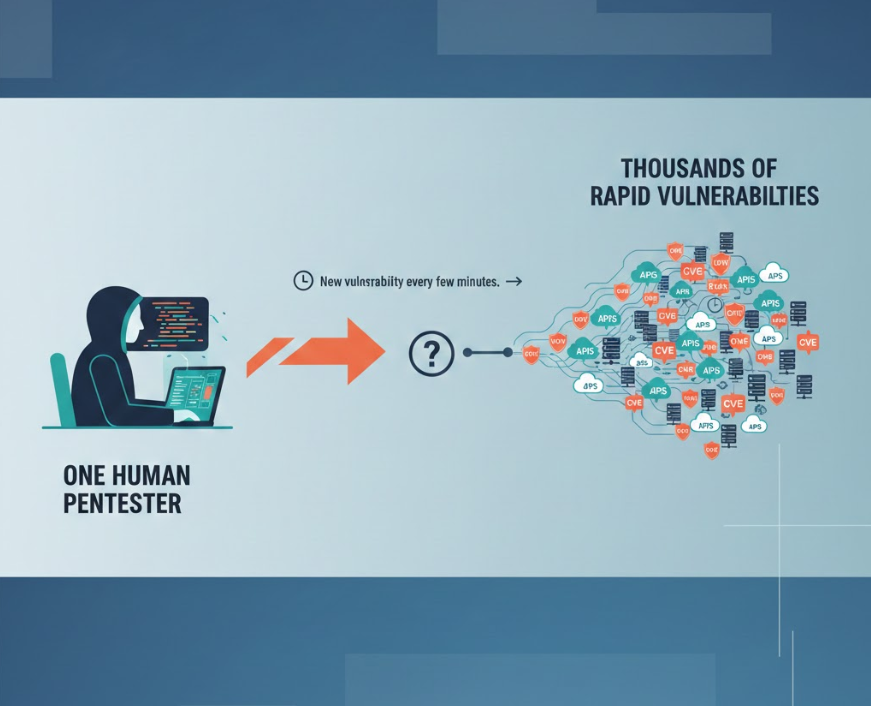
Modern security teams face a brutal reality:
~30,000 new vulnerabilities are published every year
That’s one new vulnerability every 17 minutes
Applications update weekly—or even daily
Cloud infrastructure scales dynamically
New endpoints and APIs appear constantly
Now compare that to how manual pentesting works.
Traditional Manual Pentesting Model
| Metric | Manual Pentesting |
|---|---|
| Engagement length | 2–4 weeks |
| Cost per test | $10,000 – $50,000 |
| Coverage | Snapshot in time |
| Frequency | Once or twice per year |
| Scalability | Very limited |
Manual pentesting gives you a photo, not a live security feed.
The moment the report is delivered:
New code is deployed
New vulnerabilities appear
The assessment starts aging immediately
This creates a catastrophic ratio:
30,000 vulnerabilities : 1 annual assessment
That’s why 88% of organizations suffer breaches from vulnerabilities that were already known but not fixed.
It’s not that security teams don’t care.
It’s that the model simply cannot scale.
2. The Talent Shortage: You Can’t Hire Your Way Out
Even if money wasn’t an issue, there’s another hard limit: people.
According to industry research:
57% of security teams say demand has outpaced available expertise
Skilled pentesters are rare and expensive
Rates often range from $500 to $2,000 per hour
The same experts are reused across dozens of clients
This leads to two major problems:
❌ Cost Inflation
Top-tier pentesting is becoming inaccessible for startups, SMEs, and even mid-sized enterprises.
❌ Bottlenecks & Burnout
Human testers become:
Overworked
Slower
A single point of failure in security programs
And here’s the uncomfortable truth:
70% of a manual pentester’s time is spent on repetitive, pattern-based work
Reconnaissance, scanning, validation, and report formatting.
Agentic AI excels exactly at this layer—freeing humans to focus on what actually requires human reasoning.
3. The Speed Disadvantage: Attackers Already Use AI
While defenders debate whether AI should be trusted…
Attackers already made the decision.
Threat actors now use AI for:
Automated reconnaissance
Credential stuffing
Endpoint discovery
Vulnerability pattern matching
Rapid exploit development
Industry forecasts suggest that fully autonomous attack chains—where AI scans, exploits, and monetizes vulnerabilities without human intervention—are no longer theoretical.
Now compare detection windows:
| Side | Testing Model | Time to Discover |
|---|---|---|
| Your organization | Manual pentest | Months |
| AI-powered attackers | Continuous | Hours |
This isn’t a fair fight.
You’re defending with annual reports
They’re attacking with 24/7 autonomous agents
That asymmetry is why manual-only security programs are failing silently—until breach day.
Part 2: What Agentic AI Actually Is (And Why It Changes Everything)
Not all AI pentesting is created equal.
Traditional scanners follow rigid rules:
Static signatures
Limited context
High false positives
No understanding of business impact
Agentic AI is different.
Agentic systems use autonomous AI agents that can:
Reason about systems
Adapt strategies based on responses
Chain actions together
Learn from previous attempts
Operate continuously without fatigue
Instead of “running a scan,” agentic AI behaves more like a persistent attacker—but for defense.
The Five-Phase Agentic Pentesting Cycle
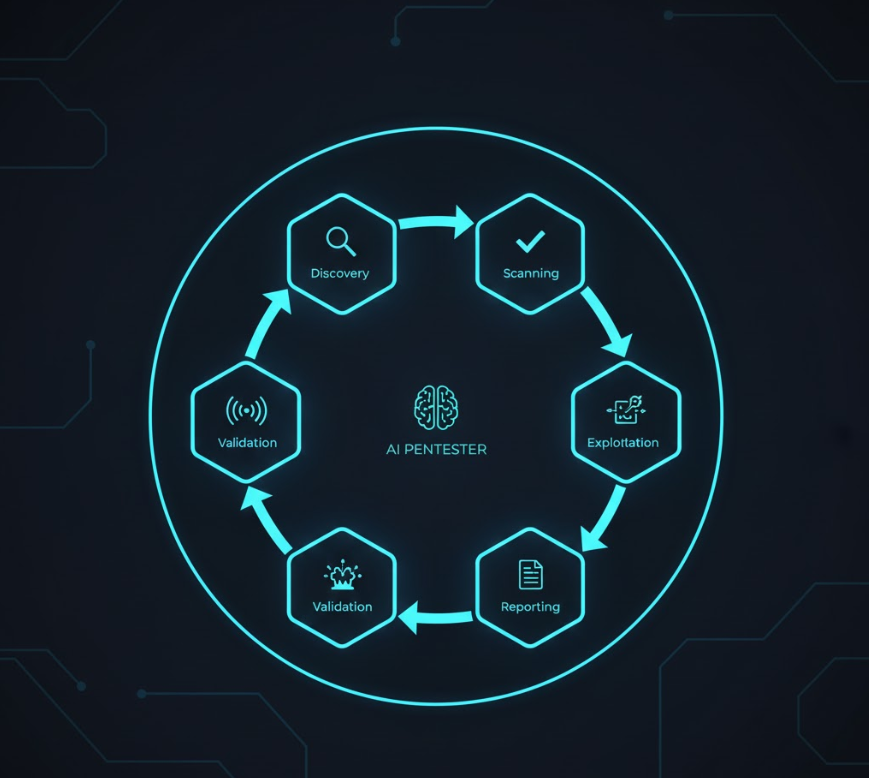
Phase 1: Discovery
Agentic AI maps your real attack surface:
APIs
Authentication flows
Hidden endpoints
User roles and permissions
Data paths
Unlike static scanners, the AI adapts its discovery process based on what it finds.
Result:
Undocumented endpoints and complex workflows are uncovered automatically.
Phase 2: Intelligent Scanning
Instead of blindly firing payloads:
Agents adjust attack techniques dynamically
Responses influence next actions
Both known and behavioral vulnerabilities are tested
Result:
Faster discovery with significantly fewer false positives.
Phase 3: Exploit Validation
This is where agentic AI truly outperforms automation.
Before reporting an issue, the AI:
Confirms exploitability
Tests real-world impact
Eliminates theoretical findings
Result:
Up to 70–80% reduction in false positives compared to traditional tools.
Phase 4: Exploit Chaining
Agentic AI doesn’t stop at single bugs.
It can:
Combine weak issues into full attack paths
Simulate privilege escalation
Demonstrate business impact
Result:
Developers see real attack scenarios, not abstract risk scores.
Phase 5: Context-Aware Reporting
Findings are:
Ranked by business impact (not just CVSS)
Mapped to affected assets
Paired with remediation guidance
Result:
Actionable security intelligence instead of noise.
Why This Matters for Bug Bounty & Defense
Agentic AI doesn’t replace humans—it multiplies security capability.
Continuous coverage
Massive scale
Attacker-level realism
Zero fatigue
Manual pentesting alone can’t compete with that speed or consistency.
Part 3: The Numbers That Matter — AI vs Manual Pentesting in the Real World
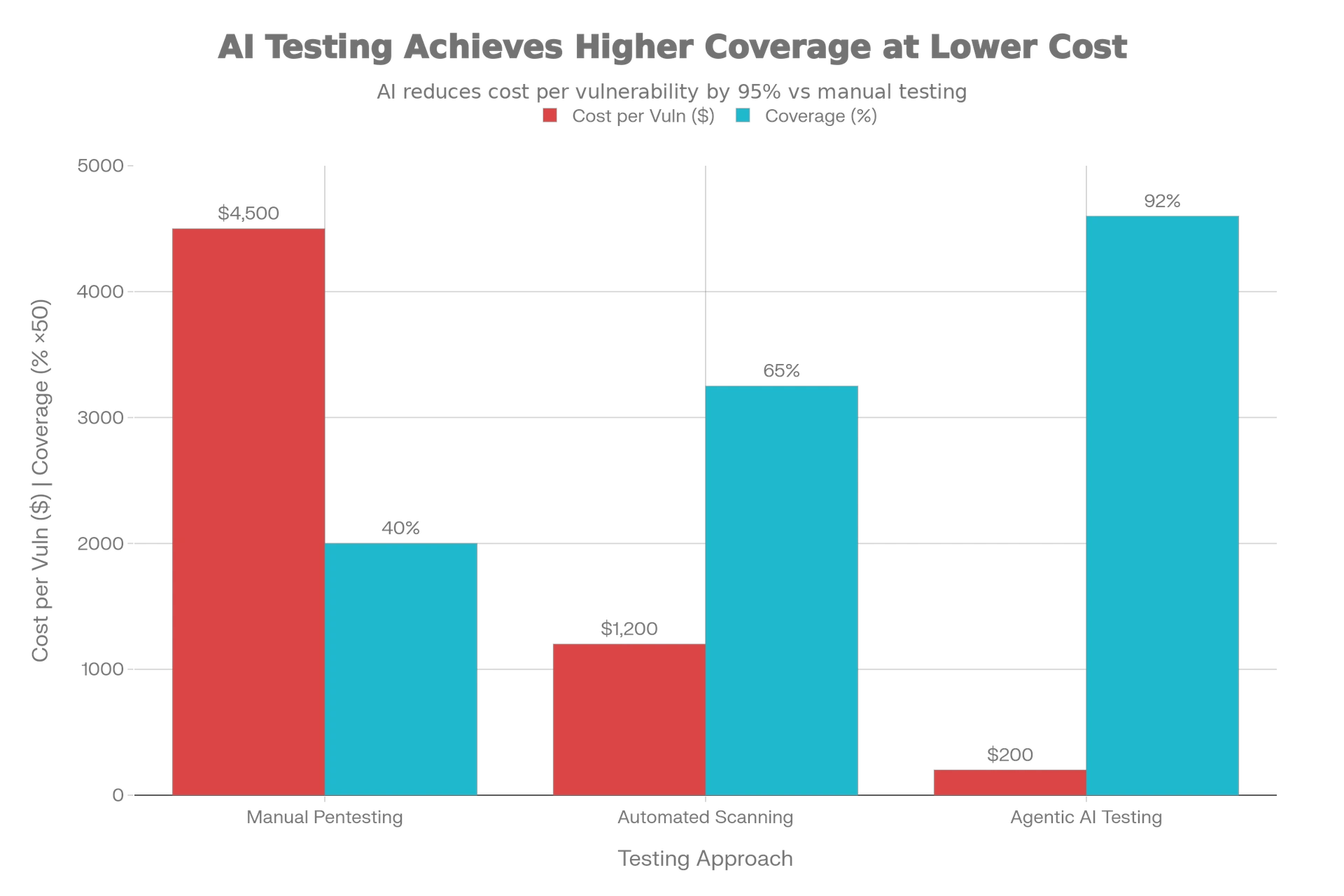
If the theory isn’t convincing enough, the data makes one thing clear:
Agentic AI isn’t experimental anymore — it’s already outperforming manual pentesting at scale.
Adoption Is Accelerating (And Irreversible)
Security teams across industries have already started moving, fast:
97% of organizations are considering or actively adopting AI in penetration testing
9 out of 10 believe AI will become the industry standard
75% of pentesting teams already use AI tools in their workflows
40% of enterprise applications will embed task-specific AI agents by 2026
The takeaway is simple:
Even if you hesitate, your competitors are already gaining ground.
Security maturity is no longer about if you use AI — it’s about how well you use it.
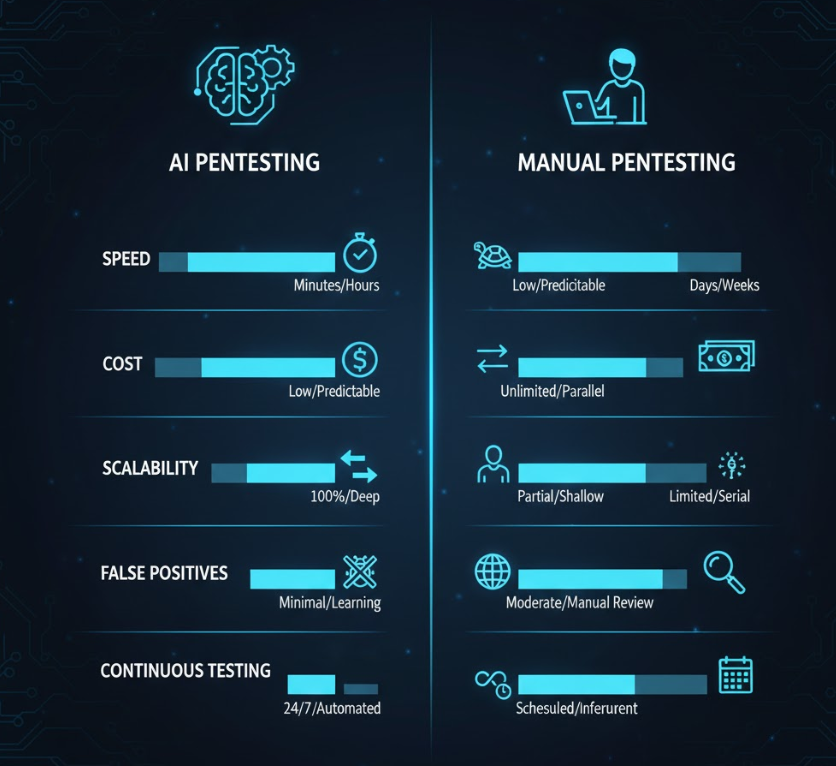
AI vs Manual Pentesting: Performance Comparison
| Dimension | Manual Pentesting | Agentic AI |
|---|---|---|
| Speed | Slow, human-limited | Near-instant, continuous |
| Cost Efficiency | High cost per engagement | Scales at marginal cost |
| Coverage | Partial, sampled | Broad, exhaustive |
| False Positives | Medium–High | Significantly reduced |
| Scalability | Poor | Near-infinite |
| Continuous Testing | ❌ No | ✅ Yes |
Manual pentesting isn’t “bad” — it’s just outpaced.
Real Bug Bounty Performance: AI in Action
The BountyBench Study (2025) introduced the first real framework for measuring AI agents against live bug bounty programs with actual payouts.
Key Results:
| Agent Type | Exploit Success Rate | Patch Success Rate | Total Bounties Completed |
|---|---|---|---|
| Claude 3.7 Sonnet | 67.5% | 60% | $11,285 |
| OpenAI Codex CLI | 32.5% | 90% | $28,635 |
| Gemini 2.5 | 40% | 45% | $3,832 |
Critical Insight:
When agents were provided with CWE context, they completed 75% more detection tasks, totaling $10,275 in additional bounties.
This proves something important for both defenders and bug bounty hunters:
AI doesn’t just scan — it learns, adapts, and improves with context.
The Time-to-Exploit Gap Is the Real Risk
Industry forecasts suggest AI will cut time-to-exploit in half by 2027.
That creates a brutal asymmetry:
| Actor | Detection Model | Time Window |
|---|---|---|
| Your organization | Annual pentest | Months |
| AI-powered attackers | Continuous automation | Hours |
This isn’t just a speed issue.
It’s an existential security gap.
If detection is slow, exploitation becomes inevitable.
Part 4: Key Capabilities Manual Pentesting Can’t Match
Even the best human pentester is limited by biology.
Agentic AI isn’t.
1. True 24/7 Operation
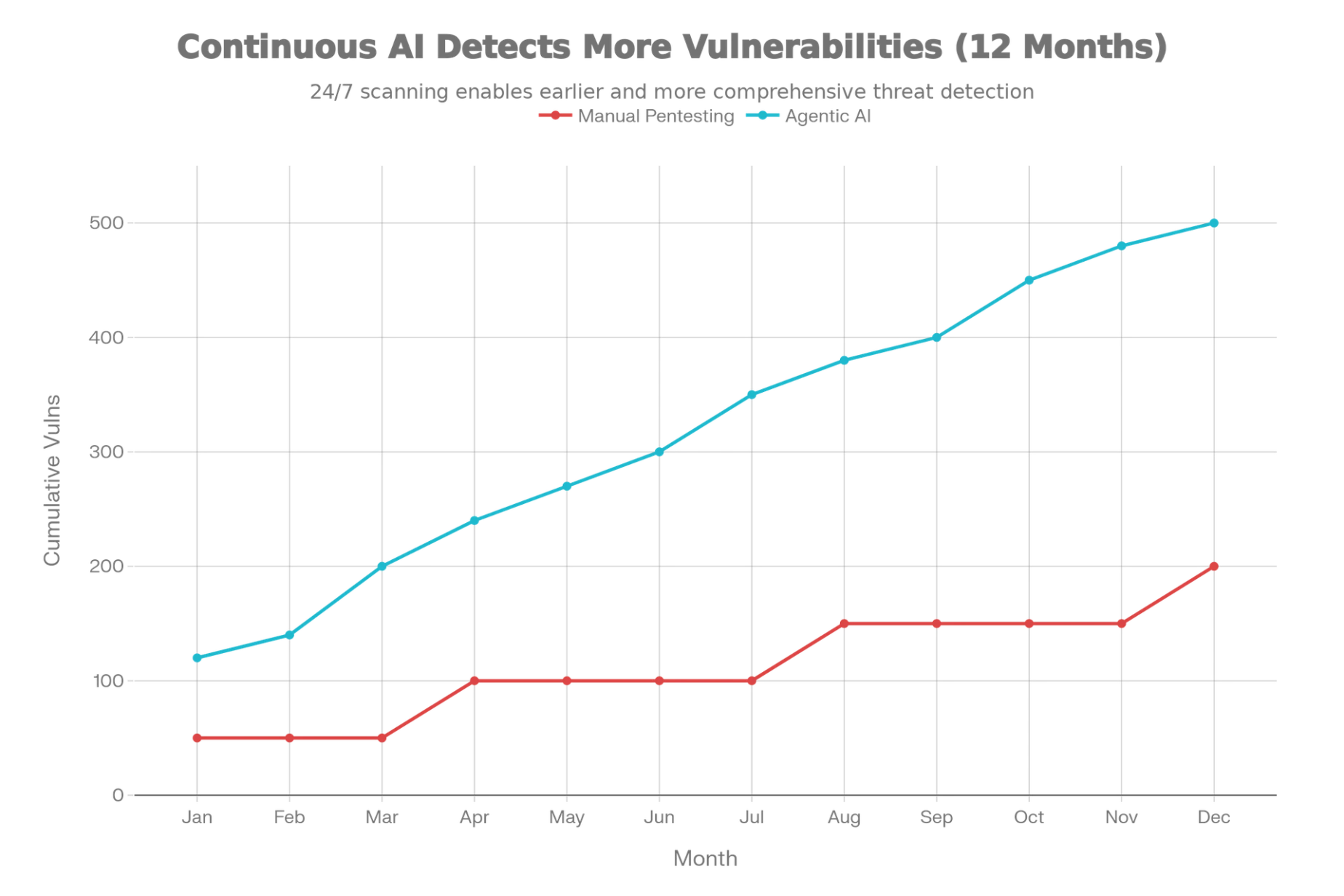
AI agents don’t:
Sleep
Take vacations
Get burned out
Miss alerts at 3 AM
They operate continuously, scanning production environments while your application evolves.
This alone eliminates the “snapshot” problem that makes manual reports obsolete days after delivery.
2. Simultaneous Multi-Vector Testing
A human tester explores one attack path at a time.
Agentic AI explores thousands in parallel:
Authentication bypass
Authorization flaws
Injection vectors
Business logic paths
Privilege escalation chains
What would take humans weeks or months, AI agents evaluate in hours.
3. Adaptive Learning From Every Test
Each interaction teaches the AI more about:
Application behavior
Error handling
Role boundaries
Data exposure patterns
This means:
Later tests become smarter
False positives drop over time
Exploits become more precise
Manual pentesting resets after every engagement.
Agentic AI compounds intelligence.
4. Business-Context-Aware Risk Prioritization
Not all vulnerabilities matter equally.
Agentic AI understands this.
Instead of blindly ranking by CVSS:
An IDOR in a low-risk endpoint is deprioritized
The same flaw in payment processing is elevated immediately
This drastically improves:
Developer trust
Fix prioritization
Security ROI
Security becomes impact-driven, not noise-driven.
5. Automated Exploit Chaining
This is where agentic AI becomes genuinely dangerous — in a good way.
AI can:
Combine weak findings
Build full attack paths
Demonstrate real-world compromise
Humans can do this too — but it takes time, creativity, and energy.
AI does it at scale, repeatedly, without fatigue.
What This Means for Bug Bounty Hunters
For ethical hackers, the message isn’t “you’re obsolete.”
It’s this:
Manual-only hacking is no longer competitive.
Top performers are already:
Using AI to accelerate recon
Automating repetitive testing
Saving human creativity for high-impact logic flaws
The future belongs to AI-augmented hackers, not AI-replaced ones.
Part 5: Tools Reshaping the Bug Bounty and Pentesting Industry in 2026
The rise of agentic AI isn’t theoretical—it’s already reshaping the tools security teams and bug bounty hunters rely on daily. A new generation of platforms has emerged, designed not just to scan, but to think, adapt, and exploit like real attackers.
Below are the categories and platforms driving this transformation.
Leading Agentic AI Pentesting Platforms (2026)
These tools represent a fundamental shift away from static scanners and point-in-time testing.
Aikido Security
Aikido consistently ranks at the top in head-to-head evaluations against both traditional pentesting firms and legacy scanners.
Why it stands out:
Simulates real attacker behavior across applications, APIs, cloud, and containers
Automatically chains vulnerabilities into full attack paths
Delivers deep, continuous coverage with consistent results
Aikido demonstrates what happens when AI is designed from the ground up for offensive security—not retrofitted.
Escape Tech
Escape focuses on the hardest class of vulnerabilities to detect: business logic flaws.
Key strengths:
AI-driven workflow analysis
Detection of logic issues manual pentesting often misses
Strong performance in complex, multi-step application flows
This makes it particularly valuable for fintech, SaaS, and e-commerce platforms.
Terra Security
Terra represents the rise of AI-powered Pentesting-as-a-Service (PTaaS).
What makes it different:
Autonomous AI agents for continuous testing
Human experts step in for validation and advanced exploitation
Hybrid delivery model gaining traction in large enterprises
This model aligns well with compliance-heavy industries.
ZeroThreat AI
ZeroThreat emphasizes scale and ease of integration.
Core capabilities:
40,000+ threat intelligence database
CI/CD pipeline integration
Continuous scanning without agent installation
Ideal for teams prioritizing minimal operational overhead.
Qualys
A well-established name evolving into the AI era.
Strengths:
Real-time asset discovery
Continuous vulnerability management
Integrated patching and response workflows
While not purely agentic, it shows how legacy platforms are adapting.
ioSENTRIX
ioSENTRIX explicitly embraces the hybrid philosophy.
Approach:
AI accelerates reconnaissance and validation
Certified humans handle exploitation and logic testing
AI speeds the process; humans provide final judgment
This balance reflects where the industry is heading.
What This Means for Bug Bounty Hunters
The tool landscape tells a clear story:
Manual-only workflows are no longer competitive
High-performing hackers now augment their skills with AI
Recon, enumeration, and validation are increasingly automated
Bug bounty success in 2026 depends less on raw hours and more on strategic intelligence amplification.
Part 6: The Uncomfortable Truth — Why the Hybrid Model Is Winning
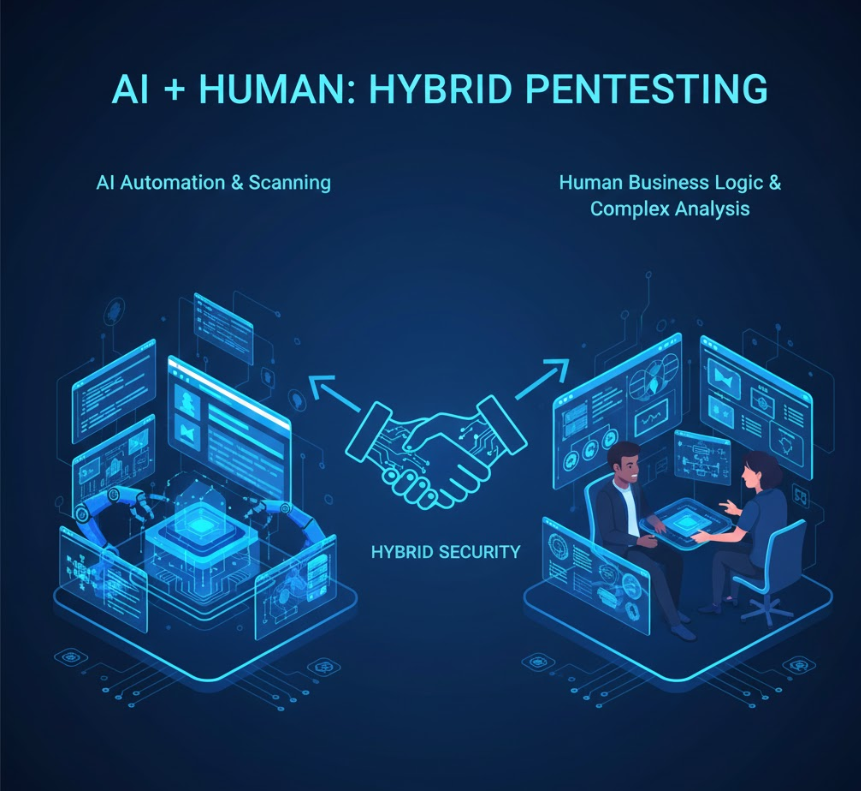
Despite the hype, agentic AI has not “replaced” human pentesters.
And it likely won’t—at least not entirely.
The real winners in 2026 are organizations that understand where AI excels and where humans remain irreplaceable.
What Agentic AI Still Cannot Do (Yet)
1. Deep Business Logic Reasoning
AI can detect anomalies, but understanding intent remains difficult.
Example:
An application uses timestamps instead of random values for CSRF tokens.
AI may flag it—but a human understands why that architectural decision is dangerous.
This kind of insight still requires human judgment.
2. Highly Creative, Multi-Stage Attack Chains
Some attacks demand intuition and lateral thinking.
Real-world insight:
Nearly 80% of human testers identified a critical RCE in a widely studied IoT platform that AI agents entirely missed.
Novel exploitation paths still favor human creativity.
3. Zero-Day Discovery
Agentic AI performs best against:
Known vulnerability classes
Recognizable patterns
Documented weaknesses
True zero-days often require:
Reverse engineering
Custom exploit development
Deep protocol understanding
Humans remain essential here.
4. Social Engineering and Human Manipulation
AI can assist, but it cannot fully replace:
Psychological manipulation
Cultural awareness
Real-time human interaction
Voice phishing, pretexting, and physical-world attacks still depend heavily on human intelligence.
Why the Hybrid Model Is Dominating
The most effective security programs no longer ask:
“Manual or AI?”
They ask:
“How do we combine them intelligently?”
The Winning Formula in 2026
| Capability | Best Owner |
|---|---|
| Continuous scanning | Agentic AI |
| Large-scale coverage | Agentic AI |
| Vulnerability validation | Agentic AI |
| Business logic flaws | Humans |
| Zero-day research | Humans |
| Social engineering | Humans |
AI provides breadth and speed.
Humans provide depth and meaning.
Together, they create a security posture that neither could achieve alone.
Compliance and Insurance Are Forcing the Shift
This hybrid approach isn’t optional anymore.
Cyber insurance underwriters now demand hybrid assessment reports
Automated scan results alone are no longer accepted
PCI DSS Requirement 11.3 explicitly requires manual validation
Organizations relying solely on automation increasingly fail audits—not because AI is bad, but because context matters.
The Real Death Isn’t Manual Pentesting — It’s Manual-Only Pentesting
Manual pentesting isn’t disappearing.
But manual-only pentesting is.
In 2026, security programs that ignore agentic AI aren’t being cautious—they’re being outpaced.
Part 7: What This Shift Means for Bug Bounty Hunters
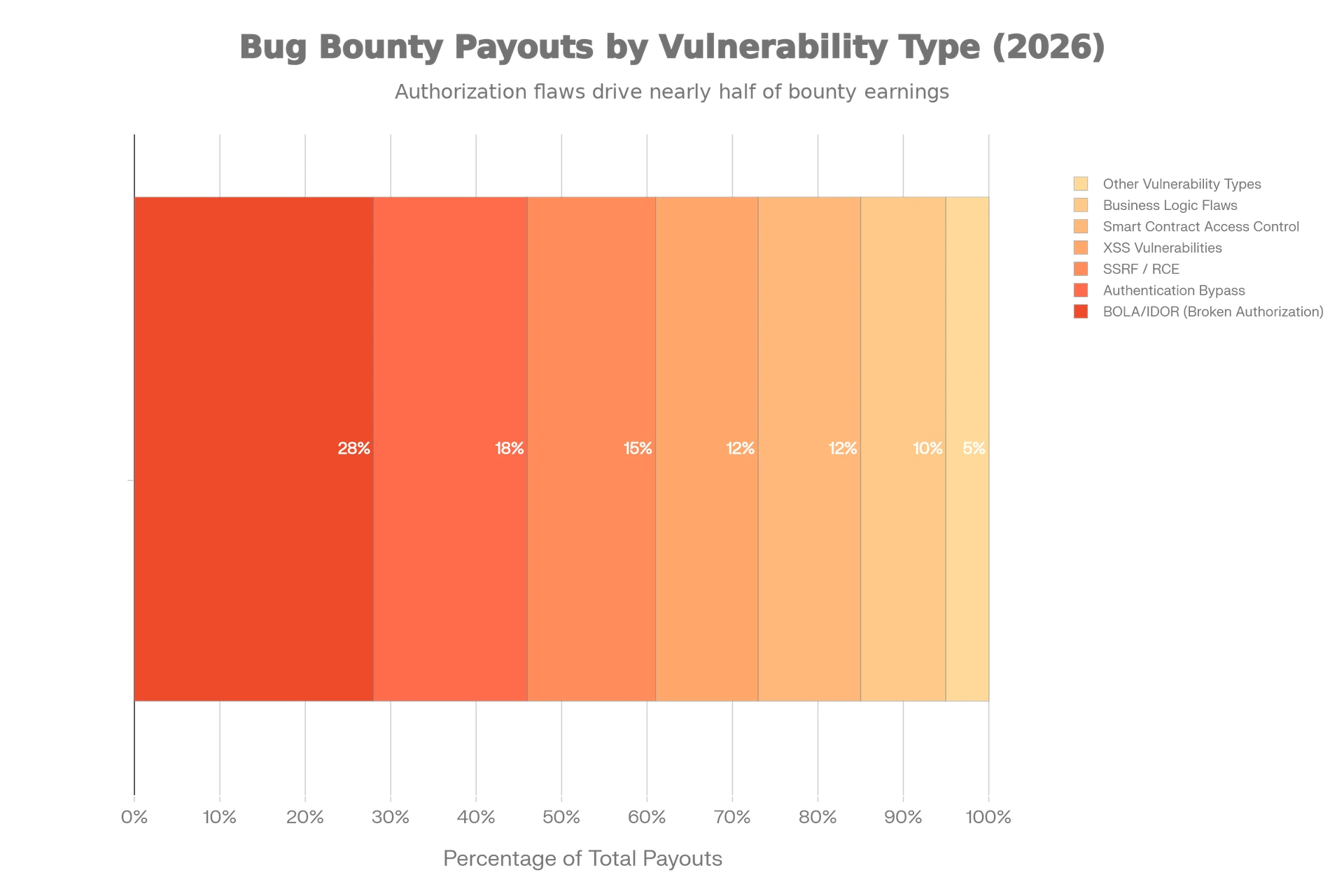
For individual hackers and bug bounty hunters, agentic AI isn’t a threat—it’s a force multiplier.
The biggest change in 2026 is not who finds bugs, but how fast and intelligently they do it.
The Old Bug Bounty Model
Manual recon
Repetitive endpoint testing
Time-consuming validation
Burnout from low-signal findings
The Modern Bug Bounty Model
AI-assisted reconnaissance
Automated pattern discovery
Faster validation loops
Humans focus on logic flaws and creative exploitation
Top-performing hunters are no longer the ones who work the longest hours—they’re the ones who use AI strategically.
Skills That Matter More Than Ever
Understanding business logic
Chaining vulnerabilities creatively
Knowing when not to trust automation
Interpreting AI output intelligently
The takeaway is clear:
AI won’t replace bug bounty hunters.
But bug bounty hunters who ignore AI will be replaced by those who don’t.
Part 8: How Organizations Must Adapt Their Security Strategy in 2026
Organizations that succeed in 2026 follow a very different security playbook than those stuck in the past.
The Losing Strategy
Annual manual pentests
Static PDF reports
Reactive patching
No continuous visibility
The Winning Strategy
Continuous agentic AI testing
Manual validation for high-impact findings
Risk prioritization based on business impact
Security integrated into CI/CD
Here’s what modern security maturity looks like:
| Security Capability | Modern Approach |
|---|---|
| Vulnerability discovery | Continuous AI-driven |
| Exploit validation | Agentic AI + humans |
| Business logic testing | Human-led |
| Compliance readiness | Hybrid reports |
| Time-to-remediation | Measured in days, not months |
Security is no longer an event—it’s a living system.
Organizations that adapt early gain:
Faster detection
Lower breach probability
Reduced insurance premiums
Stronger customer trust
Those that don’t adapt?
They accumulate invisible risk—until it explodes.
Part 9: The Future of Pentesting Is Continuous, Intelligent, and Hybrid
Let’s be precise about what’s actually “dying.”
It’s not human expertise.
It’s not ethical hacking.
It’s not deep technical skill.
What’s dying is the belief that manual-only, point-in-time pentesting is enough.
The New Reality
AI provides speed, scale, and persistence
Humans provide intuition, creativity, and context
Together, they form the only model that works at modern scale
This hybrid approach is already becoming the baseline expectation, not the exception.
Security leaders, insurers, regulators, and attackers have all moved on.
The only remaining question is whether you have.
Part 10: Final Thoughts — Adapt or Be Outpaced
The death of manual pentesting isn’t a headline designed to provoke fear.
It’s a warning grounded in data, economics, and reality.
In 2026:
Attackers use AI
Defenders must do the same
Speed matters more than perfection
Continuous testing beats annual confidence
Manual pentesting still matters—but only when paired with agentic AI.
Those who embrace this shift gain visibility, resilience, and control.
Those who resist it inherit blind spots.
And in cybersecurity, blind spots are where breaches begin.
Frequently Asked Questions (FAQ)
Is manual pentesting really dead in 2026?
No, manual pentesting is not dead, but manual-only pentesting is no longer sufficient. In 2026, the scale and speed of modern attack surfaces require continuous testing. Manual pentesting still plays a critical role in business logic flaws, zero-day research, and creative exploitation—but it must be combined with agentic AI to remain effective.
What is agentic AI in penetration testing?
Agentic AI refers to autonomous AI agents that can independently discover, test, validate, and chain vulnerabilities without human supervision. Unlike traditional scanners, agentic AI adapts its strategy, learns from responses, and behaves more like a real attacker—making it far more effective for modern pentesting and bug bounty workflows.
How is agentic AI different from automated vulnerability scanners?
Traditional scanners rely on static rules and signatures, often generating high false positives. Agentic AI uses reasoning, adaptive learning, and exploit validation to confirm real-world impact. This results in fewer false positives, deeper coverage, and actionable findings instead of noisy reports.
Can AI replace human pentesters completely?
No. AI cannot fully replace human pentesters—especially for:
Business logic vulnerabilities
Zero-day discovery
Complex exploit chains
Social engineering attacks
The most effective security programs in 2026 use a hybrid model, where AI handles scale and humans handle creativity and context.
Is agentic AI effective for bug bounty hunting?
Yes. Many top bug bounty hunters now use AI to:
Automate reconnaissance
Identify vulnerability patterns
Speed up validation
This allows humans to focus on high-impact findings. AI-assisted hunters consistently outperform manual-only hunters in both speed and earnings.
Does AI reduce false positives in pentesting?
Yes. Agentic AI validates exploitability before reporting vulnerabilities. Studies show 70–80% fewer false positives compared to traditional automated tools, making reports more trustworthy for developers and security teams.
Are organizations really adopting AI for pentesting?
Yes. Industry data shows:
97% of organizations are considering or using AI in pentesting
75% of pentesting teams already use AI tools
9 out of 10 believe AI will become the industry standard
Adoption is no longer optional—it’s competitive necessity.
Is agentic AI compliant with security standards like PCI DSS?
AI alone is not sufficient for compliance. Standards like PCI DSS Requirement 11.3 require manual validation. This is why hybrid pentesting—AI plus human expertise—is now the preferred and compliant approach.
Does agentic AI increase security costs?
In most cases, no. While initial adoption requires investment, agentic AI reduces long-term costs by:
Lowering breach risk
Reducing manual testing hours
Catching vulnerabilities earlier
Improving remediation speed
Many organizations report significant ROI within the first year.
Should beginners in cybersecurity learn AI-assisted pentesting?
Absolutely. Beginners who understand how to work with AI tools, not against them, gain a massive advantage. Learning AI-assisted recon, validation, and analysis is quickly becoming a core skill for modern pentesters and bug bounty hunters.
Where can I learn more about AI-powered pentesting and bug bounty skills?
You can learn through hands-on practice, community discussions, and curated resources.
Follow Bugitrix.com and join the Bugitrix Telegram community for free learning materials, tools, and real-world cybersecurity insights.
Learn Faster. Hack Smarter. Stay Ahead.
If you’re a:
Bug bounty hunter
Cybersecurity student
Pentester
Security engineer
Or just passionate about offensive security
👉 Join the Bugitrix Telegram channel for free resources, tools, and real-world insights
👉 Follow Bugitrix on social media to stay ahead of emerging attack and defense trends
The future of hacking isn’t manual or automated.
It’s intelligent.
—