
Introduction: The Rise of AI in Cybersecurity
In 2026, the digital battlefield has changed dramatically. Artificial Intelligence (AI) is no longer just a defensive tool used by cybersecurity professionals — it has become a weapon in the hands of malicious actors. AI‑powered attacks are reshaping the threat landscape, making cybercrime faster, smarter, and harder to detect.
For students preparing for a career in cybersecurity, this shift presents both a challenge and an opportunity. The demand for ethical hackers — professionals who use their skills to protect systems rather than exploit them — has never been higher. Ethical hacking is not just a career path; it is a mission to safeguard the digital world against evolving threats.
Global Cybersecurity Trends in 2026
To understand why ethical hacking is so critical today, let’s explore the global cybersecurity trends that define 2026.
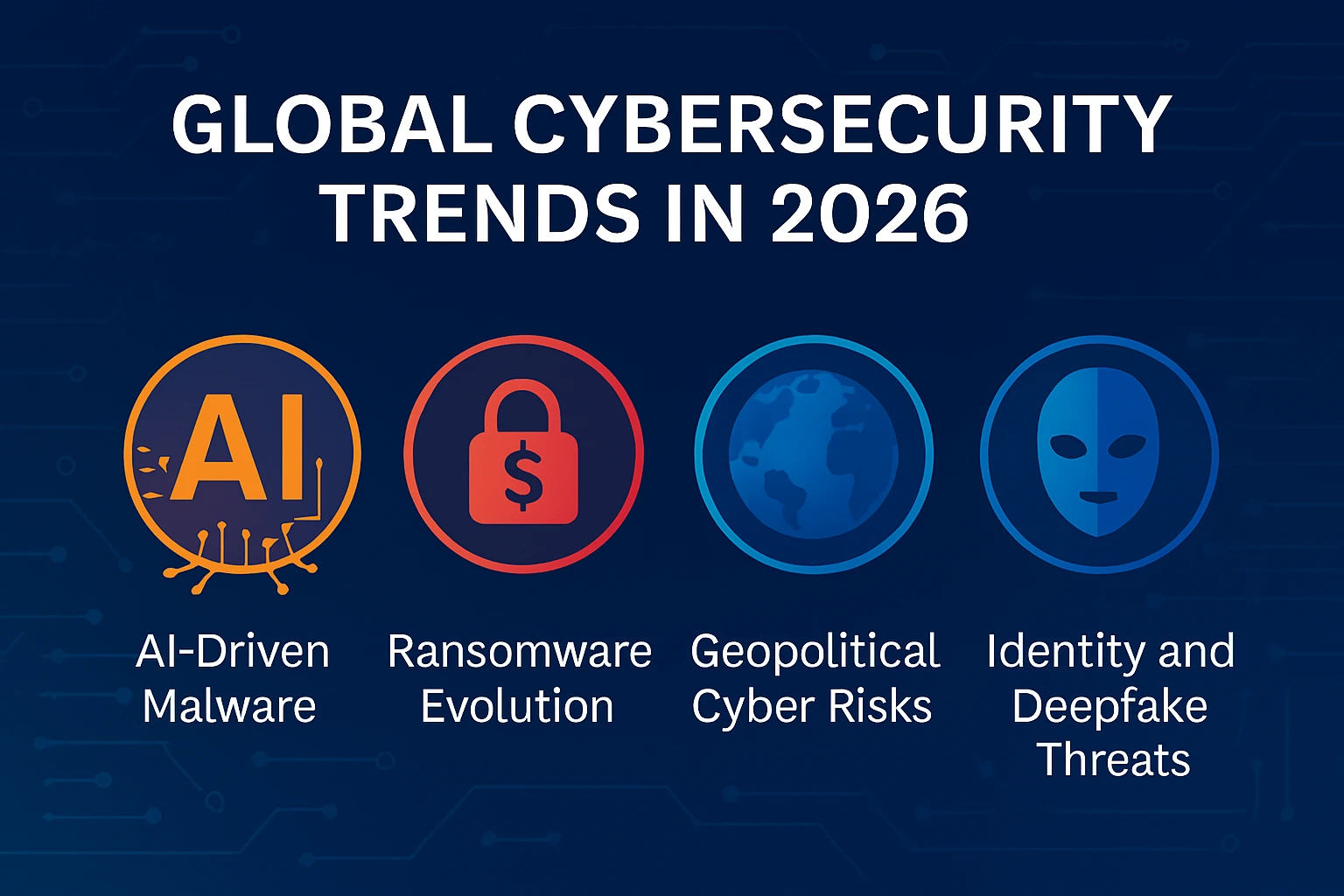
1. AI‑Driven Malware
Traditional malware relied on static code and predictable behavior. Modern AI‑driven malware, however, can learn and adapt in real time. It analyzes defenses, modifies its attack vectors, and even mimics legitimate traffic to avoid detection. This makes it nearly impossible for outdated security systems to keep up.
2. Ransomware Evolution
Ransomware remains one of the most profitable forms of cybercrime. In 2026, attackers are using AI to automate ransomware campaigns, targeting thousands of organizations simultaneously. The sophistication of these attacks has led to billions in damages worldwide, with healthcare, finance, and education sectors being prime targets.
3. Geopolitical Cyber Risks
Cybersecurity is no longer just a technical issue — it is a geopolitical weapon. Nations are investing heavily in offensive cyber capabilities, and AI is at the center of this arms race. Students entering the field must understand that ethical hacking is not only about protecting companies but also about contributing to national and global security.
4. Identity and Deepfake Threats
AI has also enabled the rise of deepfake technology, which can be used to impersonate executives, manipulate financial transactions, or spread misinformation. Ethical hackers play a vital role in developing tools to detect and counter these threats.
Ethical Hacking: A Career Path for the Future
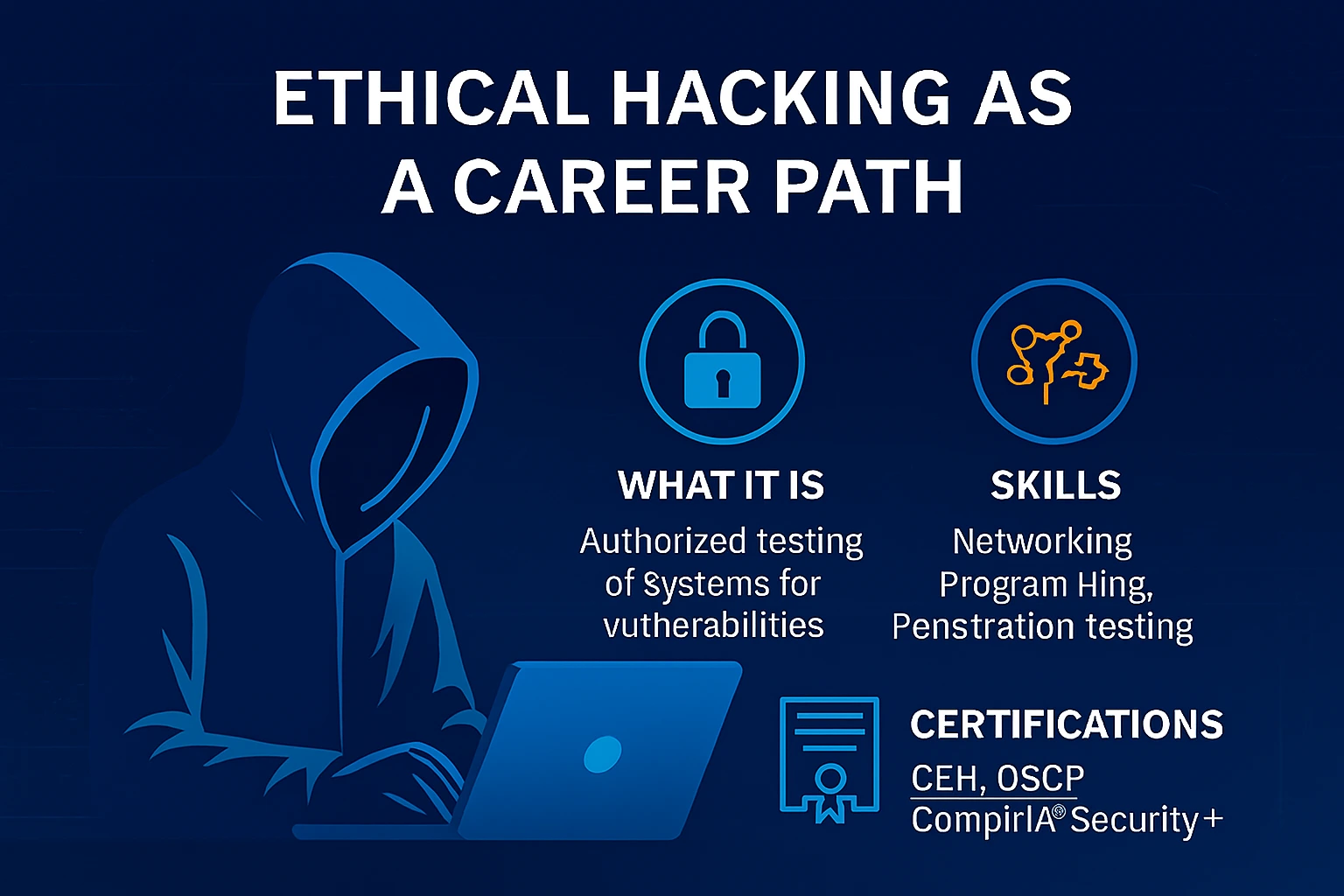
With cyber threats evolving at lightning speed, the role of ethical hackers has become indispensable. But what exactly does this career path look like?
What is Ethical Hacking?
Ethical hacking involves simulating cyberattacks to identify vulnerabilities before malicious hackers exploit them. Ethical hackers use the same tools and techniques as cybercriminals, but with permission and for the purpose of strengthening security.
Skills Required
Students aspiring to become ethical hackers should focus on building skills in:
Networking and Operating Systems (Linux, Windows, TCP/IP protocols)
Programming Languages (Python, C++, JavaScript)
Penetration Testing Tools (Metasploit, Burp Suite, Nmap)
Cloud Security (AWS, Azure, Google Cloud)
AI and Machine Learning (to understand and counter AI‑powered attacks)
Certifications
To stand out in the job market, certifications are essential. Some of the most recognized ones include:
Certified Ethical Hacker (CEH)
Offensive Security Certified Professional (OSCP)
CompTIA Security+
Certified Information Systems Security Professional (CISSP)
Opportunities for Students
The cybersecurity industry is booming, and ethical hackers are at the forefront of this growth.
Job Roles
Students can pursue diverse roles such as:
Penetration Tester: Simulating attacks to find vulnerabilities.
Security Analyst: Monitoring systems for suspicious activity.
Bug Bounty Hunter: Finding and reporting security flaws for rewards.
SOC Analyst: Working in Security Operations Centers to respond to incidents.
Salary Expectations
Ethical hackers are among the highest‑paid professionals in IT. In 2026, entry‑level salaries range from $60,000 to $80,000 annually, while experienced professionals can earn well over $150,000 depending on their expertise and certifications.
Career Growth
The career path is dynamic. Students can start as junior analysts, move into penetration testing, and eventually become Chief Information Security Officers (CISOs) or independent consultants. The rise of AI‑powered attacks ensures that ethical hackers will remain in demand for decades to come.
AI‑Powered Attacks: Case Studies, Examples, and Lessons for Future Ethical Hackers

Case Study 1: AI‑Driven Phishing Campaigns
Phishing has always been one of the most common cyber threats, but in 2026, AI has taken it to a whole new level. Instead of generic “You’ve won a prize” emails, attackers now use AI‑powered language models to craft personalized phishing messages.
How it works: AI scans social media profiles, professional networks, and public data to generate highly convincing emails tailored to the victim’s interests and habits.
Impact: A recent global survey revealed that over 70% of organizations experienced AI‑driven phishing attempts in 2025, with financial losses exceeding $10 billion.
Lesson for students: Ethical hackers must learn how to detect subtle signs of phishing, such as unusual metadata, suspicious links, or inconsistencies in sender information.
Case Study 2: AI‑Powered Ransomware in Healthcare
Healthcare systems are prime targets because they cannot afford downtime. In 2025, a major hospital network in Europe was hit by AI‑powered ransomware.
Attack vector: The ransomware used machine learning to identify critical systems and encrypt them selectively, ensuring maximum disruption.
Outcome: Patient records were locked, surgeries delayed, and millions demanded in ransom.
Lesson for students: Ethical hackers must focus on penetration testing in healthcare IT systems, ensuring backups, segmentation, and AI‑based detection tools are in place.
Case Study 3: Deepfake CEO Fraud
In 2026, deepfake technology has become a serious cybersecurity threat. Attackers use AI to generate realistic audio and video of CEOs or executives, instructing employees to transfer funds or share sensitive data.
Example: A multinational company lost $25 million when employees followed instructions from what they thought was their CEO’s video call.
Lesson for students: Ethical hackers must develop tools to detect deepfakes and educate organizations about verification protocols before executing high‑value transactions.
How Ethical Hackers Counter AI‑Powered Attacks
Ethical hackers are the frontline defenders against AI‑powered cybercrime. Here are some strategies they use:
AI vs. AI Defense
Just as attackers use AI, defenders deploy AI‑based intrusion detection systems. Ethical hackers test these systems to ensure they can recognize evolving threats.
Red Teaming with AI
Ethical hackers simulate AI‑powered attacks to expose weaknesses in corporate defenses. This helps organizations prepare for real‑world scenarios.
Threat Intelligence Sharing
Communities like Bugitrix.com play a crucial role in sharing intelligence about new AI‑driven threats, helping students and professionals stay ahead.
Continuous Learning
Since AI evolves rapidly, ethical hackers must constantly update their skills. Joining forums like Bugitrix Forum ensures access to the latest techniques and discussions.
FAQs: Students’ Most Common Questions About Ethical Hacking
1. Is Ethical Hacking Legal?
Yes, ethical hacking is legal when performed with permission. Organizations hire ethical hackers to test their systems, and bug bounty programs reward hackers who responsibly disclose vulnerabilities.
2. Which Certification Should I Start With?
For beginners, CompTIA Security+ is a great entry point. Once you gain experience, certifications like CEH (Certified Ethical Hacker) and OSCP (Offensive Security Certified Professional) will boost your career prospects.
3. How Do I Practice Hacking Safely?
Students should use virtual labs and platforms like HackTheBox or TryHackMe. Communities such as Bugitrix.com also provide safe environments to learn and collaborate.
4. Can AI Replace Ethical Hackers?
AI can automate certain tasks, but it cannot replace human creativity, intuition, and ethical judgment. Ethical hackers will remain essential for designing strategies, interpreting results, and ensuring security policies align with human values.
5. What Are the Career Prospects in 2026?
The global cybersecurity workforce gap is estimated at 3.5 million professionals. Ethical hackers are among the most sought‑after experts, with opportunities in government, private companies, and freelance bug bounty hunting.
AI‑Powered Attacks: The Future of Cybersecurity and Ethical Hacking Careers
The Future of AI in Cybersecurity
Looking ahead, AI will continue to transform both sides of the cybersecurity battlefield. For students preparing to enter this field, understanding these future trends is essential.
1. Autonomous Cyber Weapons
AI is evolving into autonomous cyber weapons capable of launching attacks without human intervention. These systems can scan networks, exploit vulnerabilities, and adapt strategies in real time. Ethical hackers must learn how to anticipate and counter such autonomous threats.
2. Quantum Computing Risks
Quantum computing is expected to break traditional encryption methods. While this technology promises breakthroughs in science, it also poses a massive risk to cybersecurity. Ethical hackers will need to explore post‑quantum cryptography to ensure data remains secure in the quantum era.
3. AI‑Enhanced Defense Systems
On the defensive side, AI will power self‑healing networks that automatically detect and patch vulnerabilities. Ethical hackers will play a critical role in testing these systems, ensuring they are resilient against sophisticated attacks.
4. Cybersecurity and Global Policy
Governments worldwide are drafting new policies to regulate AI in cybersecurity. Ethical hackers will increasingly collaborate with policymakers, contributing technical expertise to shape laws that balance innovation with security.
Advanced Tools for Ethical Hackers
Students entering the field must familiarize themselves with advanced tools that are shaping cybersecurity in 2026.
- AI‑Driven Penetration Testing Tools: Platforms that simulate AI‑powered attacks to test defenses.
- Threat Intelligence Platforms: Tools like MISP (Malware Information Sharing Platform) that collect and share data on emerging threats.
- Cloud Security Tools: As businesses migrate to the cloud, tools like Prisma Cloud and AWS Inspector are essential.
- Deepfake Detection Software: AI‑powered tools that analyze video and audio for signs of manipulation.
- Bug Bounty Platforms: Websites like HackerOne and Bugcrowd, where ethical hackers can practice and earn rewards.
By mastering these tools, students can position themselves as valuable assets in the cybersecurity workforce.
Predictions for Ethical Hacking Careers
The next decade will be a golden era for ethical hackers. Here’s what students can expect:
Explosive Job Growth
- The global demand for cybersecurity professionals is projected to grow by 30% annually. Ethical hackers will be among the most sought‑after experts.
Specialization in AI Security
- New job roles will emerge, such as AI Security Analyst or Autonomous Systems Penetration Tester, focusing specifically on AI‑powered threats.
Global Collaboration
- Ethical hackers will work across borders, collaborating with international teams to combat global cybercrime. Communities like Bugitrix.com will be central to this collaboration.
Freelance Opportunities
- With the rise of bug bounty programs, students can start earning while learning. Freelance ethical hacking will become a viable career path.
Why Ethical Hacking is More Than a Career
Ethical hacking is not just about earning a salary — it’s about protecting the digital world. Every student who chooses this path becomes part of a global mission to safeguard privacy, data, and trust in technology.
- Impact: Ethical hackers prevent billions in damages annually.
- Responsibility: They ensure that AI is used for good, not exploitation.
- Legacy: By joining this field, students contribute to shaping the future of cybersecurity.
Join the Bugitrix Community
For students preparing for cybersecurity careers, the journey can feel overwhelming. That’s why joining a supportive community is essential.
- Website: Bugitrix.com — your hub for resources, guides, and updates.
- Telegram: t.me/bugitrix — connect instantly with peers and mentors.
- Community Forum: Bugitrix Forum — ask questions, share experiences, and collaborate on projects.
By joining Bugitrix, you gain access to:
- Real‑world insights from professionals.
- Study materials for certifications.
- Networking opportunities with global students and experts.
- A safe space to practice and grow as an ethical hacker.
Final Thoughts
AI‑powered attacks are redefining cybersecurity, but they also highlight the importance of ethical hackers. For students, this is the perfect time to enter the field. The demand is high, the challenges are exciting, and the opportunities are global.
Ethical hacking is not just a career path — it is a mission. By mastering skills, staying updated, and joining communities like Bugitrix.com, students can become the defenders of tomorrow’s digital world.