
Every time a power grid goes dark, a bank loses millions, or a government's emails land on WikiLeaks — there's a good chance a nation-state hacker was behind it. Cyber warfare is no longer a "future threat." It's happening right now, in real time, and four countries are leading the charge: Russia, China, Iran, and North Korea — collectively known in cybersecurity circles as CRINK.
In 2026, the stakes have never been higher. The U.S. Office of the Director of National Intelligence's Annual Threat Assessment (ATA) for 2026 made it crystal clear: China, Russia, Iran, North Korea, and aggressive ransomware groups are steadily positioning themselves inside the networks that run critical infrastructure — and for these adversaries, long-term access into industrial and infrastructure environments is now a strategic objective, not just a byproduct of opportunistic compromise. CYBR.SEC.Media
This blog breaks down each country's cyber capabilities, their most dangerous hacker groups, recent high-profile attacks, and what their end goals really are. By the end, you'll understand exactly who's winning — and why that matters to every person connected to the internet.
🌍 Why Nation-State Cyber Attacks Matter to YOU
Before we dive in, let's address the obvious question: Why should I, a regular person or cybersecurity professional, care about geopolitical hacking?
Simple answer — because the targets aren't just governments. They're hospitals, banks, telecom companies, energy grids, universities, and yes, even individual people. Since 2005, 34 countries have been suspected of sponsoring cyber operations. China, Russia, Iran, and North Korea alone sponsored 77% of all suspected operations. Council on Foreign Relations
That's an overwhelming majority. And the attacks keep getting bolder, faster, and more destructive — especially now that AI is being added to the mix.
🇷🇺 Russia — The Master of Disruption and Espionage
The Strategy: Destroy First, Spy Second
Russia's cyber operations are uniquely tied to its kinetic (real-world) military operations. Where most nations spy quietly, Russia is willing to burn things down. Their hackers don't just steal data — they destroy infrastructure, spread disinformation, and destabilize entire nations.
The Russian government engages in malicious cyber activities to enable broad-scope cyber espionage, suppress certain social and political activity, steal intellectual property, and harm regional and international adversaries. CISA
Key Russian APT Groups
| APT Group | Also Known As | Primary Targets | Known For |
|---|---|---|---|
| APT28 | Fancy Bear / Sofacy | NATO, Governments, Military | Election interference, credential theft |
| APT29 | Cozy Bear / Midnight Blizzard | Intelligence agencies, Think Tanks | SolarWinds attack |
| Sandworm | Voodoo Bear | Critical Infrastructure, Ukraine | Power grid attacks, NotPetya |
| Turla / Snake | Venomous Bear | Embassies, Government agencies | Long-term espionage, custom malware |
| Gamaredon | Primitive Bear | Ukraine | Rapid deployment, phishing |
Recent Notable Russian Attacks
Ukraine as the Permanent Warzone Russia has been using Ukraine as a real-time cyberwar testing ground for years. 75% of Russian nation-state attacks in the period July 2023 to June 2024 targeted Ukraine or a NATO member state. Infosecurity Europe Energy grids, water systems, military communications — everything is a target.
NATO Members on High Alert In September 2024, the US, UK and seven other governments accused the Russian military of launching sabotage cyber-attacks on critical infrastructure in NATO member countries. Infosecurity Europe
APT28 Still Active in 2026 Security research identified activity consistent with the Russian threat group APT28 targeting government and military entities using a Microsoft Office vulnerability (CVE-2026-21509). The campaign involved a multi-stage attack chain designed to remain stealthy during post-exploitation phases. The Cyber Express
Spy Games at Embassies In early 2024, Russian hackers launched espionage campaigns against the embassies of Georgia, Poland, Ukraine, and Iran, exploiting a bug in a webmail server to inject malware into servers at the embassies and collect information on European and Iranian political and military activities. Center for Strategic and International Studies
Russia's Primary Objectives
- Weaken NATO unity and Western alliances
- Disrupt Ukraine's military and civilian infrastructure
- Steal defence and government intelligence
- Run disinformation campaigns to influence elections
- Pre-position in critical infrastructure for wartime use
Threat Level: ⚠️⚠️⚠️⚠️⚠️ CRITICAL (especially for Europe and NATO members)
🇨🇳 China — The Silent Thief Playing the Long Game
The Strategy: Steal Today, Dominate Tomorrow
China's cyber operations are perhaps the most strategically sophisticated of all. While Russia makes noise, China moves quietly. Their goal isn't chaos — it's dominance. They want to steal intellectual property, embed themselves inside critical infrastructure, and position themselves to control entire industries over the next decade.
Organizations targeted by Chinese nation-state activity include those within critical national infrastructure such as energy and utilities, either directly or indirectly via the supply chain. This serves the national objectives set by the Chinese Communist Party to develop and assert domestic economic and technological dominance. IT Pro
Key Chinese APT Groups
| APT Group | Also Known As | Primary Targets | Known For |
|---|---|---|---|
| APT41 | Double Dragon / Winnti | Healthcare, Tech, Telecoms | Dual espionage + cybercrime |
| APT10 | Stone Panda | MSPs, Cloud providers | Supply chain attacks |
| Salt Typhoon | — | Telecom companies | Wiretapping, surveillance |
| Volt Typhoon | — | US Critical Infrastructure | Pre-positioning for wartime |
| Hafnium | — | Microsoft Exchange users | Zero-day exploits |
Recent Notable Chinese Attacks
Salt Typhoon — The Telecom Hack That Shocked the World This was one of the most significant espionage operations in recent memory. Chinese hackers dubbed Salt Typhoon breached at least eight U.S. telecommunications providers, as well as telecom providers in more than twenty other countries, as part of a wide-ranging espionage and intelligence collection campaign. Attackers stole customer call data and law enforcement surveillance request data, and compromised private communications of individuals involved in government or political activity. Center for Strategic and International Studies Researchers believed the attack began up to two years before discovery.
The Typhoon Campaign Continues in 2026 China is continuing its successful "Typhoon" campaigns seeking to embarrass Western governments and take as much intellectual property as possible. IT Pro The codename "Typhoon" now covers multiple Chinese APT sub-groups, each targeting a specific sector.
Targeting Czech Republic and NATO Partners The Czech Republic attributed a cyberattack targeting its Foreign Ministry to China in May 2025, demonstrating China's increasing willingness to directly target European diplomatic institutions. Center for Strategic and International Studies
AI-Powered Disinformation Chinese Communist Party-affiliated actors have been observed publishing AI-generated content on social media to amplify controversial domestic issues in various countries including the US, including the use of AI-generated images and videos of AI-generated people. Infosecurity Europe This is information warfare at scale.
China's Primary Objectives
- Steal intellectual property from tech, defence, pharma, and energy sectors
- Pre-position inside critical infrastructure (power, water, telecoms) ahead of potential Taiwan conflict
- Surveil dissidents and foreign government officials
- Undermine US-led alliances in the Indo-Pacific
- Advance the CCP's "Made in China 2025" and "China 2035" economic dominance plans
Threat Level: ⚠️⚠️⚠️⚠️⚠️ CRITICAL (especially for US, Taiwan, and Indo-Pacific nations)
🇮🇷 Iran — The Opportunistic Attacker Getting Bolder
The Strategy: Retaliation, Surveillance, and Regional Influence
Iran's cyber operations have always been about two things: suppressing internal dissent and punishing external enemies. But in 2026, with rising tensions involving the US and Israel, Iran's cyber capabilities have been weaponized at a scale never seen before.
The Iranian government has exercised its increasingly sophisticated cyber capabilities to suppress certain social and political activity and to harm regional and international adversaries. CISA
Key Iranian APT Groups
| APT Group | Also Known As | Primary Targets | Known For |
|---|---|---|---|
| APT33 | Elfin / Refined Kitten | Energy, Aviation | Destructive wiper malware |
| APT34 | OilRig / Helix Kitten | Middle East Governments | Phishing, government espionage |
| APT35 | Charming Kitten | Journalists, Academics | Credential harvesting |
| MuddyWater | Static Kitten | Telecom, Defence | Living-off-the-land attacks |
| Mint Sandstorm | Phosphorus | US Think Tanks, Media | Targeting political campaigns |
Recent Notable Iranian Attacks
Operation Israel Retaliation — 2026 After the February 2026 US-Israel strikes against Iranian targets, security researchers reported a surge of retaliatory cyber operations and hacktivist campaigns targeting organizations in Israel, the United States, and allied countries. Analysts tracked dozens of incidents ranging from DDoS attacks and website defacements to alleged data breaches claimed by pro-Iranian and pro-Palestinian hacker groups. The Cyber Express
Eight Years Inside Kurdish Government Networks An Iranian-linked espionage group maintained persistent access to Kurdish and Iraqi government networks for eight years, using custom implants and backdoors to spy on officials and sustain strategic footholds in both regions. Center for Strategic and International Studies Eight years. That's the level of patience and stealth these actors operate with.
Nuclear Facility Espionage Iranian hackers compromised an IT network connected to an Israeli nuclear facility in March 2024, leaking sensitive facility documents — though they did not compromise the operational technology network. Center for Strategic and International Studies
AI-Enhanced Social Engineering Iran has been accused of attempts to disrupt critical services in countries like the US and Israel following the outbreak of war between Israel and Hamas in October 2023. Infosecurity Europe And now, with AI tools, their phishing campaigns have become far more convincing.
Iran's Primary Objectives
- Monitor and silence domestic opposition and dissidents abroad
- Retaliate against Israel and US interests during conflict escalation
- Destabilize regional rivals like Saudi Arabia and the UAE
- Support proxy groups (Hamas, Hezbollah, Houthis) with intelligence and cyber capabilities
- Demonstrate cyber power to deter military action
Threat Level: ⚠️⚠️⚠️⚠️ HIGH (especially in the Middle East, and for anyone tied to US/Israel interests)
🇰🇵 North Korea — The Most Financially Dangerous Hacker State on Earth
The Strategy: Steal Crypto, Fund Nukes
North Korea plays by different rules entirely. Unlike Russia (disruptive), China (strategic), or Iran (political), North Korea's cyber program is primarily a revenue-generation machine. The Kim Jong-un regime is under severe international sanctions, and hacking crypto exchanges has become one of its primary income streams — funding missile and nuclear programs in the process.
The North Korean government employs malicious cyber activity to collect intelligence, conduct attacks, and generate revenue. CISA
Key North Korean APT Groups
| APT Group | Also Known As | Primary Targets | Known For |
|---|---|---|---|
| Lazarus Group | HIDDEN COBRA / APT38 | Crypto Exchanges, Banks | Largest crypto thefts in history |
| Kimsuky | Velvet Chollima | Think Tanks, Governments | South Korea espionage |
| Andariel | Silent Chollima | Defence, Healthcare | Ransomware deployment |
| BlueNoroff | — | Financial Institutions | SWIFT banking attacks |
| TraderTraitor | — | Crypto companies | Fake job offers, social engineering |
The Numbers That Will Shock You
In 2025, North Korean state-sponsored hackers executed the most devastating year of cryptocurrency theft ever recorded. Threat actors linked to Pyongyang stole at least $2.02 billion in digital assets — a 51% increase from the $1.3 billion pilfered in 2024. The regime's cumulative crypto theft since 2017 now exceeds $6.75 billion. Crypto Impact Hub
To put that in perspective: that's more money than the GDP of several small nations, funnelled into one of the world's most isolated and dangerous regimes.
The Bybit Heist — The Biggest Crypto Theft in History
This deserves its own section because it was unprecedented.
In February 2025, the cryptocurrency exchange Bybit was hacked in what became the biggest crypto exchange theft to date. Around 400,000 Ethereum was stolen, worth about $1.5 billion at the time. The attackers gained access to Bybit's cold wallet system by exploiting a vulnerability in a third-party wallet tool called Safe{Wallet}. They tricked wallet signers into approving a fake transaction that gave them control over the funds. Wikipedia
The hack didn't start with brute-force hacking. The attack chain began not with code exploitation, but with human manipulation. Attackers first identified a developer with elevated system access. Through what appears to have been a targeted phishing campaign — likely involving fake job offers or investment opportunities — they convinced the developer to download malicious software. Once installed, the malware gave North Korea complete control over the admin's MacOS machine. Blockeden
Rather than immediately stealing funds, the attackers spent weeks studying Bybit's transaction patterns, hijacking AWS session tokens and bypassing multi-factor authentication entirely. Blockeden
This is the level of patience, precision, and technical sophistication we're dealing with.
North Korea's Full 2025 Crypto Damage Sheet
| Target | Date | Amount Stolen |
|---|---|---|
| Bybit Exchange | February 2025 | $1.5 Billion |
| WOO X | July 2025 | $14 Million |
| BitoPro (Taiwan) | May 2025 | $11.5 Million |
| Upbit Exchange | November 2025 | $36 Million |
| Seedify | 2025 | $1.2 Million |
| Total 2025 | — | $2.02 Billion+ |
This isn't merely criminal activity — it's an economic lifeline for a nuclear-armed pariah state. United Nations monitors estimate crypto theft now constitutes approximately 13% of North Korea's GDP. Crypto Impact Hub
North Korea's Primary Objectives
- Generate hard currency to fund nuclear and missile programmes under sanctions
- Conduct espionage against South Korea, Japan, and the US
- Infiltrate IT supply chains by placing DPRK workers inside Western tech companies
- Disrupt enemies when politically motivated
Threat Level: ⚠️⚠️⚠️⚠️⚠️ CRITICAL (especially for anyone in finance, crypto, or defence)
📊 Head-to-Head Comparison: Who's Winning the Cyberwar?
| Capability | Russia 🇷🇺 | China 🇨🇳 | Iran 🇮🇷 | North Korea 🇰🇵 |
|---|---|---|---|---|
| Sophistication | ⭐⭐⭐⭐⭐ | ⭐⭐⭐⭐⭐ | ⭐⭐⭐⭐ | ⭐⭐⭐⭐⭐ |
| Scale of Operations | ⭐⭐⭐⭐⭐ | ⭐⭐⭐⭐⭐ | ⭐⭐⭐ | ⭐⭐⭐⭐ |
| Financial Damage | ⭐⭐⭐ | ⭐⭐⭐⭐ | ⭐⭐⭐ | ⭐⭐⭐⭐⭐ |
| Destructive Intent | ⭐⭐⭐⭐⭐ | ⭐⭐⭐ | ⭐⭐⭐⭐ | ⭐⭐⭐ |
| Espionage Capability | ⭐⭐⭐⭐⭐ | ⭐⭐⭐⭐⭐ | ⭐⭐⭐⭐ | ⭐⭐⭐⭐ |
| AI Integration | ⭐⭐⭐⭐ | ⭐⭐⭐⭐⭐ | ⭐⭐⭐ | ⭐⭐⭐⭐ |
| Global Reach | ⭐⭐⭐⭐⭐ | ⭐⭐⭐⭐⭐ | ⭐⭐⭐ | ⭐⭐⭐⭐ |
| Primary Weapon | Disruption | Espionage | Retaliation | Theft |
So who's "winning"?
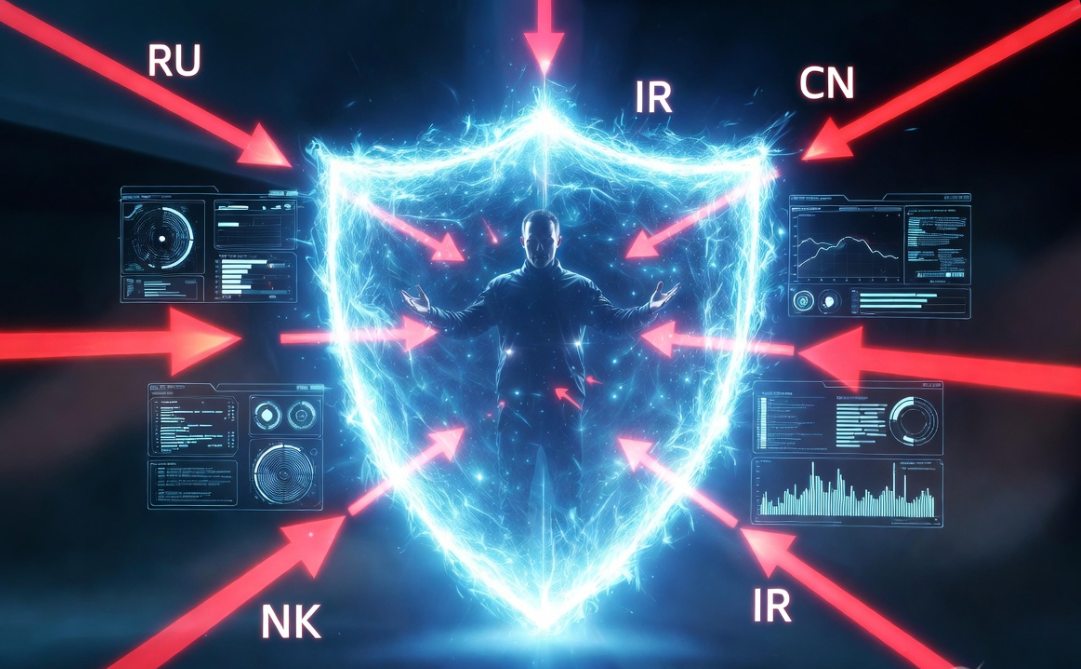
Honestly, there's no single winner — but here's the honest breakdown:
- China is winning the long-term strategic war. Their patient, methodical approach to intellectual property theft and infrastructure infiltration is setting them up for economic and military dominance for decades.
- Russia is winning the active conflict war. Their willingness to use cyber weapons as real war tools, especially in Ukraine, makes them the most immediately dangerous actor in active geopolitical conflicts.
- North Korea is winning the financial war. No other nation has turned hacking into such a profitable and regime-sustaining operation. $6.75 billion in cumulative crypto theft since 2017 is extraordinary.
- Iran is winning the proxy and retaliation war. Their ability to rapidly deploy cyber capabilities in response to geopolitical events — especially US/Israel military actions — makes them highly unpredictable and dangerous.
🤖 The 2026 Game-Changer: AI Is Making Everyone More Dangerous
Every one of these four nations is now incorporating AI into their cyber operations. Threat actors from Russia, China, North Korea and Iran are leveraging AI and other advanced technologies to support their operations. Researchers from Microsoft and OpenAI have observed nation-state actors probing AI's current capabilities and security controls, using them for assistance in areas such as running basic coding tasks and translations for social engineering campaigns. Infosecurity Europe
What does this mean in practice?
- Faster phishing — AI generates perfectly worded, personalised spear-phishing emails in seconds
- Better malware — AI helps write and obfuscate malicious code faster than ever
- Deeper disinformation — AI-generated deepfakes and synthetic media are now standard influence operation tools
- Automated reconnaissance — AI scans millions of potential targets and finds weak points faster than any human team could
The cyberwar is no longer just about who has the best hackers. It's about who can scale the fastest.
🛡️ How to Defend Against Nation-State Level Threats
You might not be a NATO minister or a cryptocurrency exchange CEO — but nation-state attackers don't always aim only at governments. Supply chains, contractors, universities, and individuals are all fair game.
Here's what every organisation and serious security professional should be doing:
1. Threat Intelligence is Non-Negotiable Know who your adversaries are. Understand which APT groups target your sector. If you're in energy, financial services, defence contracting, or telecom — you are a target.
2. Zero Trust Architecture Never trust, always verify. Every access request should be authenticated, every user should have minimum necessary privileges, and no device should be implicitly trusted just because it's on the internal network.
3. Patch Immediately — No Exceptions Even after patches become available, flaws frequently remain exploitable due to slow enterprise patch adoption, making them attractive tools in state-sponsored cyber threats. The Cyber Express Zero-day vulnerabilities are scary, but most successful attacks exploit old, unpatched vulnerabilities.
4. Social Engineering Awareness Training The Bybit hack started with a developer downloading something they shouldn't have. The SolarWinds hack was a supply chain compromise that went undetected for months. The human is always the weakest link.
5. Monitor for Pre-Positioning These operations are deliberate and sustained, aimed at embedding access within key systems to enable disruption during periods of conflict or crisis. Industrial Cyber Nation-state actors play the long game. They're inside your network months before they act. Anomaly detection and behavioural monitoring can catch this.
6. Secure Your Crypto Assets (Especially if You're in Finance) The Bybit attack exploited a third-party supply chain. If you're in fintech or crypto, audit every single third-party integration you use. Assume nothing is safe by default.
🧠 What's Next for Nation-State Cyber Operations?
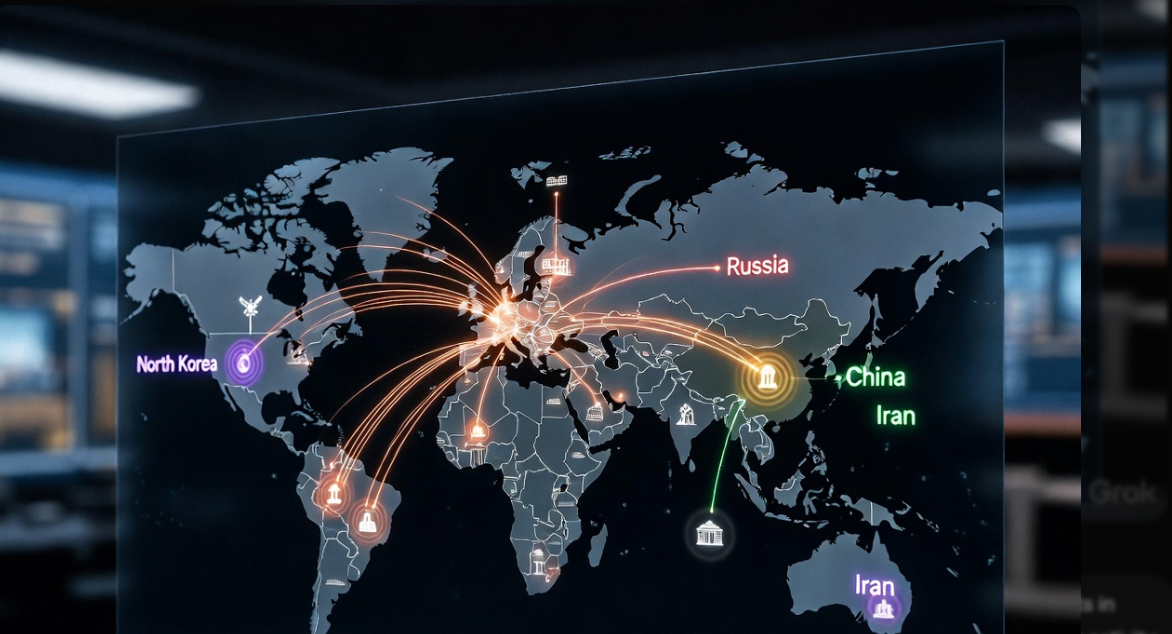
Looking at the trends heading deeper into 2026:
- Infrastructure attacks will escalate as geopolitical tensions (Taiwan Strait, Middle East) remain high
- AI-powered cyber operations will make attacks faster, cheaper, and harder to attribute
- Supply chain targeting will grow — compromising one trusted vendor gives access to hundreds of downstream targets
- Crypto will remain North Korea's ATM — expect more sophisticated exchange attacks and CBDC probes
- Hacktivist proxies will be used increasingly by all four nations to enable plausible deniability
- Telecom networks will remain primary espionage infrastructure, as Salt Typhoon proved
Adversaries will increasingly use technology such as AI to supercharge attacks, helping to increase speed, scale and believability, as well as supporting traditional operations. IT Pro
🎯 Final Verdict: No One is "Winning" — And That's the Problem
The uncomfortable truth is that nation-state cyber warfare doesn't have a finish line. There's no victory condition, no peace treaty, no ceasefire. It runs 24/7, 365 days a year, invisibly and relentlessly.
Every country listed here has different goals, different tactics, and different definitions of success. What they share is a willingness to use cyberspace as a weapon — against governments, against corporations, and against you.
The best defence isn't just technology. It's knowledge. Understanding who is attacking, why they're attacking, and how they operate is the first step toward meaningful security.
You're reading this blog — which means you're already ahead of most people.
🚀 Want to Go Deeper? Here's Your Next Step
🔍 Download our free infographic: "Nation-State Threat Actor Map 2026" — a visual breakdown of every major APT group, their targets, tools, and affiliations. Perfect for security teams, students, and anyone serious about understanding modern cyber threats.
🌐 Stay Informed. Stay Ahead.
The cyber landscape changes every single day. Here's how to stay on top of it:
👉 Visit bugitrix.com — For in-depth blogs, tutorials, tools, and everything cybersecurity. This is your hub for staying ahead of the threat landscape.
📱 Join our Telegram Channel — t.me/bugitrix — Get daily cybersecurity news, tips, tricks, and breaking threat intelligence delivered directly to your phone. We cut through the noise so you get only what matters.
💬 Join the Bugitrix Community — bugitrix.com/forum/help-1 — Connect with thousands of ethical hackers, security researchers, and cybersecurity professionals from around the world. Ask questions, share knowledge, and grow together.
🎓 Apply for 1-on-1 Mentorship — bugitrix.com/mentorship-details — If you're serious about building a career in cybersecurity — whether it's bug bounty, red teaming, threat intelligence, or SOC analysis — our mentorship programme connects you with professionals actively working in the field. Limited spots. Apply now.
📄 Build Your Cybersecurity Resume With Us — A strong resume gets you interviews. Our team will help you build a resume that actually stands out in a competitive field. Apply here
Stay curious. Stay vigilant. The cyberwar isn't coming — it's already here.