
Cybersecurity is no longer just a concern for governments or large enterprises. In 2026, one of the most alarming trends is the 150% surge in nation-state cyberattacks. This isn’t just another statistic—it’s a signal that the digital battlefield has expanded, and small businesses, startups, and even individuals are now part of the target zone.

In this blog, we’ll break down what this surge actually means, which sectors are most affected, and most importantly—how you can protect yourself or your business.
🚨 What Are Nation-State Cyberattacks?
Nation-state cyberattacks are coordinated hacking operations backed by governments. These attacks are typically executed by highly skilled groups known as Advanced Persistent Threats (APTs).
Unlike regular hackers, APT groups:
- Have long-term objectives
- Use advanced tools and zero-day vulnerabilities
- Focus on espionage, disruption, or financial gain
- Operate silently for months (or years)
📊 The 150% Surge: Breaking Down the Data
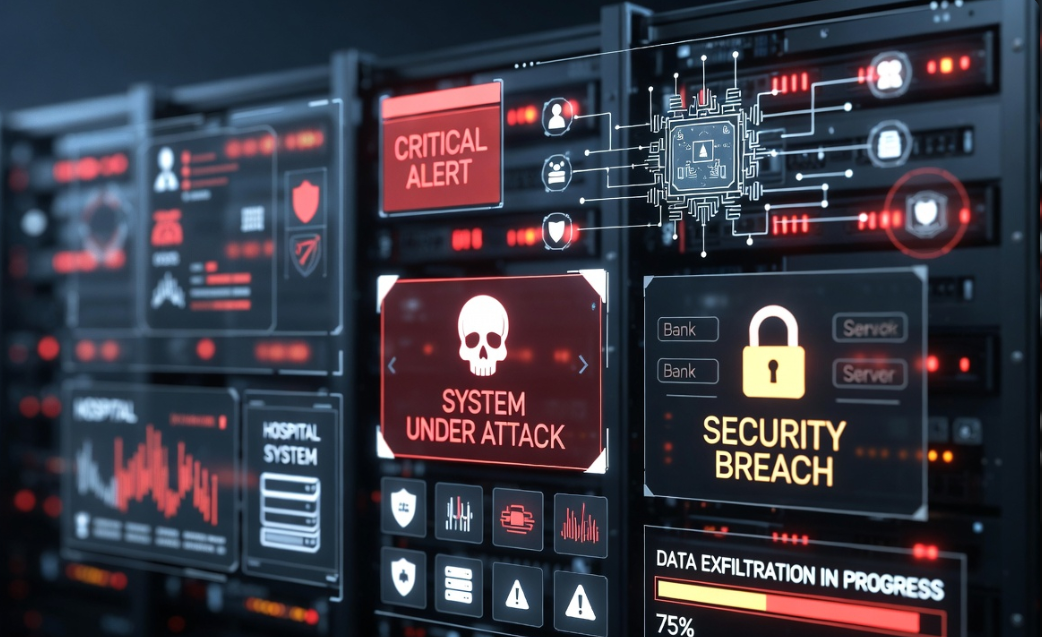
Recent cyber threat intelligence reports reveal a 150% increase in state-sponsored cyber activities between 2024–2026.
Key Highlights:
| Metric | 2024 | 2026 | Growth |
|---|---|---|---|
| Nation-state attacks detected | 1,200+ | 3,000+ | +150% |
| APT campaigns targeting SMBs | 18% | 42% | +133% |
| Critical infrastructure attacks | 320 | 890 | +178% |
| Healthcare sector breaches | 210 | 520 | +147% |
👉 The biggest shift?
Small and Medium Businesses (SMBs) are now prime targets.
🎯 Why This Surge Is Happening
1. Geopolitical Tensions Are Rising
Cyber warfare is cheaper, faster, and deniable compared to traditional warfare.
2. Digital Transformation Expanded Attack Surface
More cloud, more APIs, more remote work = more entry points.
3. SMBs Are the Weakest Link
Attackers know smaller companies:
- Lack advanced security tools
- Have weaker monitoring
- Are connected to larger supply chains
🧠 Most Active Attack Types in 2026
| Attack Type | Description | Impact |
|---|---|---|
| Cyber Espionage | Stealing sensitive data, trade secrets | Long-term damage |
| Supply Chain Attacks | Compromising vendors to reach bigger targets | Massive scale |
| Ransomware (State-backed) | Encryption + extortion | Financial + operational |
| Infrastructure Sabotage | Disrupting power, telecom, or systems | National impact |
| Credential Harvesting | Stealing login data via phishing | Access expansion |
🏭 Most Targeted Sectors

1. 💰 Finance Sector
Banks, fintech startups, and crypto platforms are high-value targets.
Why?
- Direct financial gain
- Access to customer data
- Influence on economies
2. 🏥 Healthcare Industry
Hospitals and healthcare SaaS systems are under constant attack.
Why?
- Sensitive patient data
- Weak legacy systems
- High urgency → more likely to pay ransom
3. ⚡ Critical Infrastructure
Power grids, water systems, telecom networks.
Why?
- Disruption = national chaos
- Strategic geopolitical leverage
4. 🏢 SMBs (The Rising Target)
This is where YOU come in.
Why SMBs are targeted:
- Easier to breach
- Often used as entry points into larger companies
- Lack dedicated security teams
⚠️ What This Means For You (Real Impact)
Let’s make this practical.
If You Are a Business Owner:
- You are now a potential target—even if you're small
- Your vendors and tools can be exploited
A single breach can:
- Destroy reputation
- Leak customer data
- Shut down operations
If You Are a Developer or Tech Professional:
- Your code can be targeted (supply chain attacks)
- GitHub, APIs, and packages can be compromised
- Your credentials are valuable
If You Are a Cybersecurity Learner:
- This is the biggest opportunity
- Demand for security professionals is skyrocketing
- Understanding APT behavior gives you a huge edge
🔐 Practical Defense Strategy for SMBs
You don’t need a million-dollar security budget to stay safe.
You need smart, layered security.
✅ 1. Implement Zero Trust Model
Never trust, always verify.
- Enforce MFA (Multi-Factor Authentication)
- Restrict access based on roles
- Monitor login behavior
✅ 2. Endpoint Security is Critical
Every device is an entry point.
- Use EDR/XDR solutions
- Keep systems updated
- Block unauthorized software
✅ 3. Secure Your Email (Biggest Attack Vector)
| Threat | Solution |
|---|---|
| Phishing | Email filtering + awareness training |
| Spoofing | SPF, DKIM, DMARC |
| Malware attachments | Sandboxing tools |
✅ 4. Regular Vulnerability Scanning
- Run weekly scans
- Fix high-risk vulnerabilities immediately
Use tools like:
- Nuclei
- Nessus
- OpenVAS
✅ 5. Backup Strategy (Non-Negotiable)
Follow 3-2-1 rule:
- 3 copies of data
- 2 different storage types
- 1 offline backup
✅ 6. Monitor Logs Like a Pro
You can’t stop what you don’t see.
- Use SIEM tools
- Track login attempts
- Monitor unusual behavior
✅ 7. Employee Awareness Training
Humans are the weakest link.
Train your team on:
- Phishing detection
- Password hygiene
- Safe browsing
🧩 Real-World Attack Scenario (Simplified)
Let’s say you run a small SaaS startup.
- An attacker sends a phishing email to your employee
- Employee enters credentials on fake login page
- Attacker gains access to internal dashboard
- Moves laterally to production systems
- Deploys malware or steals customer data
👉 This is how state-sponsored attackers operate silently
📈 Cyber Threat Intelligence 2026: Key Trends

| Trend | Insight |
|---|---|
| AI-powered attacks | Automated phishing & malware |
| Supply chain dominance | Attacking vendors instead of targets |
| Cloud exploitation | Misconfigured cloud = easy entry |
| Identity attacks rising | Passwords are the weakest point |
| Zero-day usage increase | Advanced attackers exploit unknown bugs |
🛡️ How to Stay Ahead (Action Plan)
🔹 Weekly
- Run vulnerability scans
- Check logs
🔹 Monthly
- Patch systems
- Review access controls
🔹 Quarterly
- Conduct penetration testing
- Train employees
💡 Pro Tips (From Real Attack Patterns)
- Don’t expose admin panels publicly
- Use password managers
- Disable unused services
- Monitor API abuse
- Always assume breach mindset
🚀 Opportunity for Cybersecurity Learners
This surge is not just a threat—it’s an opportunity.
If you:
- Learn APT tactics
- Practice bug bounty
- Understand real-world attacks
You can:
- Get high-paying roles
- Work on global security projects
- Build authority in cybersecurity
📢 Final Thoughts
The 150% surge in nation-state cyberattacks is a wake-up call.
This is no longer a problem for governments alone.
It’s your problem, your business problem, and your opportunity.
Cybersecurity is not optional anymore—it’s survival.
🔥 Take Action Now
👉 For more valuable cybersecurity content, guides, and real-world learning:
🌐 Visit: bugitrix.com
👉 Join our Telegram for daily tips, tricks & latest cyber news:
👉 Join our hacker community & ask questions:
💬 https://www.bugitrix.com/forum/help-1
👉 Apply for 1:1 Mentorship (serious learners only):
🎯 https://www.bugitrix.com/mentorship-details
👉 Build or Review Your Resume with Experts:
📄 https://docs.google.com/forms/d/e/1FAIpQLSfYfAWVhVpq5tbZ0OruX3r1PbHyzQOWL6-3vzgpE5JyP-_f3w/viewform