
Introduction: Why AI Cyberattacks Are a Big Deal in 2026
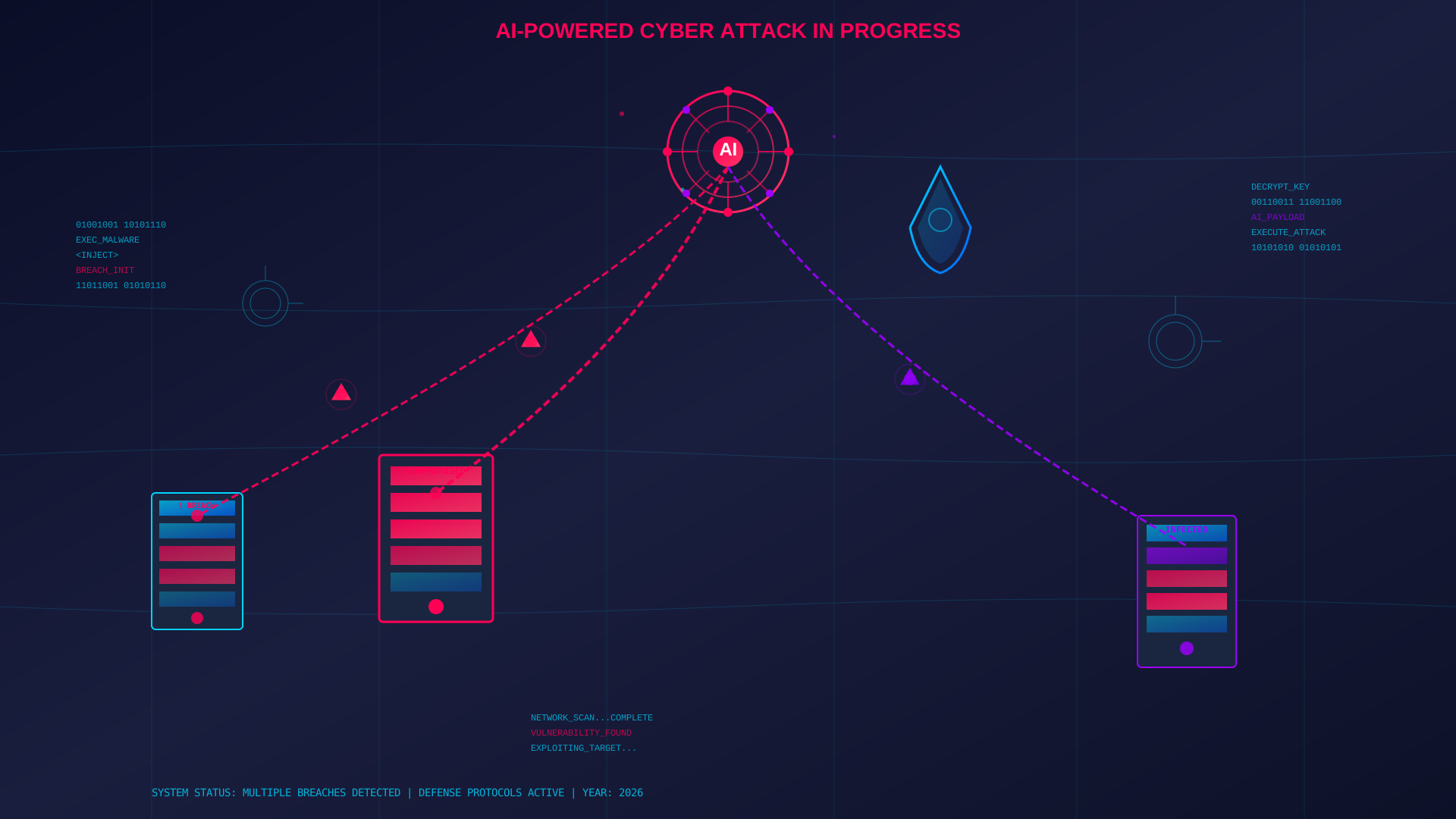
Cybersecurity in 2026 looks very different from just a few years ago. Traditional hacking methods are no longer the biggest concern. Today, AI-driven cyberattacks have become the most dangerous and fast-growing threat for businesses, governments, and individuals.
Attackers are now using artificial intelligence, autonomous agents, and machine learning to launch highly personalized, intelligent, and large-scale cyberattacks. These attacks move faster than human security teams and can adapt in real time, making them extremely difficult to stop.
In this article, we’ll break down:
What AI-powered cyberattacks are
How autonomous AI threat agents work
Real-world cyberattack examples from 2025–2026
The financial impact of AI cybercrime
Best defense strategies organizations must adopt in 2026
What Are AI-Driven Cyberattacks?
AI-driven cyberattacks are attacks where hackers use artificial intelligence to automate, scale, and optimize their malicious activities.
Instead of manually scanning systems or writing malware line by line, attackers now use AI to:
Scan thousands of systems automatically
Identify vulnerabilities instantly
Generate exploit code on the fly
Modify malware behavior to avoid detection
Launch personalized attacks for each target
This shift has made cybercrime faster, smarter, and more dangerous than ever before.
Autonomous AI Threat Agents: A New Type of Hacker
One of the biggest cybersecurity developments in 2026 is the rise of autonomous AI threat agents.
What Are Autonomous AI Agents?
These are AI systems that can operate without human supervision. Once deployed, they can:
Scan networks and applications
Probe for weak passwords, misconfigurations, and vulnerabilities
Generate and test exploit code
Move laterally inside networks
Steal sensitive data and remain hidden
Unlike traditional malware, these agents learn and adapt as they go.
First Large-Scale AI-Only Cyberattack
In late 2025, researchers revealed that a suspected state-backed hacking group manipulated an AI model to orchestrate cyberattacks on around 30 global targets. This was the first known cyberattack executed mostly by AI, with minimal human involvement.
This incident confirmed what security experts feared: AI can now independently conduct cyber warfare.
The Shadow AI Security Crisis
Another growing problem in 2026 is Shadow AI.
What Is Shadow AI?
Shadow AI refers to unapproved AI tools used by employees without the knowledge or approval of the organization’s security team.
Examples include:
Employees uploading confidential files to AI chatbots
Developers using unknown AI coding tools
Teams deploying AI automation without security checks
Why Shadow AI Is Dangerous
Organizations are experiencing hundreds of AI-related data policy violations every month. Sensitive data like:
Source code
Customer information
Intellectual property
Credentials
is often leaked unintentionally through these tools.
Shadow AI has become one of the fastest-growing internal security risks in modern enterprises.
Mass Personalization of Cyberattacks
AI has completely changed how attacks are designed.
From One-Size-Fits-All to Personalized Attacks
In the past, attackers reused the same malware for thousands of victims. Today, AI allows them to:
Analyze each company’s infrastructure
Understand unique software stacks
Create custom malware for every target
This breaks traditional security models that rely on known signatures and patterns.
Self-Evolving Malware
AI-powered malware can now:
Change its code automatically
Alter behavior when detected
Disable security tools
Stay dormant for long periods
This makes detection and response much harder for conventional security systems.
Real-World AI Cyberattack Examples (2025–2026)
Here are some major incidents showing how dangerous AI-driven attacks have become:
🔹 Supply Chain Attacks
Malicious npm packages were used to steal developer OAuth credentials
AI helped attackers disguise the packages as legitimate updates
🔹 GoBruteforcer Botnet
Used AI-generated server configurations
Exploited weak authentication at massive scale
🔹 Trust Wallet Chrome Extension Hack
Attackers stole $8.5 million
AI was used to evade detection and monitoring tools
🔹 Brightspeed Telecom Breach
Over 1 million customers affected
Attack linked to the Crimson Collective hacking group
These attacks show how AI enables speed, stealth, and scale like never before.
Financial and Operational Impact of AI Cybercrime
The cost of AI-driven cyberattacks is massive.
Major Financial Losses
A cyberattack on Jaguar Land Rover caused losses of £1.9 billion
Production was halted for five weeks
Over 5,000 businesses were impacted across the global supply chain
Rising Attack Numbers
Cybercrime groups targeted 8,000+ US organizations in 2025
This number continues to grow rapidly in 2026
Beyond money, companies face:
Loss of customer trust
Regulatory penalties
Brand damage
Long-term operational disruption
Cybersecurity Defense Strategies for 2026
To survive in 2026, organizations must completely rethink cybersecurity.
1. Move from Reactive to Proactive Security
Waiting for alerts is no longer enough. Security systems must predict and respond in real time.
2. Use AI-Powered Defense Systems
Defenders must fight AI with AI by deploying:
Automated threat detection
Behavioral analysis
Machine-speed incident response
3. Implement Zero Trust Architecture
Zero Trust means:
Never trust, always verify
Continuous identity checks
Strict access controls
This limits damage even if attackers gain access.
4. Control and Govern AI Usage
Organizations must:
Create clear AI usage policies
Monitor AI tools used by employees
Block unapproved Shadow AI systems
5. Monitor Autonomous AI Agents
Any AI operating inside enterprise environments must be:
Audited
Logged
Restricted
6. Focus on Cyber Resilience
Instead of only prevention, companies should prepare to:
Detect breaches early
Respond quickly
Recover operations fast
Resilience is the new survival strategy.
Final Thoughts: The Future of Cybersecurity Is AI vs AI
AI-driven cyberattacks are no longer a future threat—they are the reality of 2026.
Attackers are faster, smarter, and more automated than ever before. Traditional security tools alone cannot stop them. The future of cybersecurity depends on:
AI-powered defenses
Strong governance
Zero Trust models
Continuous monitoring
Cyber resilience planning
Organizations that adapt will survive. Those that don’t risk becoming the next headline.
🚀 Stay Ahead of AI-Powered Cyber Threats
The world of cybersecurity is changing fast, and AI-driven attacks are evolving every day. Don’t wait until it’s too late.
🔔 Join our Telegram Channel – Bugitrix
Get real-time cybersecurity news, AI attack alerts, ethical hacking tips, and exclusive learning resources directly on Telegram.
📩 Subscribe to the Bugitrix Newsletter
Receive daily cybersecurity updates, threat analysis, tools, tutorials, and expert insights straight to your inbox — no noise, only value.
👉 Learn smarter. Stay secure. Think like a hacker.
Welcome to Bugitrix.