
Introduction – Why AI-Powered Cyberattacks Are Exploding in 2025
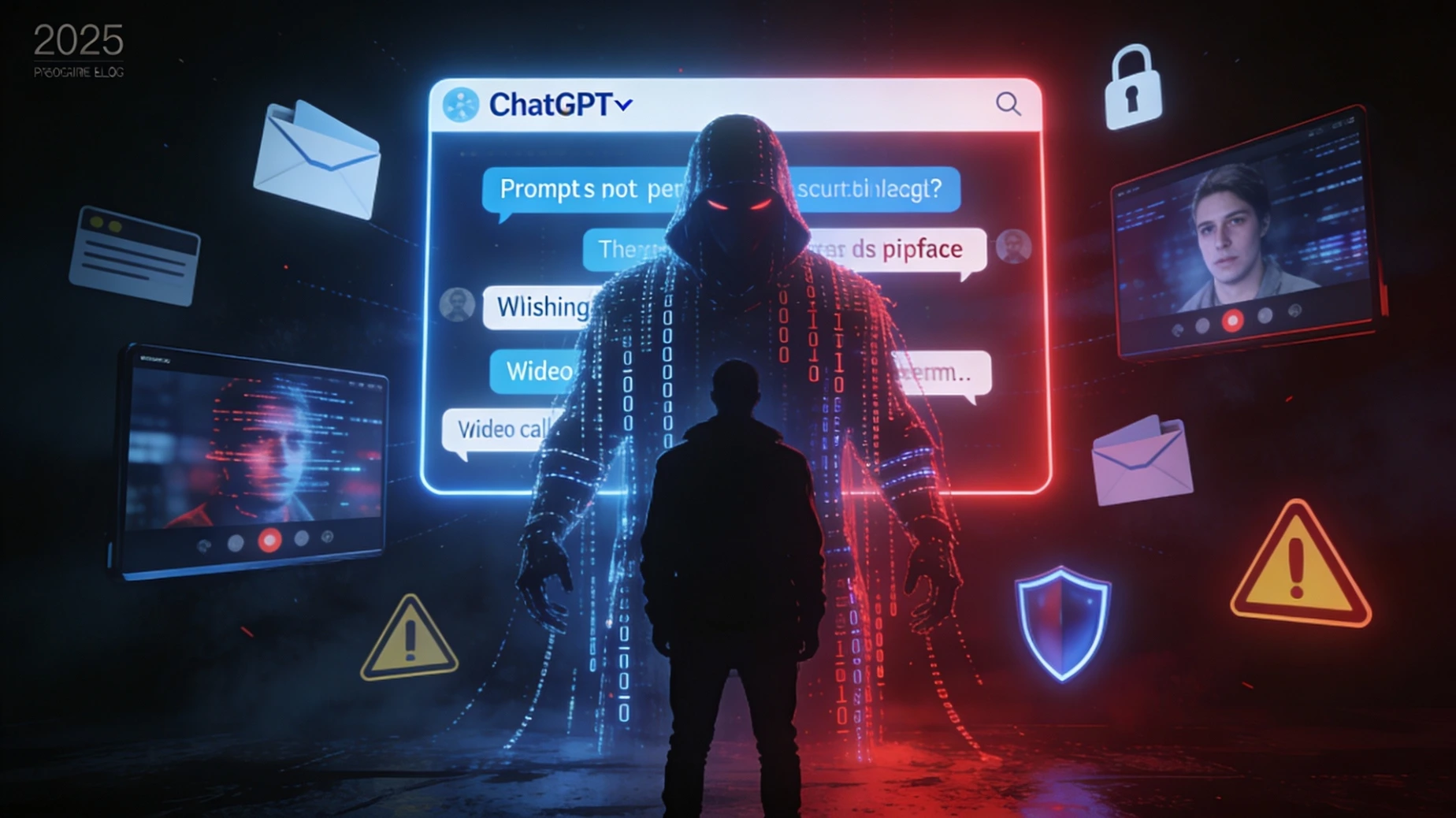
In 2025, hacking is no longer limited to expert programmers sitting behind multiple screens.
Today, artificial intelligence tools like ChatGPT and autonomous AI agents have changed cybercrime forever.
A single scammer can now:
Write perfect phishing emails in seconds
Clone a CEO’s voice using a short audio clip
Generate malware that antivirus software cannot detect
Run attacks 24/7 using AI agents — without technical skills
One real incident shocked the global cybersecurity community:
An employee at a multinational company approved transactions worth millions after attending what looked like a normal video call with senior executives. The faces were real. The voices were perfect. The urgency felt genuine.
But every person on that call was an AI-generated deepfake.
This is not science fiction. This is modern cybercrime.
According to recent threat intelligence:
AI-generated phishing emails are opened far more often than traditional scams
Deepfake fraud losses now reach hundreds of millions of dollars globally
Even beginners are being targeted — students, employees, parents, freelancers
The reason is simple:
👉 AI removes the technical barrier.
You don’t need to know hacking anymore — you just need to know how to use AI.
This guide is not written to scare you.
It’s written to educate, prepare, and protect you.
Whether you are:
A student exploring cybersecurity
A working professional
A business owner
Or someone who just wants to stay safe online
This beginner-friendly guide by Bugitrix will help you understand:
How hackers are using ChatGPT and AI agents
What real AI-powered cyberattacks look like
Why normal people are the biggest targets
And how you can defend yourself in 2025
📥 Download the free Bugitrix PDF at the end for a simplified AI-security.
What Is AI Hacking? (Beginner-Friendly Explanation)
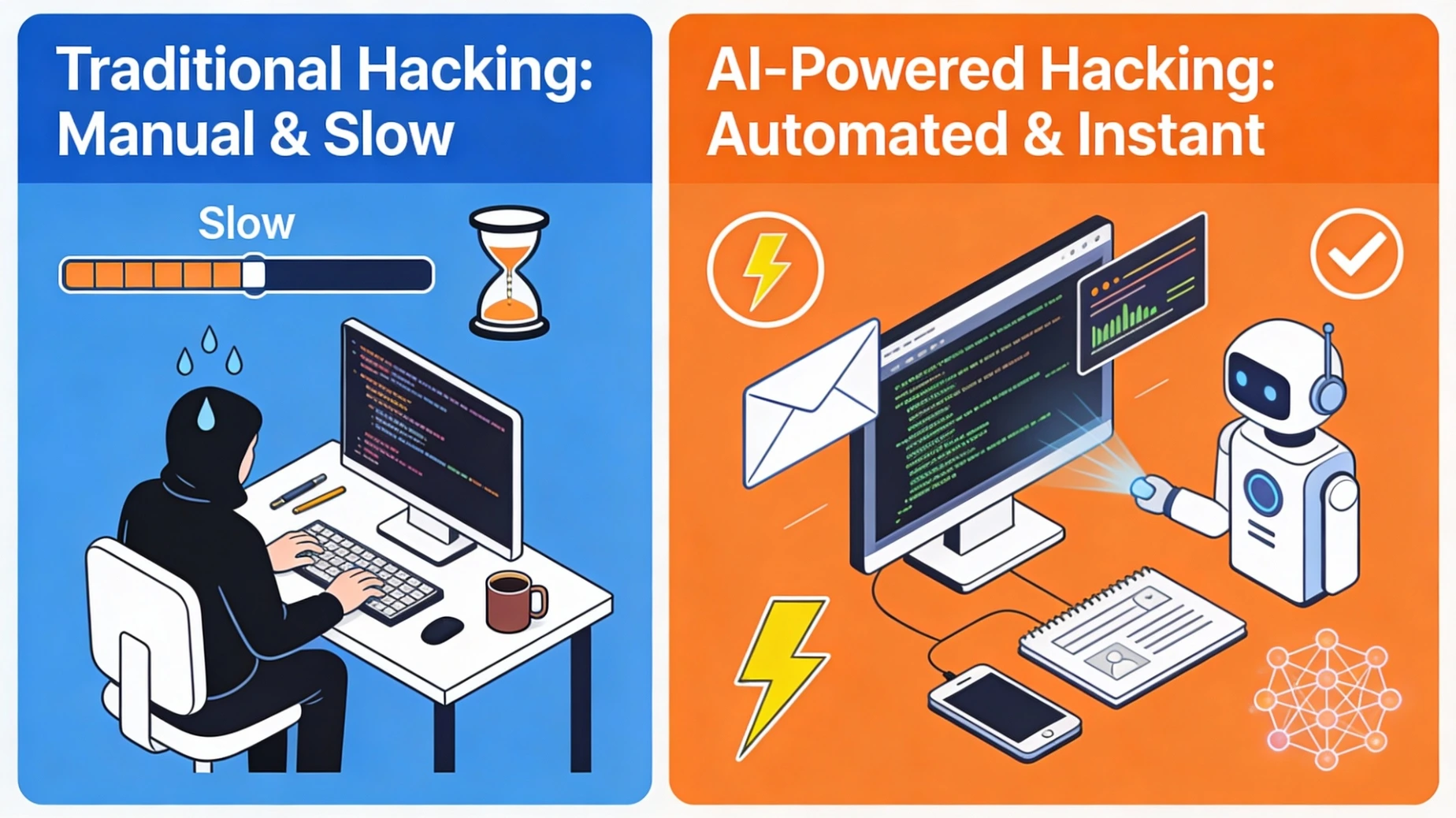
Let’s simplify this.
AI hacking does NOT mean AI itself is hacking you.
It means humans are using AI tools to perform cyberattacks faster, smarter, and at massive scale.
Traditional Hacking (Old Way)
Earlier, hacking required:
Programming skills
Manual effort
Time and patience
Deep technical knowledge
A hacker had to write code, find vulnerabilities, test attacks, and manually trick victims.
AI-Powered Hacking (2025 Reality)
With AI, attackers can now:
Ask AI to write malicious code
Generate scam messages automatically
Analyze victims’ social media profiles
Adapt attacks based on responses
Run multiple attacks at the same time
In simple words:
AI acts like a super-assistant for hackers.
It doesn’t replace humans — it multiplies their power.
Why AI Makes Cybercrime Extremely Dangerous
AI brings three things that cybercriminals love:
1️⃣ Speed
Tasks that once took days now take minutes.
2️⃣ Scale
One attacker can target thousands of people simultaneously.
3️⃣ Precision
AI personalizes attacks using:
Your name
Your job
Your language
Your emotions
This is why AI phishing works far better than old spam emails.
Can Non-Technical People Use AI for Hacking?
Unfortunately, yes.
That’s the most dangerous part.
With AI:
You don’t need to know coding
You don’t need hacking experience
You just need prompts and instructions
This has led to:
Rise of “script-kiddie” attackers powered by AI
Growth of cybercrime as a service
Increased targeting of beginners and normal users
That’s why awareness is now more important than technical skill.
Important Ethical Note
This article explains AI hacking only for defensive and educational purposes.
At Bugitrix, the goal is to:
Teach cybersecurity ethically
Help beginners understand modern threats
Build skills to defend systems, not attack them
How Hackers Use ChatGPT & AI Tools (Simple Breakdown)
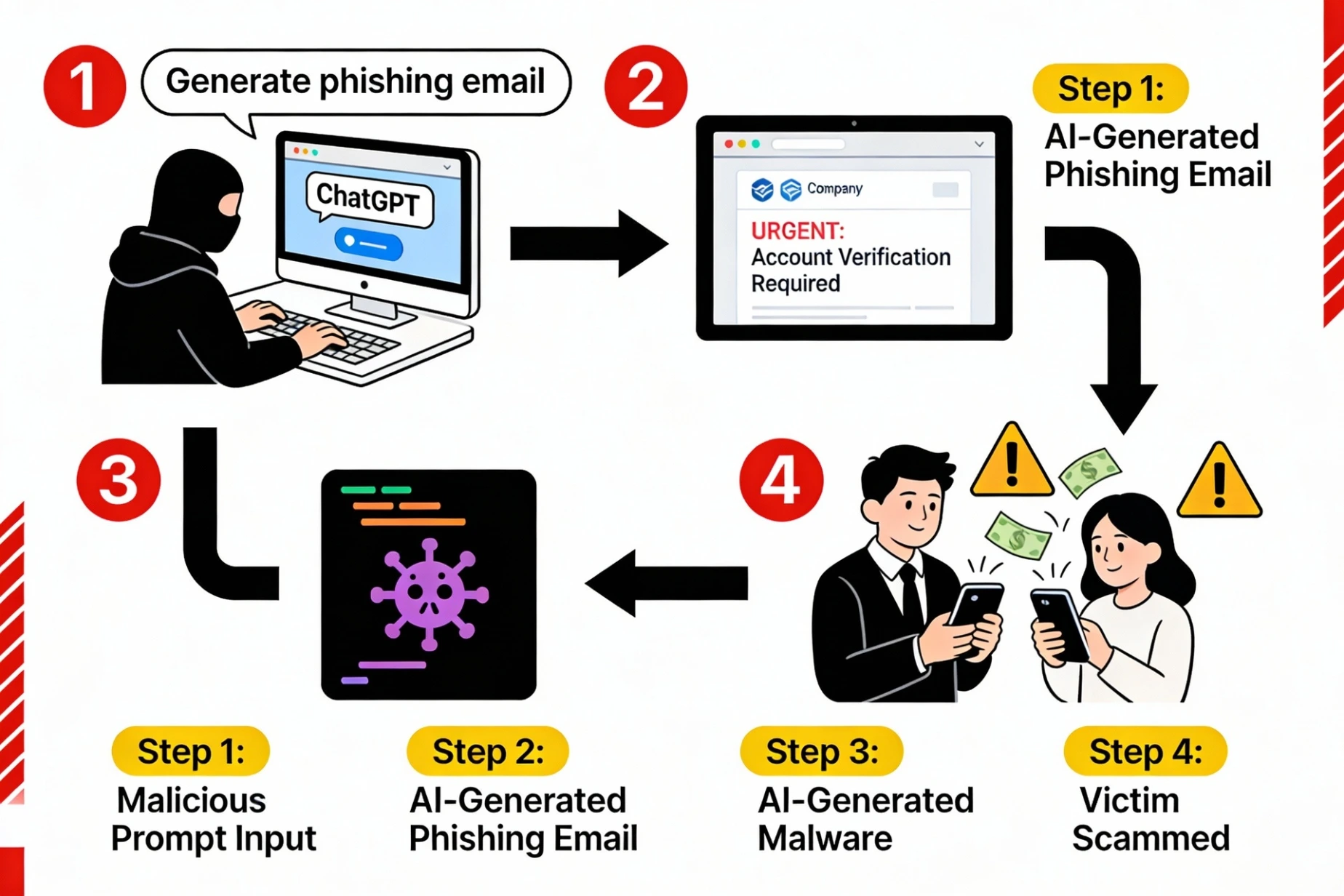
AI tools like ChatGPT were built to help people learn and work faster — but hackers are using the same tools for cybercrime.
Here’s how, in very simple terms:
1️⃣ AI-Powered Phishing & Scam Messages
Hackers use AI to:
Write perfect scam emails & messages
Sound professional, urgent, and convincing
Translate scams into any language instantly
Unlike old scams with spelling mistakes, AI scams look 100% real — which is why beginners fall for them easily.
📌 Our free Bugitrix PDF explains how to spot these AI-written scams in seconds.
2️⃣ AI for Malware & Script Creation
Attackers ask AI to:
Generate malicious scripts
Modify existing malware
Bypass antivirus detection
Even people with zero coding knowledge can now create dangerous tools using AI prompts.
⚠️ This is why antivirus alone is no longer enough in 2025.
3️⃣ Bypassing AI Safety (Jailbreaking)
When AI refuses harmful requests, attackers:
Rephrase questions
Break tasks into small steps
Pretend it’s “educational” or “testing”
You don’t need to know how this works —
you only need to know that it happens.
📘 The free PDF focuses on defense, red flags, and protection — not misuse.
Dark Web AI Tools Hackers Use (WormGPT, FraudGPT & More)
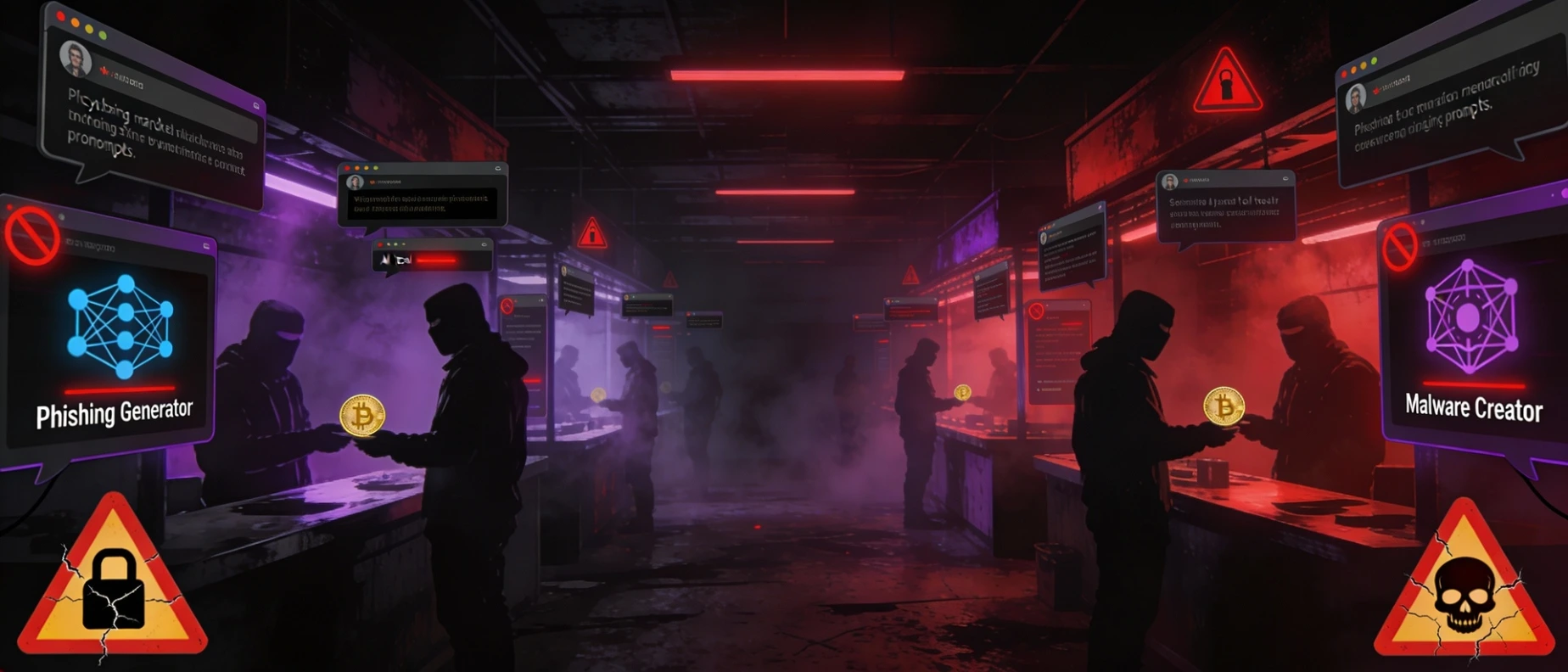
When normal AI tools block misuse, criminals turn to illegal AI models sold on the dark web.
These tools are:
❌ Uncensored
❌ Unethical
❌ Built only for cybercrime
They are commonly used for:
Large-scale phishing campaigns
Business Email Compromise (BEC) scams
Fake identity & fraud generation
The scary part?
👉 They are cheap, automated, and easy to use.
This means:
More attackers
More scams
More beginners targeted
Why You Should Care (Even If You’re Not in IT)
You don’t need to be hacked directly to be affected.
AI scams impact:
Students
Employees
Parents
Small businesses
Freelancers
Knowing how attacks look is enough to avoid 90% of them.
📥 That’s exactly why the Bugitrix free PDF exists:
No technical jargon
Real examples
Clear warning signs
Simple protection steps
AI Agents – The Most Dangerous Cyber Threat of 2025
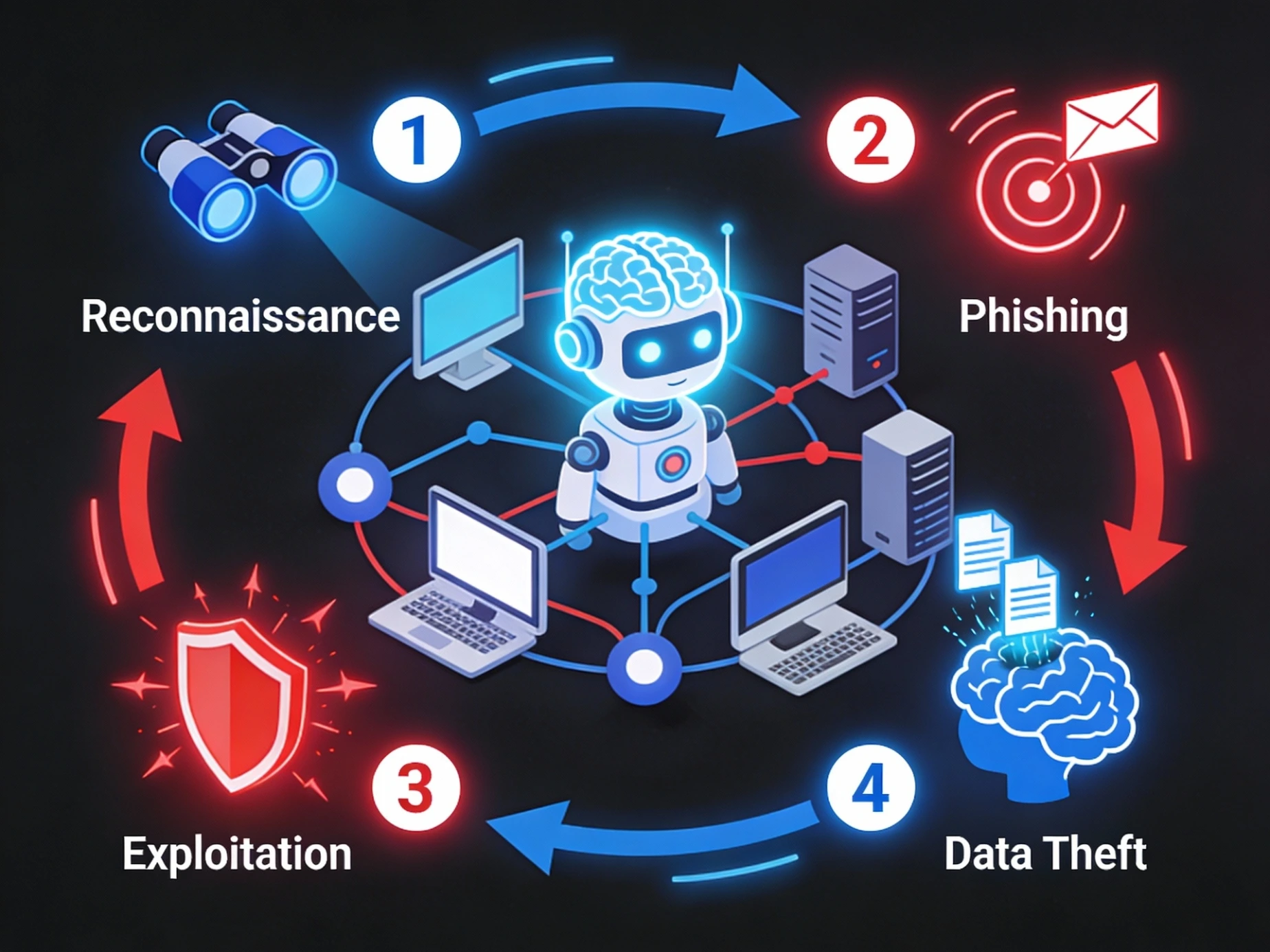
ChatGPT is powerful — but AI agents are far more dangerous.
What Are AI Agents? (Simple Explanation)
An AI agent is not just a chatbot that answers questions.
It is an autonomous system that can:
Plan tasks on its own
Make decisions without human input
Use tools (scanners, scripts, browsers)
Learn from failures and retry automatically
In simple words:
AI agents don’t wait for instructions — they act.
How Hackers Use AI Agents for Attacks
Hackers use AI agents to automate the entire hacking process:
Reconnaissance – collecting employee data, emails, systems used
Target selection – choosing the weakest entry point
Attack execution – phishing, exploitation, malware delivery
Adaptation – changing tactics if something fails
Scaling – repeating the attack on many targets at once
What used to take days or weeks can now happen in hours.
This is why cybersecurity experts say:
AI agents are not just tools — they are force multipliers.
📘 The Bugitrix free PDF explains how AI-agent attacks look from a victim’s perspective and how to interrupt them early.
Why AI Agents Are Hard to Stop
AI agents:
Work 24/7 without fatigue
Launch multiple attacks at the same time
Adjust behavior when blocked
Don’t rely on fixed malware signatures
This makes traditional defenses slower than the attack itself.
That’s why awareness + verification habits matter more than ever.
Real AI-Powered Cyberattacks You Should Know (2024–2025)
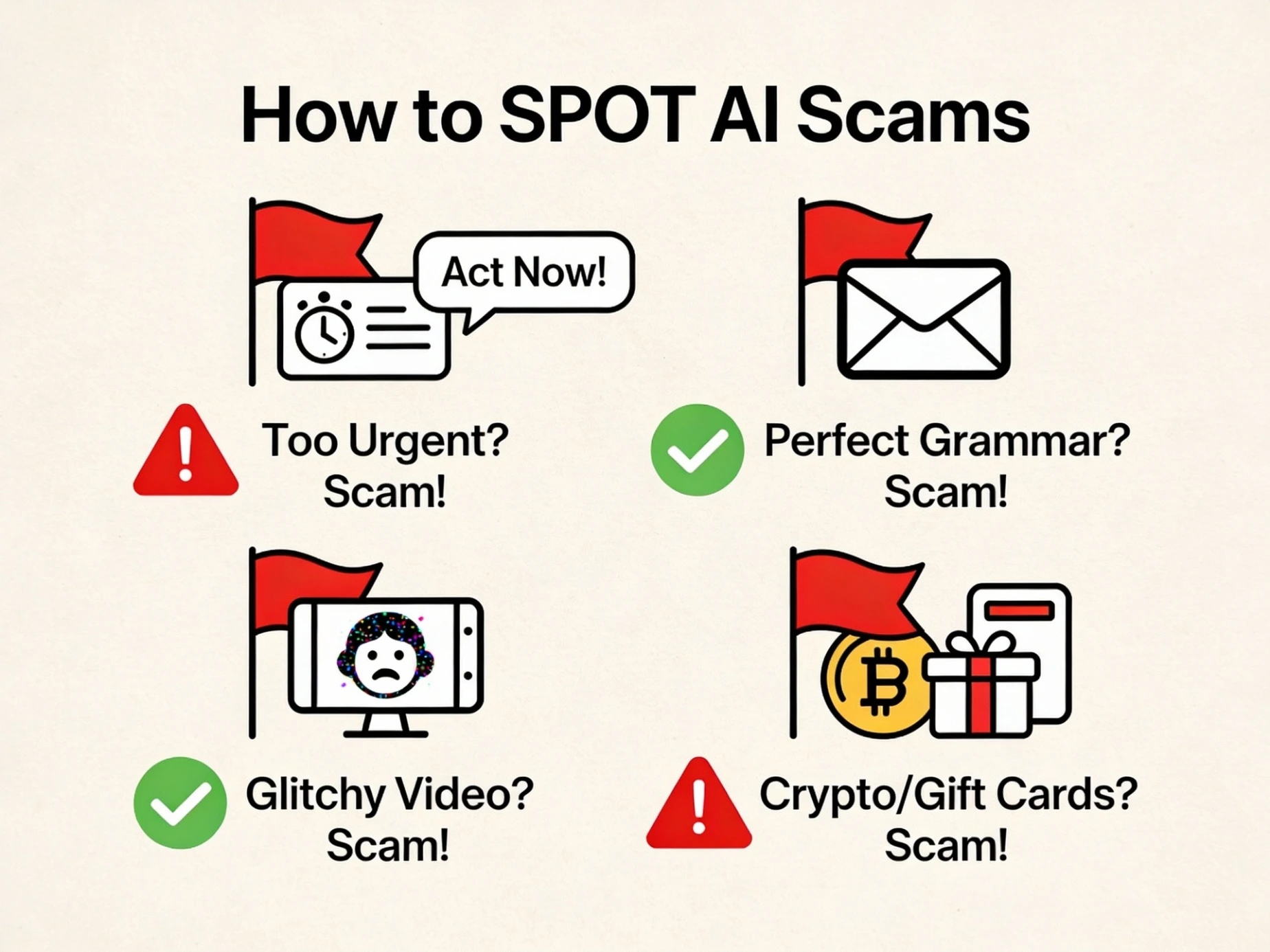
AI cyberattacks are not theory — they are already causing massive financial and emotional damage.
Let’s look at a few real, simplified examples.
1️⃣ Deepfake Video & Voice Scam
In a real incident, an employee joined what looked like a normal video meeting with senior executives.
Faces were familiar. Voices sounded perfect. The request felt urgent.
👉 The result: millions lost
👉 The truth: every person on the call was AI-generated
Why it worked:
Humans trust faces and voices
Authority pressure overrides logic
Verification steps were skipped
📌 Your free PDF includes a simple “verification checklist” to stop this exact attack.
2️⃣ AI-Powered Phishing Attacks
AI phishing emails:
Match writing style perfectly
Reference real projects or deadlines
Arrive at “normal” working hours
Create urgency without obvious red flags
That’s why AI phishing has much higher success rates than traditional scams.
Most victims say:
“It looked completely normal.”
3️⃣ AI Malware That Antivirus Misses
Some modern AI malware:
Runs only in memory
Changes code every time
Uses trusted services to hide activity
This is why “I have antivirus” is no longer a guarantee of safety.
📘 The Bugitrix PDF focuses on behavior-based warning signs — not technical malware code.
Key Takeaway from These Attacks
The common factor is not technology failure.
It’s:
Trust
Urgency
Lack of verification
Lack of awareness
And the good news?
👉 These attacks can be stopped by informed humans.
Why Beginners & Non-Technical Users Are the Biggest Targets
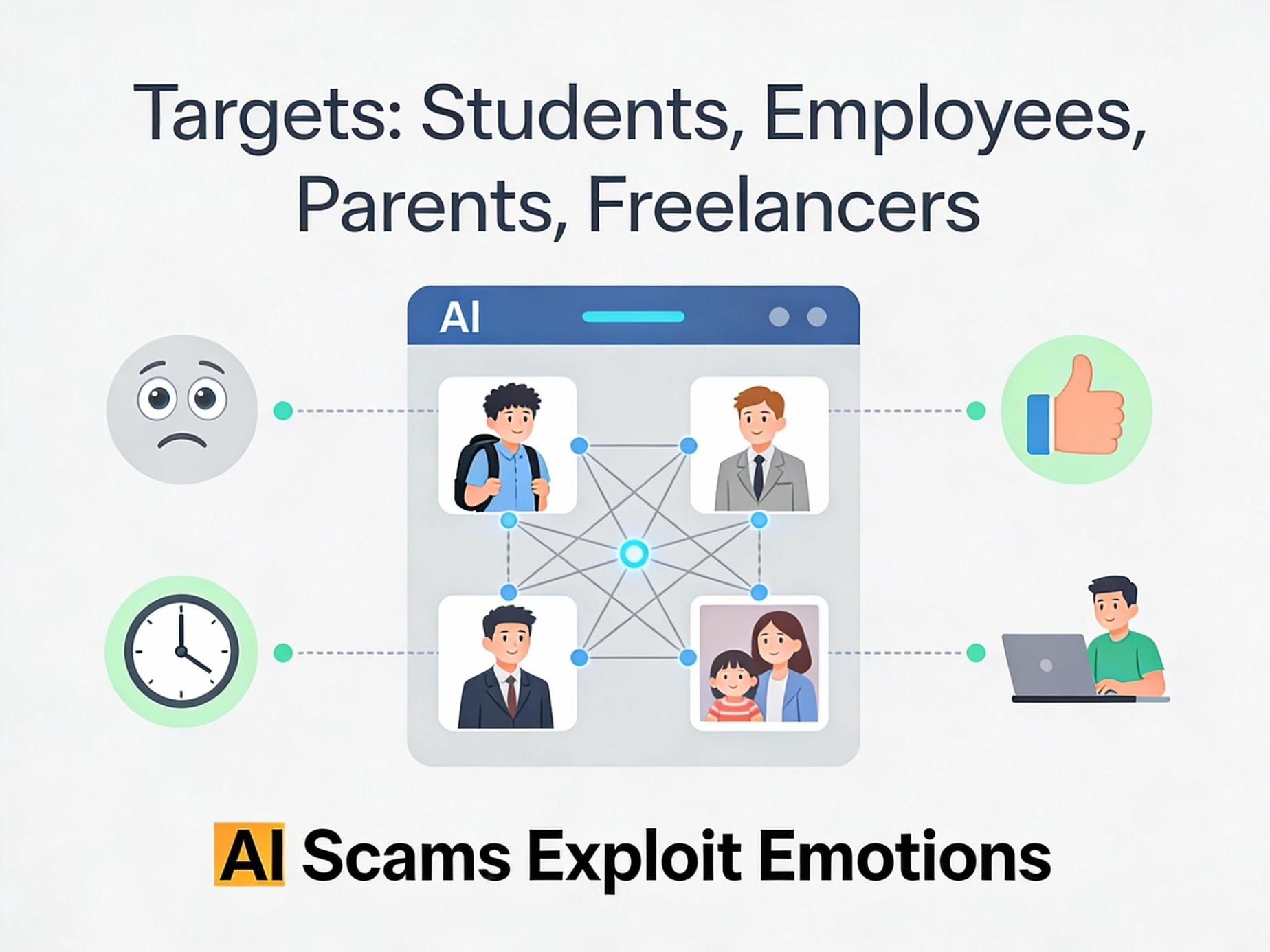
A common myth is that only tech experts or large companies get hacked.
In reality, beginners and non-technical users are the easiest and most profitable targets for AI-powered attackers.
Here’s why 👇
1️⃣ AI Attacks Focus on Human Psychology, Not Code
Modern cyberattacks don’t “break systems” first — they break trust.
AI is extremely good at:
Creating urgency (“Do this now”)
Using authority (“CEO”, “Manager”, “Bank”)
Triggering fear (“Account blocked”, “Legal issue”)
Sounding friendly and familiar
Beginners are more likely to:
Trust messages that look professional
Act fast instead of verifying
Feel embarrassed to ask questions
That’s exactly what attackers want.
2️⃣ Public Digital Footprints Make Attacks Easy
AI tools automatically scan:
LinkedIn profiles
Instagram posts
Facebook photos
Job portals
Public resumes
From this data, attackers build personalized scams that feel real.
You don’t need to overshare to be targeted —
you just need to exist online.
📘 The free Bugitrix PDF explains how attackers profile victims and how to reduce your digital exposure safely.
3️⃣ Beginners Rely Too Much on “Tools”
Many people believe:
“I have antivirus, so I’m safe”
“I use 2FA, so nothing can happen”
“Scams are easy to spot”
AI attacks bypass tools by:
Using trusted platforms
Avoiding obvious malware
Targeting decision-making moments
This is why awareness beats software in many cases.
Reality Check
Hackers don’t care who you are.
They care how easily you can be convinced.
That’s why:
Students
Freshers
Employees
Parents
Small business owners
are attacked daily.
How to Detect AI-Generated Scams Before It’s Too Late
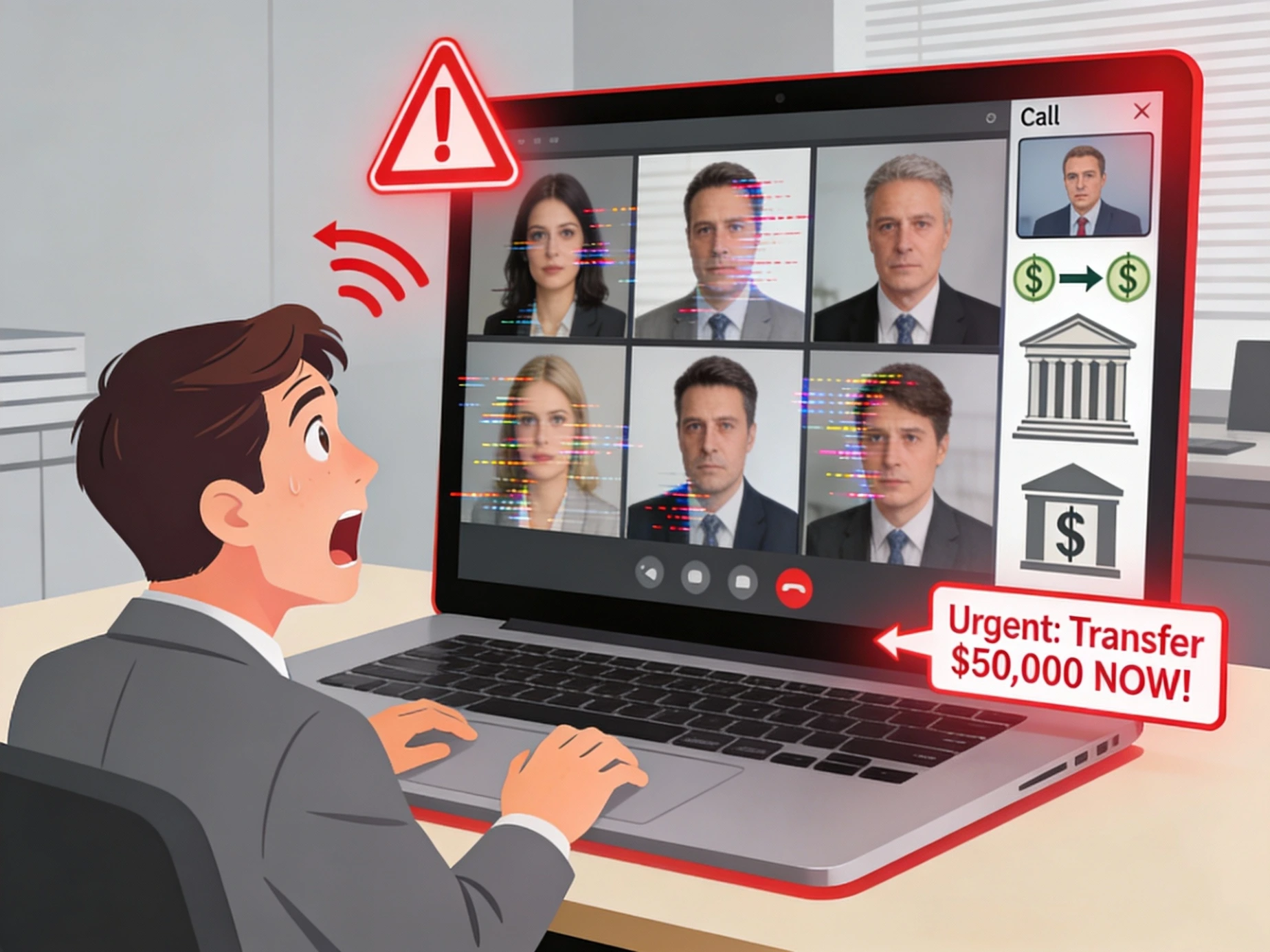
The good news?
Most AI scams still leave warning signs — if you know what to look for.
Here are practical, beginner-friendly signals.
1️⃣ “Too Perfect” Messages
AI-generated scams often:
Have perfect grammar
Sound overly professional
Follow a clean, structured format
Ask yourself:
“Would this person normally write like this?”
📌 The PDF includes side-by-side real vs AI scam examples to train your eyes.
2️⃣ Urgency Without Verification
Common AI scam phrases:
“Act immediately”
“This is confidential”
“Don’t involve anyone else”
“Time-sensitive request”
Urgency is used to block your thinking time.
Golden rule:
Urgency + secrecy = verify immediately
3️⃣ Voice & Video Red Flags
With deepfake calls:
Faces may look slightly unnatural
Audio may lag or sound too clean
Callers may avoid unexpected questions
Pressure to act quickly is constant
Never trust voice or video alone in 2025.
📘 Your free PDF includes a simple verification protocol anyone can follow.
4️⃣ Unusual Requests from Familiar People
Big warning signs:
New payment methods
Sudden changes in process
Requests to bypass normal approval
Asking you to “help urgently”
Even if it looks real — verify using another channel.
Key Protection Mindset
You don’t need to understand AI.
You need to understand patterns.
AI scams succeed when people:
Feel rushed
Feel scared
Feel pressured by authority
Awareness breaks all three.
How to Protect Yourself from AI Cyber Attacks (2025 Practical Guide)
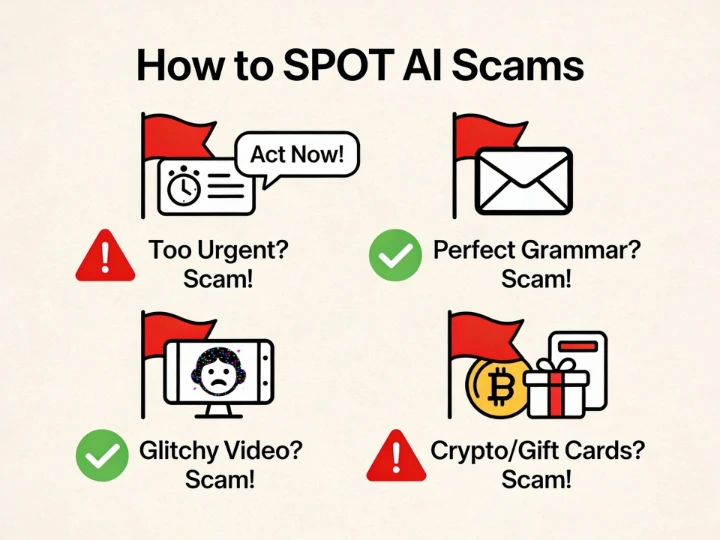
You don’t need to be a cybersecurity expert to stay safe in 2025.
Most AI-powered attacks can be stopped by basic habits + awareness.
Let’s break this down simply.
Protection Tips for Individuals, Students & Beginners
These steps are easy to follow and highly effective:
1️⃣ Upgrade Your Login Security
Use strong, unique passwords (password manager recommended)
Prefer passkeys or app-based authentication over SMS
Never rely on voice verification for banking or payments
2️⃣ Verify Before You Act
Any urgent request for money or data → pause
Verify using a different channel (call, message, ask another person)
Never trust “confidential, don’t tell anyone” requests
3️⃣ Reduce Your Online Exposure
Limit public details on social media
Avoid sharing phone numbers, emails, and job details openly
Be careful with photos and videos (they can be used for deepfakes)
4️⃣ Use the “Safe-Word” Rule
Families and teams should agree on a private verification phrase
Use it for emergencies or financial requests
Never store it digitally
📘 The Bugitrix free PDF includes a step-by-step beginner checklist covering all these protections in one place.
Protection Tips for Employees & Professionals
If you work in an organization, AI attacks target your role, not your device.
Never bypass approval processes, even if the request looks urgent
Be cautious with emails referencing real projects or deadlines
Report suspicious messages early — even if unsure
Treat unexpected video/voice calls as untrusted by default
In 2025, verification is professionalism — not distrust.
Careers, Skills & Certifications to Fight AI Cybercrime
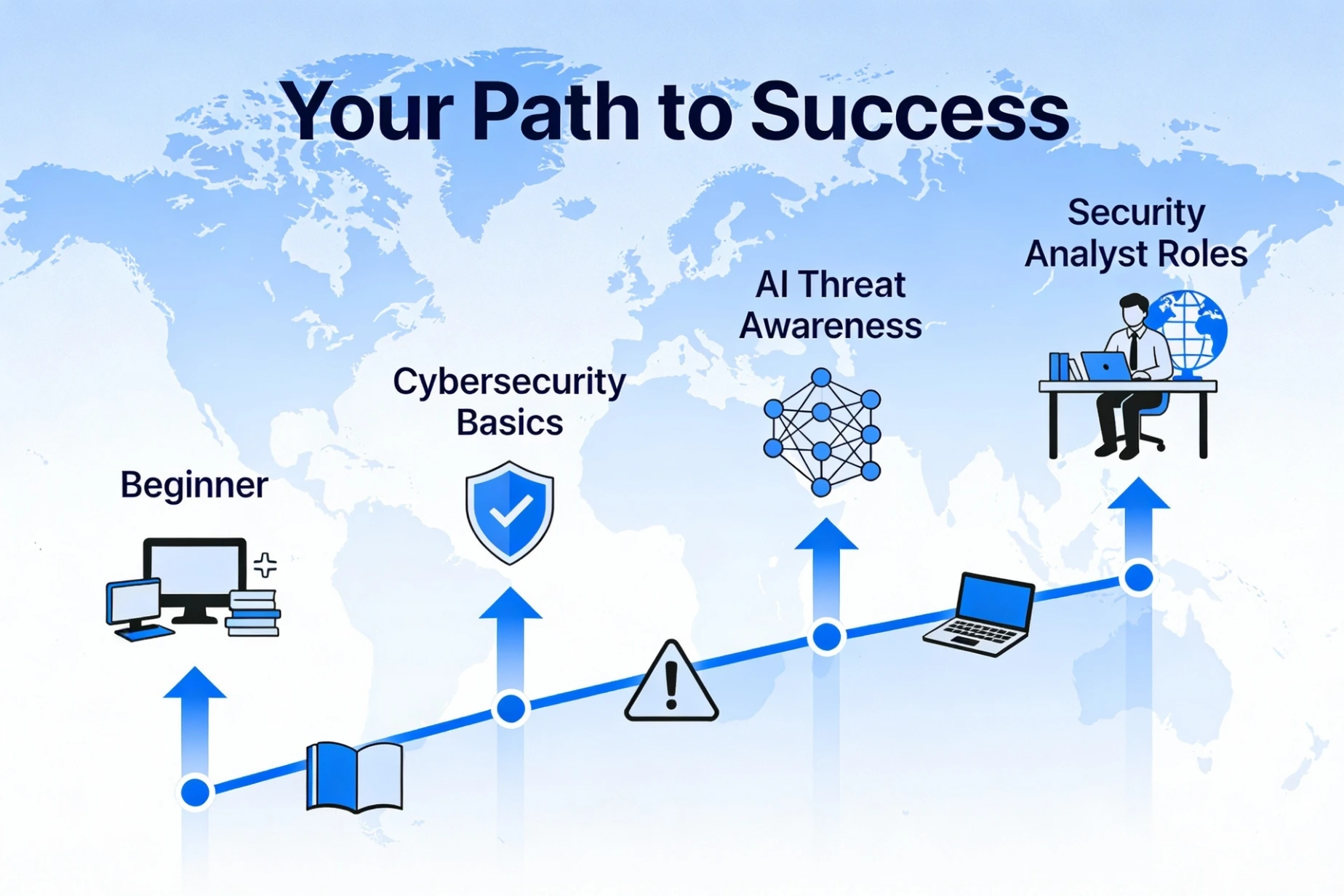
AI-powered cybercrime has created a massive demand for cybersecurity professionals, especially those who understand modern AI threats.
The good news?
👉 You don’t need to start as an expert.
Why AI Security Skills Are in High Demand
Globally (including India):
Companies are facing AI phishing & deepfake fraud
Governments are investing in cyber defense
Businesses need people who understand AI risks
This has opened roles like:
Cybersecurity Analyst
SOC Analyst
Ethical Hacker (defensive focus)
AI Security & Risk Analyst
Beginner-Friendly Learning Path
A safe and ethical path looks like this:
Cybersecurity basics (networks, threats, phishing)
Understanding AI misuse (how attacks work, not how to perform them)
Defense-focused skills (detection, awareness, response)
Hands-on labs & real-world scenarios
📘 Your free Bugitrix PDF acts as a foundation guide before entering full courses.
Certifications (Beginner-Safe Approach)
If you’re starting out:
Focus on fundamentals first
Avoid advanced certifications too early
Learn concepts before chasing certificates
Certifications help after understanding threats — not before.
🎓 Bugitrix courses are designed to guide beginners step by step without overwhelming them.
Why Start Learning Now
AI is evolving faster than traditional security training.
Those who:
Understand AI-driven attacks
Can explain risks clearly
Know how to respond calmly
will have long-term career stability.
Future of AI Hacking – What to Expect Beyond 2025

AI-powered cyberattacks are not slowing down — they are accelerating.
Here’s what beginners and professionals should realistically expect in the coming years:
1️⃣ Fully Automated Cyberattacks
AI agents will increasingly:
Run complete attacks without human involvement
Adapt in real time when blocked
Target multiple victims simultaneously
This means faster attacks, larger scale, and less warning time.
2️⃣ Deepfakes Becoming Nearly Indistinguishable
Voice and video cloning will improve to the point where:
Calls sound 100% natural
Video meetings feel real
Traditional “call-back” verification fails
That’s why process-based verification will matter more than trust.
📘 The Bugitrix PDF explains future-safe verification habits that don’t rely on technology alone.
3️⃣ AI vs AI (Attackers vs Defenders)
The future of cybersecurity is:
AI attacking systems
AI defending systems
But attackers move faster because:
They don’t follow rules
They test attacks in the real world
They adapt instantly
This makes human awareness and judgment a critical defense layer.
4️⃣ Why Learning Cybersecurity Early Matters
AI will not replace cybersecurity jobs —
it will replace unprepared people.
Those who understand:
How AI attacks look
How humans are manipulated
How to verify before acting
will always be valuable.
FAQ -
Q1. How are hackers using ChatGPT for cyber attacks?
Answer:
Hackers misuse ChatGPT and similar AI tools to generate phishing emails, scam messages, malicious scripts, and social engineering content. AI helps attackers write convincing messages, personalize scams, and automate attacks faster than traditional methods, even with little technical knowledge.
Q2. Can beginners really be targeted by AI-powered hackers?
Answer:
Yes. Beginners and non-technical users are the primary targets because AI attacks focus on human psychology rather than technical vulnerabilities. Students, employees, parents, and freelancers are frequently targeted through AI-generated phishing, deepfake calls, and fake urgent requests.
Q3. What are AI agents in hacking?
Answer:
AI agents are autonomous systems that can plan, execute, and adapt cyberattacks without continuous human control. They can perform reconnaissance, phishing, exploitation, and data theft automatically, making cyberattacks faster and harder to stop.
Q4. What is an AI phishing attack?
Answer:
An AI phishing attack uses artificial intelligence to create highly realistic scam emails or messages. These messages often have perfect grammar, personalized details, and a sense of urgency, making them more effective than traditional phishing scams.
Q5. How can I tell if an email or message is AI-generated?
Answer:
Common signs include overly perfect grammar, urgent language, requests for secrecy, unusual payment instructions, and messages that feel professional but slightly unnatural. Verifying requests through another channel is the safest way to detect AI-generated scams.
Q6. Are deepfake voice and video scams really dangerous?
Answer:
Yes. Deepfake scams can clone voices and faces using short audio or video samples. These scams are dangerous because people naturally trust familiar voices and faces, leading to financial fraud and data theft if verification steps are skipped.
Q7. Is antivirus enough to stop AI cyber attacks?
Answer:
No. Many AI-powered attacks bypass traditional antivirus software by running in memory, changing their code frequently, or using trusted services. Awareness, verification habits, and strong authentication are just as important as security tools.
Q8. How can I protect myself from AI-powered cybercrime?
Answer:
You can protect yourself by using strong unique passwords, enabling modern authentication methods, verifying urgent requests through multiple channels, limiting personal information online, and staying aware of common AI scam patterns.
Q9. Are there careers to fight AI cybercrime?
Answer:
Yes. AI-powered cybercrime has increased demand for cybersecurity analysts, SOC analysts, ethical hackers, and AI security professionals. Beginners can start by learning cybersecurity fundamentals and understanding how AI is misused in attacks.
Q10. Is learning cybersecurity still worth it in the AI era?
Answer:
Absolutely. AI has increased the need for cybersecurity professionals who understand both technology and human behavior. Learning cybersecurity early provides long-term career stability and global job opportunities.
Final Thoughts – Awareness Is Your Strongest Defense
AI itself is not the enemy.
Uninformed use of AI is.
The biggest lesson from real-world AI cyberattacks is simple:
Most attacks succeed not because systems fail —
but because humans are rushed, pressured, or unaware.
The good news?
You don’t need:
Advanced hacking skills
Expensive tools
Deep technical knowledge
To stay safe.
You need:
Awareness
Verification habits
Basic digital hygiene
And that’s exactly what Bugitrix focuses on.
Free Resources & Learning Path (By Bugitrix)

If you want to go deeper without being overwhelmed, start here 👇
📥 Download the FREE PDF
How Hackers Are Weaponizing ChatGPT and AI Agents in 2025.pdf
“AI Cyber Attacks Explained for Beginners”
Real attack patterns
Red flags & warning signs
Simple protection checklists
No technical jargon
(Same guide used to build this article — simplified for daily use)
📢 Join the Bugitrix Telegram Channel
Free cybersecurity resources
Scam alerts & awareness posts
Beginner-friendly explanations
Career guidance & updates
🎓 Learn Cybersecurity the Right Way
If you want to:
Build real skills
Understand modern threats
Learn ethical cybersecurity step by step
👉 Explore Bugitrix beginner courses & resources
🌐 Stay Connected
Website: Bugitrix.com
Learn. Defend. Grow.
One Last Reminder
In the age of AI-powered cybercrime:
Awareness is not optional.
It’s survival.