
Introduction: Navigating the Evolving Cyber Threat Landscape in 2026

As we step into 2026, cybersecurity is no longer just an IT concern—it’s a business survival strategy. The rapid convergence of cloud computing and critical infrastructure has created an environment where a single misconfiguration or overlooked vulnerability can trigger massive data breaches, operational shutdowns, or national-level disruptions.
Organizations worldwide are aggressively adopting hybrid and multi-cloud architectures to gain flexibility, scalability, and cost efficiency. However, this transformation comes at a price: a dramatically expanded attack surface. Threat actors are no longer limited to exploiting traditional networks—they now target cloud identities, AI models, APIs, IoT devices, and supply chains.
💡 “In 2026, attackers don’t break in—they log in.”
Modern cybercriminals leverage AI-driven attack techniques, stolen cloud credentials, and misconfigured resources to remain undetected for months. According to industry reports, over 80% of organizations faced at least one cloud-related security incident in the past year, proving that reactive security models are failing.
At the same time, critical infrastructure—including power grids, healthcare systems, transportation networks, and industrial control systems—has become a prime target due to:
Rising geopolitical tensions 🌍
Aging operational technology (OT)
Increased reliance on cloud-connected systems
This is where ethical hacking becomes a game-changer.
Ethical hackers think like attackers—but work for defense. Through penetration testing, vulnerability assessments, and real-world attack simulations, they help organizations identify weaknesses before malicious actors exploit them.
At 👉 Bugitrix.com, we focus on teaching practical ethical hacking and cloud security skills aligned with real-world threats. Whether you’re a student, professional, or bug bounty hunter, mastering these skills is no longer optional—it’s essential for surviving the cybersecurity battlefield of 2026 🔐
Why Cloud Security Is Under Heavy Attack in 2026 ☁️

Cloud environments have become the primary battlefield for cyber attacks, and in 2026, attackers are more focused on cloud platforms than ever before.
Why? Because the cloud holds:
Massive volumes of sensitive data
Complex identity and access mechanisms
Rapidly changing configurations
Limited visibility when mismanaged
⚠️ “The cloud didn’t make security weaker—mismanagement did.”
Key Reasons Cloud Platforms Are Prime Targets
🔑 1. Identity Is the New Perimeter
Traditional firewalls are fading. In cloud environments, identity and access management (IAM) defines security boundaries. Attackers exploit:
Compromised OAuth tokens
Over-privileged IAM roles
Weak MFA implementations
Statistics show that over 70% of cloud breaches start with compromised identities, allowing attackers to bypass endpoints entirely.
⚙️ 2. Misconfigurations at Massive Scale
Misconfigurations remain the #1 cause of cloud security failures. Simple mistakes—like public storage buckets or open APIs—can expose millions of records.
| Common Cloud Misconfiguration | Risk Level | Impact |
|---|---|---|
| Public S3 / Blob storage | High 🔥 | Data leaks |
| Excessive IAM permissions | Critical 🚨 | Full account takeover |
| Unpatched cloud services | High | Remote code execution |
| Shadow IT tools | Medium | Data exfiltration |
🛑 “One wrong permission can undo millions spent on security tools.”
🤖 3. AI and Automation Are Changing Attacks
AI has accelerated both defense and offense. In 2026, attackers use AI to:
Automate reconnaissance
Detect misconfigurations faster
Exploit cloud APIs at scale
At the same time, organizations deploy AI agents and LLMs without proper security controls, creating new attack vectors that ethical hackers must understand deeply.
🌐 4. Multi-Cloud Complexity and Visibility Gaps
Multi-cloud adoption is no longer optional—it’s a resilience requirement. But managing security across AWS, Azure, and Google Cloud introduces:
Fragmented logging
Inconsistent policies
Blind spots in threat detection
Many critical logs are paywalled or disabled by default, allowing attackers to operate silently.
AI-Driven Cloud Threats Redefining Cyber Attacks in 2026 🤖☁️
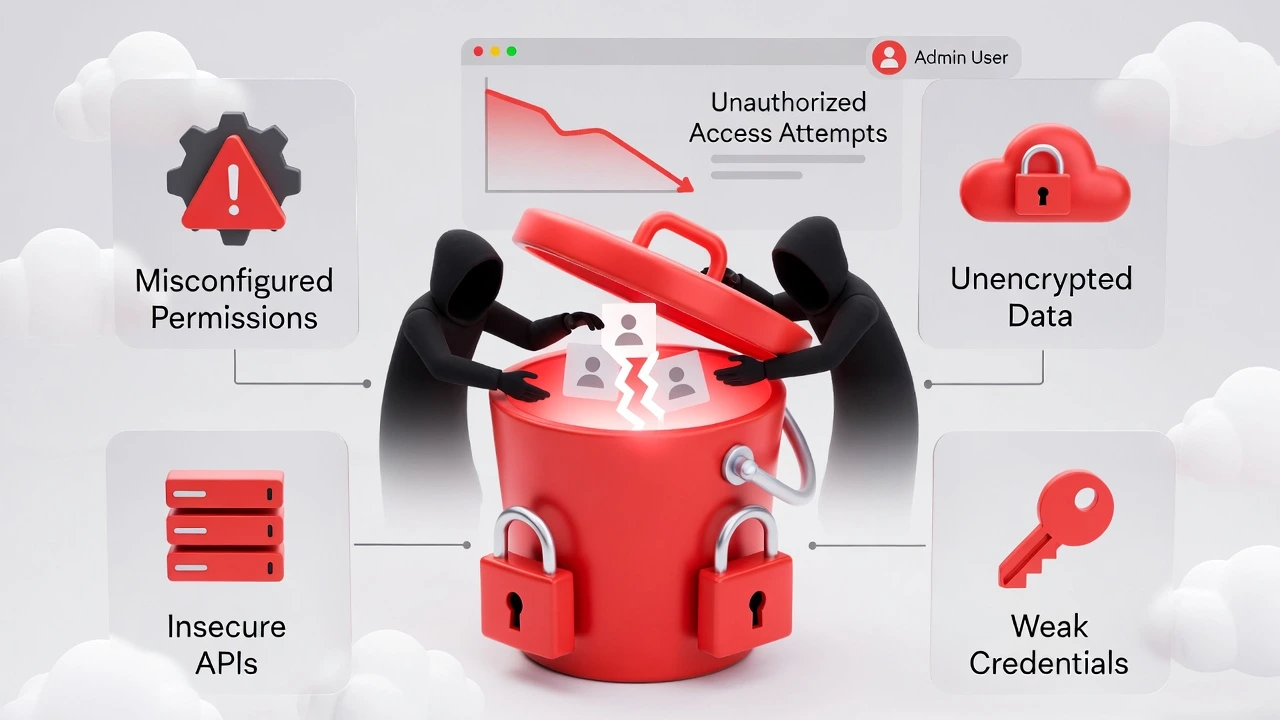
Artificial Intelligence is no longer just enhancing cybersecurity—it’s actively reshaping how cloud attacks are executed. In 2026, threat actors are weaponizing AI to automate reconnaissance, exploit vulnerabilities faster, and remain undetected for longer periods.
⚠️ “AI doesn’t just scale innovation—it scales attacks too.”
Cloud environments are particularly vulnerable because AI systems often operate deep inside trusted networks, where traditional perimeter defenses offer little protection.
AI Data Poisoning: The Silent Cloud Killer 🧬
One of the most dangerous AI-driven threats in cloud environments is data poisoning. Instead of attacking systems directly, adversaries inject subtly manipulated data into AI training pipelines.
Why Data Poisoning Is So Dangerous:
Attacks remain dormant for months
AI models slowly degrade accuracy
Results appear “normal” until critical failure occurs
| Attack Type | Target | Long-Term Impact |
|---|---|---|
| Data Poisoning | ML training datasets | Corrupted predictions |
| Model Drift Exploitation | Deployed AI services | Financial & security losses |
| Training Pipeline Abuse | Cloud AI workflows | Undetected manipulation |
In real-world cloud deployments, poisoned AI models have caused:
Missed intrusion detections
Incorrect financial forecasts
Manipulated fraud detection systems
🧠 “If attackers control your data, they control your decisions.”
Ethical hackers trained at Bugitrix.com learn how to:
Test AI pipelines for poisoning risks
Audit cloud-based ML workflows
Simulate adversarial ML attacks safely
Prompt Injection and AI Agent Exploits 🧾
The rapid adoption of LLMs and autonomous AI agents has introduced new attack surfaces. Poorly secured AI prompts can be manipulated to:
Leak sensitive data
Bypass access controls
Execute unintended actions
These vulnerabilities are especially dangerous in cloud-native applications where AI agents are connected to:
Databases
APIs
CI/CD pipelines
Internal tools
🚨 “An AI agent with admin access is only as safe as its prompt.”
AI + Identity Abuse: A Perfect Storm 🔑
AI-driven attacks often pair with identity abuse, making detection extremely difficult. Attackers use AI to:
Identify over-privileged cloud roles
Automate OAuth token misuse
Blend malicious actions into normal workloads
This has led to a sharp rise in post-entry exploitation, where attackers operate freely after initial access.
Learning how to break and defend AI-integrated cloud systems is now a core skill—and Bugitrix.com equips learners with hands-on labs covering real AI attack scenarios.
Cloud Misconfigurations & Identity Abuse – The Biggest Silent Killers 🔐
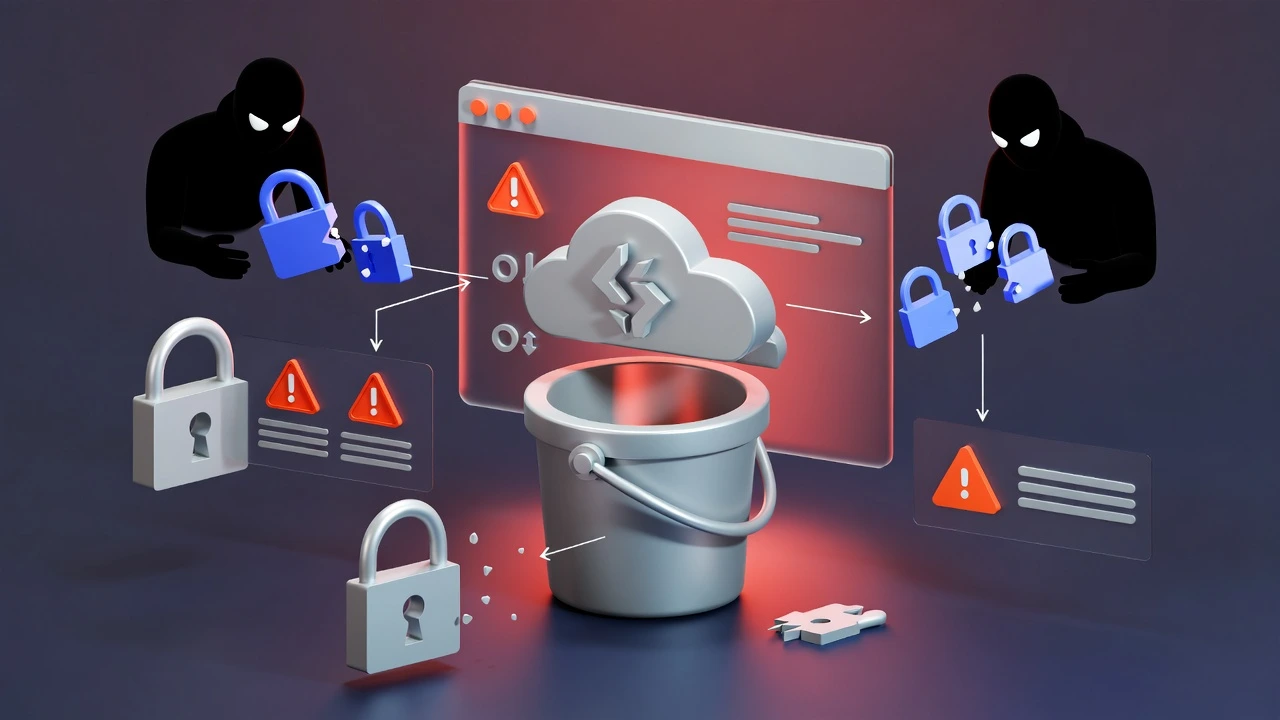
Despite advances in security tools, cloud misconfigurations remain the leading cause of breaches in 2026. The reason? Cloud platforms prioritize speed and flexibility—security is often left to the user.
❗ “The cloud is secure by design, but vulnerable by default.”
Misconfigurations: Small Mistakes, Massive Damage ⚙️
Simple configuration errors continue to expose sensitive data at scale. Common issues include:
Publicly accessible storage buckets
Unrestricted APIs
Default credentials in cloud services
Insecure CI/CD pipelines
| Misconfiguration | Exploited By Attackers | Business Impact |
|---|---|---|
| Open cloud storage | Data scraping bots | Data breaches |
| Weak API security | Automated exploitation | Service abuse |
| Over-permissive roles | Privilege escalation | Full takeover |
| Shadow IT tools | Insider & external threats | Data leaks |
🔥 “One misconfigured resource can compromise an entire organization.”
Identity and Access Management Failures 🚪
In modern cloud attacks, identity is the entry point. Instead of malware, attackers steal:
OAuth tokens
API keys
Session cookies
These allow them to access cloud services without triggering endpoint alerts.
Why IAM Attacks Are So Effective:
They bypass traditional security controls
Logs are often incomplete or disabled
Actions appear legitimate
Statistics show that over 80% of cloud breaches involve compromised identities, making IAM security a top priority.
Shadow IT and Visibility Gaps 👻
Employees often deploy tools and services without security approval. This shadow IT creates blind spots where:
Data is stored insecurely
Access controls are weak
Monitoring is nonexistent
In multi-cloud environments, these gaps multiply rapidly.
🕶️ “You can’t defend what you can’t see.”
How Ethical Hackers Reduce Cloud Risk 🛡️
Ethical hackers uncover what automated tools miss by:
Simulating identity-based attacks
Auditing IAM permissions
Exploiting misconfigurations safely
Testing real-world breach paths
At Bugitrix.com, learners gain practical cloud exploitation and defense skills, preparing them to:
Secure AWS, Azure, and GCP
Prevent identity-based breaches
Think like attackers in real cloud environments
Supply Chain & Multi-Cloud Risks in a Geopolitical Era 🌍☁️
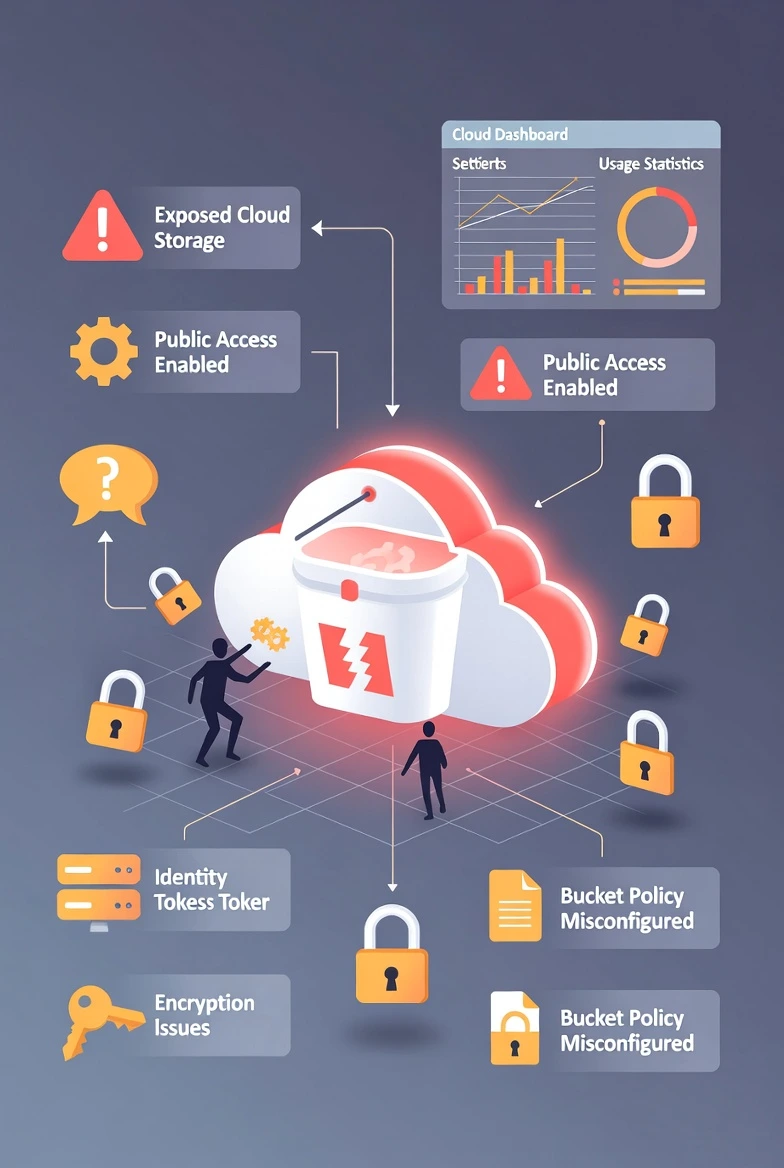
As organizations diversify their cloud environments to improve resilience, supply chain and multi-cloud risks have emerged as one of the most dangerous cybersecurity challenges in 2026. What once improved availability now introduces interconnected dependencies that attackers are eager to exploit.
🌐 “Your security is only as strong as the weakest vendor in your ecosystem.”
Modern enterprises depend on:
Third-party SaaS providers
Managed cloud services
Open-source components
Cloud-connected IoT systems
Each dependency expands the attack surface—often outside direct organizational control.
Third-Party and Supply Chain Vulnerabilities 🔗
Supply chain attacks have increased dramatically because they allow adversaries to:
Breach multiple organizations at once
Bypass perimeter defenses
Exploit trusted update mechanisms
High-profile incidents have shown how a single compromised vendor can cause cascading outages across industries.
| Supply Chain Weakness | Attack Method | Result |
|---|---|---|
| Compromised updates | Malicious code injection | Mass compromise |
| Weak vendor IAM | Credential abuse | Lateral movement |
| Insecure APIs | Token exploitation | Data exfiltration |
| Open-source flaws | Dependency poisoning | Hidden backdoors |
🚨 “Attackers don’t target companies—they target ecosystems.”
Multi-Cloud Complexity and Concentration Risk ☁️☁️
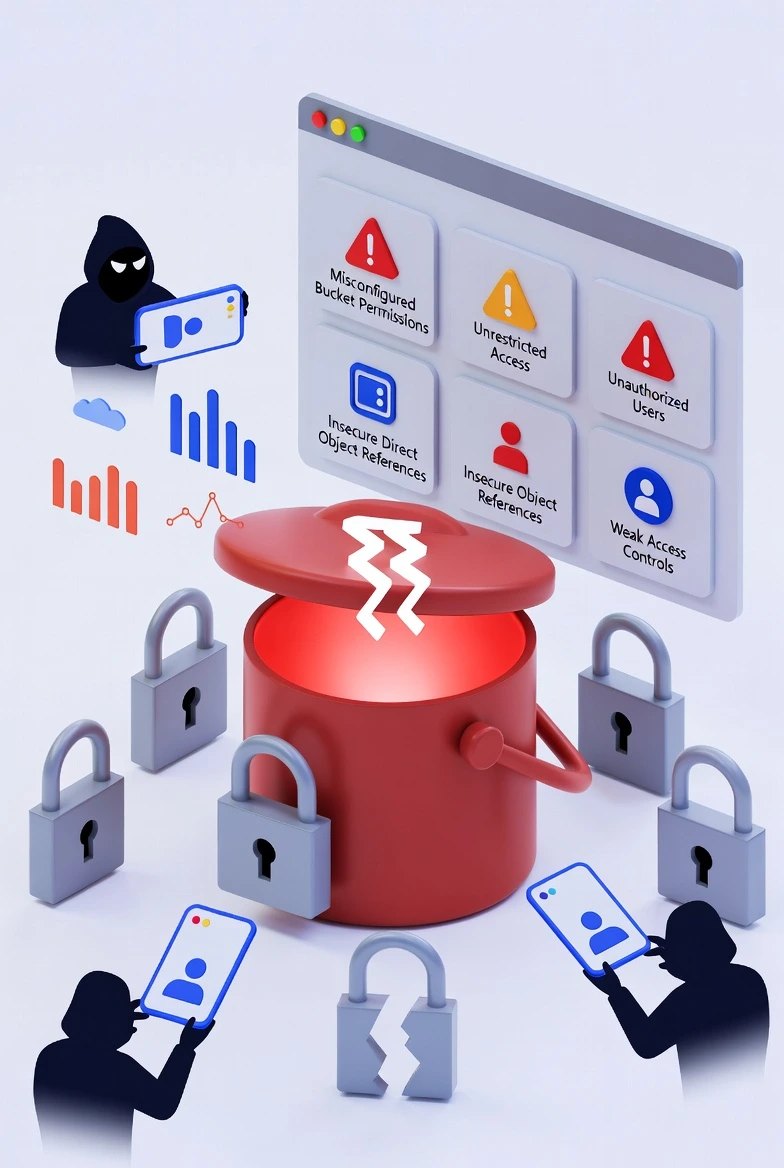
Multi-cloud adoption is accelerating due to:
Geopolitical instability
Regulatory pressures
Need for uptime resilience
However, managing security across multiple cloud providers introduces:
Inconsistent security policies
Fragmented monitoring
Configuration drift
Ironically, while multi-cloud reduces reliance on one provider, concentration risk still exists due to shared:
Identity systems
CI/CD pipelines
Third-party tools
Ethical hackers trained through Bugitrix.com learn how to:
Map attack paths across vendors
Simulate third-party breaches
Test multi-cloud misconfigurations ethically
🛡️ “Resilience isn’t about more clouds—it’s about smarter security.”
Infrastructure Vulnerabilities Threatening Critical Systems in 2026 ⚡🏭
Cybersecurity in 2026 extends far beyond IT environments. Critical infrastructure systems—energy, healthcare, transportation, manufacturing—are now deeply interconnected with cloud platforms, making them high-value targets.
⚠️ “When infrastructure fails, cyber incidents become real-world crises.”
These systems were never designed with modern threat models in mind, yet they now face AI-assisted attackers and nation-state adversaries.
Critical Infrastructure Under Cyber Warfare Pressure 🧨
Geopolitical tensions have transformed cyberattacks into strategic weapons. Attackers increasingly:
Pre-position malware in power grids
Target logistics and supply chains
Disrupt healthcare and emergency services
Ransomware has evolved from data theft to operational paralysis, shutting down:
Industrial control systems (ICS)
SCADA environments
OT networks
| Infrastructure Target | Common Exploit | Impact |
|---|---|---|
| Power grids | OT vulnerabilities | Blackouts |
| Healthcare systems | Ransomware | Patient risk |
| Transport networks | Network exploits | Service disruption |
| Manufacturing | PLC compromise | Production halt |
🚫 “Downtime is no longer an inconvenience—it’s a weapon.”
Network, VPN, and Embedded Device Exploits 📡
Legacy VPNs and embedded devices remain soft entry points into critical networks. In many cases:
VPN vulnerabilities remain unpatched
Embedded Linux devices lack monitoring
Credentials are reused across IT and OT
Attackers exploit these weaknesses to pivot from:
IT → OT environments
Cloud → on-prem infrastructure
IoT and edge devices worsen the problem by expanding attack surfaces while offering limited security visibility.
Why Ethical Hacking Is Essential for Infrastructure Defense 🛡️
Traditional compliance checks are not enough to protect critical systems. Ethical hacking helps by:
Simulating real attack paths
Identifying hidden pivot points
Testing incident response readiness
At Bugitrix.com, learners gain exposure to:
Infrastructure penetration testing
OT security fundamentals
Cloud-to-infrastructure attack scenarios
Emerging Cyber Threats in 2026: AI-Powered Attacks and Quantum Risks 🚀🤖
Cyber threats in 2026 are no longer just faster—they are smarter, adaptive, and predictive. The fusion of artificial intelligence and emerging quantum technologies is reshaping how attacks are planned, executed, and scaled.
⚠️ “Automation didn’t just change security operations—it changed cybercrime.”
Threat actors now deploy AI to analyze environments, identify weaknesses, and launch attacks with minimal human effort.
AI-Enabled Cyberattacks Are Exploding 📈
AI-powered cyber campaigns have surged dramatically, enabling attackers to:
Automate phishing and social engineering
Exploit cloud misconfigurations at scale
Manipulate large language models (LLMs)
Evade traditional detection systems
Dark or malicious LLMs are lowering the barrier to entry, allowing even low-skilled attackers to execute high-impact operations.
| AI Attack Technique | Target | Impact |
|---|---|---|
| Prompt injection | LLM-powered apps | Data leakage |
| AI reconnaissance | Cloud environments | Faster exploitation |
| Adversarial ML | Detection systems | Missed alerts |
| Deepfake phishing | Employees & executives | Credential theft |
🧠 “When machines attack machines, human reaction time isn’t enough.”
At Bugitrix.com, learners explore real-world AI attack simulations, understanding how attackers manipulate intelligent systems—and how to stop them.
Quantum Computing: Today’s Preparation for Tomorrow’s Attacks ⚛️
While large-scale quantum attacks are still emerging, 2026 is the preparation phase. Adversaries are already:
Harvesting encrypted data for future decryption
Testing quantum-resistant attack models
Targeting weak cryptographic implementations
The risk lies in long-term data exposure, where sensitive information stolen today may be decrypted tomorrow.
🔓 “Data stolen now can be broken later.”
Organizations must begin adopting:
Post-quantum cryptography planning
Cryptographic agility
Strong key management
Ethical hackers trained through Bugitrix.com learn to assess cryptographic weaknesses and future-proof security architectures.
Ethical Hacking Best Practices to Prevent Breaches in 2026 🛡️

In a threat landscape defined by AI, cloud complexity, and infrastructure exposure, ethical hacking has become a core defensive strategy rather than a luxury.
🎯 “The best defense is understanding how you get attacked.”
Ethical hacking focuses on prevention, validation, and continuous improvement, not reactive patching after damage is done.
Cloud-Native Vulnerability Scanning and Pentesting 🔍
Modern ethical hackers rely on continuous security validation, especially in dynamic cloud environments.
Best practices include:
Automated vulnerability scanning
Configuration audits across AWS, Azure, and GCP
Identity abuse simulations
AI-focused attack testing
| Ethical Hacking Activity | Purpose | Benefit |
|---|---|---|
| Cloud pentesting | Find real attack paths | Prevent breaches |
| Misconfiguration audits | Reduce exposure | Stronger posture |
| Identity testing | Detect IAM flaws | Stop lateral movement |
| AI security testing | Protect ML models | Trustworthy automation |
Zero Trust and Identity-First Security 🔑
With identity as the primary attack vector, ethical hacking validates:
Least-privilege access
Continuous authentication
Non-human identity security
Abnormal behavior detection
Zero Trust is not a product—it’s a mindset that ethical hackers actively test.
Monitoring, Recovery, and Continuous Learning 🔄
Prevention must be paired with resilience. Ethical hackers also evaluate:
Logging effectiveness
Incident response readiness
Backup and restore reliability
At Bugitrix.com, learners develop hands-on ethical hacking skills aligned with real-world cloud, AI, and infrastructure threats—preparing them to protect modern organizations with confidence.
Real-World Cyber Incidents and Lessons Learned 📉🔍
Real-world breaches are the clearest proof that theoretical security is not enough. The incidents below highlight how modern attacks exploit AI, cloud misconfigurations, and infrastructure weaknesses—and how ethical hacking could have minimized or prevented the damage.
💥 “Breaches don’t happen because companies ignore security—they happen because they underestimate attackers.”
Fortune 500 Fintech AI Data Leak (2025) 🤖💸
A major fintech organization suffered a prolonged breach due to prompt injection vulnerabilities in an AI-powered customer service system. Attackers manipulated prompts to:
Bypass access controls
Expose sensitive customer data
Operate undetected for weeks
The root cause wasn’t malware—it was unvalidated AI reasoning paths.
Lesson learned:
AI systems must be treated as attack surfaces, not trusted tools. Ethical hacking of AI workflows could have detected this flaw early.
Asahi Brewery Supply Chain Attack 🍺⚠️
A third-party IT compromise forced the company to shift to manual operations, disrupting production and logistics. The attack demonstrated how:
One vendor weakness can halt operations
Recovery plans often fail under real pressure
Lesson learned:
Supply chain security testing and breach simulations are critical for operational resilience.
Erlang/OTP SSH Vulnerability in OT Environments 🧩
A flaw in Erlang/OTP allowed remote code execution without credentials, impacting telecom and operational technology systems. Attackers exploited:
Unpatched services
Poor network segmentation
Lesson learned:
Critical infrastructure requires continuous vulnerability testing, not periodic audits.
N8N Automation Platform Exposure ⚙️🌐
Over 100,000 servers were exposed due to misconfigured deployments, allowing attackers to:
Take over automation workflows
Access cloud credentials
Pivot into internal systems
Lesson learned:
Misconfigurations remain one of the most dangerous—and preventable—threats.
🛡️ “Every major breach leaves behind the same message: someone should have tested this earlier.”
This is exactly where ethical hacking delivers unmatched value—by identifying real attack paths before criminals do.
Why Ethical Hacking Skills Are in Massive Demand in 2026 🎓🔥
Organizations are no longer asking if they need ethical hackers—they’re asking how many.
The most in-demand skills include:
Cloud security testing (AWS, Azure, GCP)
Identity and access exploitation
AI and LLM security testing
Infrastructure and OT security fundamentals
Cybersecurity professionals who can think like attackers are now at the center of modern defense strategies.
At Bugitrix.com, learners gain:
Hands-on ethical hacking labs
Real-world cloud attack simulations
Bug bounty–ready skills
Practical knowledge aligned with 2026 threats
🚀 “The future of cybersecurity belongs to ethical hackers—not passive defenders.”
Final Thoughts: Building a Resilient Cyber Future in 2026 🔐🌍
The cybersecurity landscape of 2026 is defined by cloud dominance, AI acceleration, infrastructure exposure, and geopolitical pressure. Reactive security models are no longer sufficient in a world where:
Identity is the primary attack vector
AI can be weaponized
Supply chains amplify risk
Infrastructure attacks cause real-world harm
Ethical hacking bridges the gap between assumed security and proven security. By continuously testing systems, simulating real attacks, and validating defenses, organizations can turn vulnerabilities into strengths.
🧠 “Security isn’t about hope—it’s about proof.”
The cost of inaction is staggering, with hundreds of billions lost annually to cybercrime. The solution lies in skills, awareness, and proactive testing.
If you’re serious about:
Learning cybersecurity the right way
Building real-world ethical hacking skills
Staying relevant in the future job market
👉 Start your journey with Bugitrix.com — your trusted platform for ethical hacking, cloud security, and bug bounty learning.
Frequently Asked Questions (FAQ) 🔍❓
1. Why are cloud environments more vulnerable in 2026?
Cloud environments are more vulnerable due to misconfigurations, identity-based attacks, multi-cloud complexity, and limited visibility. Attackers exploit IAM weaknesses and exposed cloud resources rather than traditional endpoints. Learning cloud security testing from platforms like Bugitrix.com helps identify these risks early.
2. What is ethical hacking and why is it important today?
Ethical hacking involves legally simulating real cyberattacks to uncover vulnerabilities before criminals exploit them. In 2026, ethical hacking is critical because threats are AI-driven, automated, and cloud-focused—making proactive testing essential for breach prevention.
3. How does AI increase cybersecurity risks?
AI increases risks through:
Data poisoning attacks
Prompt injection vulnerabilities
AI agent abuse
Automated exploitation at scale
Attackers use AI to evade detection and accelerate attacks. Ethical hackers must now understand AI security testing, a skill taught through hands-on learning at Bugitrix.com.
4. What are the biggest cloud security mistakes organizations make?
The most common mistakes include:
Publicly exposed storage buckets
Over-privileged IAM roles
Weak API security
Shadow IT usage
These errors often lead to large-scale data breaches and account takeovers.
5. What is identity-based cloud security and why does it matter?
Identity-based security focuses on who or what can access cloud resources. Since most cloud breaches begin with stolen credentials or tokens, protecting identities is more important than perimeter security in modern environments.
6. How do supply chain attacks affect cloud and infrastructure security?
Supply chain attacks allow attackers to compromise multiple organizations through a single trusted vendor. In cloud and infrastructure environments, these attacks can cause cascading outages, data breaches, and operational shutdowns.
7. Can ethical hacking prevent infrastructure and OT attacks?
Yes. Ethical hacking helps by:
Identifying hidden vulnerabilities
Simulating real-world attack paths
Testing incident response readiness
This is especially important for critical infrastructure and OT systems, which were not designed for modern threat models.
8. Is ethical hacking a good career choice in 2026?
Absolutely. Ethical hacking is one of the most in-demand cybersecurity careers due to rising cloud adoption, AI threats, and global cyber risks. Skills in cloud security, bug bounty, and penetration testing offer strong career growth.
9. Where can beginners learn ethical hacking and cloud security properly?
Beginners should learn from platforms that offer hands-on, real-world training, not just theory. Bugitrix.com provides practical learning paths for ethical hacking, cloud security, and bug bounty hunting aligned with modern threats.
10. How can organizations stay secure against future cyber threats?
Organizations should:
Adopt ethical hacking as a continuous practice
Implement Zero Trust and identity-first security
Secure AI and cloud workloads
Train teams with real-world attack simulations
🛡️ Security in 2026 is built by testing, learning, and adapting—continuously.