
Entry Level Cyber Security Jobs: The Ultimate Beginner’s Guide (No Experience Required)
Cyber security is no longer just a “tech job” — it’s a career shield for the digital world. As cyber attacks grow every year, companies across the globe are desperately hiring professionals to defend their systems.
The good news?
You don’t need a degree, years of experience, or genius-level hacking skills to get started.
If you’re a beginner wondering about entry level cyber security jobs, this guide will walk you through everything — from job roles and skills to age myths, AI fears, and step-by-step hiring strategies.
Whether you’re a student, a career switcher, or someone starting from absolute zero — this article is written for you.
Why Entry Level Cyber Security Jobs Are in Massive Demand
Let’s start with reality.
Over 90% of organizations worldwide experienced at least one cyber attack
Data breaches cost companies millions of dollars
There are millions of unfilled cybersecurity jobs globally
Cyber security has a talent shortage, not an oversupply.
That’s why companies are actively creating entry level cyber security jobs to train beginners internally instead of waiting for “perfect” candidates.
What Are Entry Level Cyber Security Jobs?
Entry level cyber security jobs are beginner-friendly roles designed for people who:
Have basic technical knowledge
Understand security fundamentals
Can follow processes and learn on the job
These roles focus more on:
Monitoring
Documentation
Alert handling
Basic investigations
Assisting senior security teams
📌 You’re not expected to “hack the Pentagon” on day one.
What Is the Most Entry-Level Cyber Security Job?
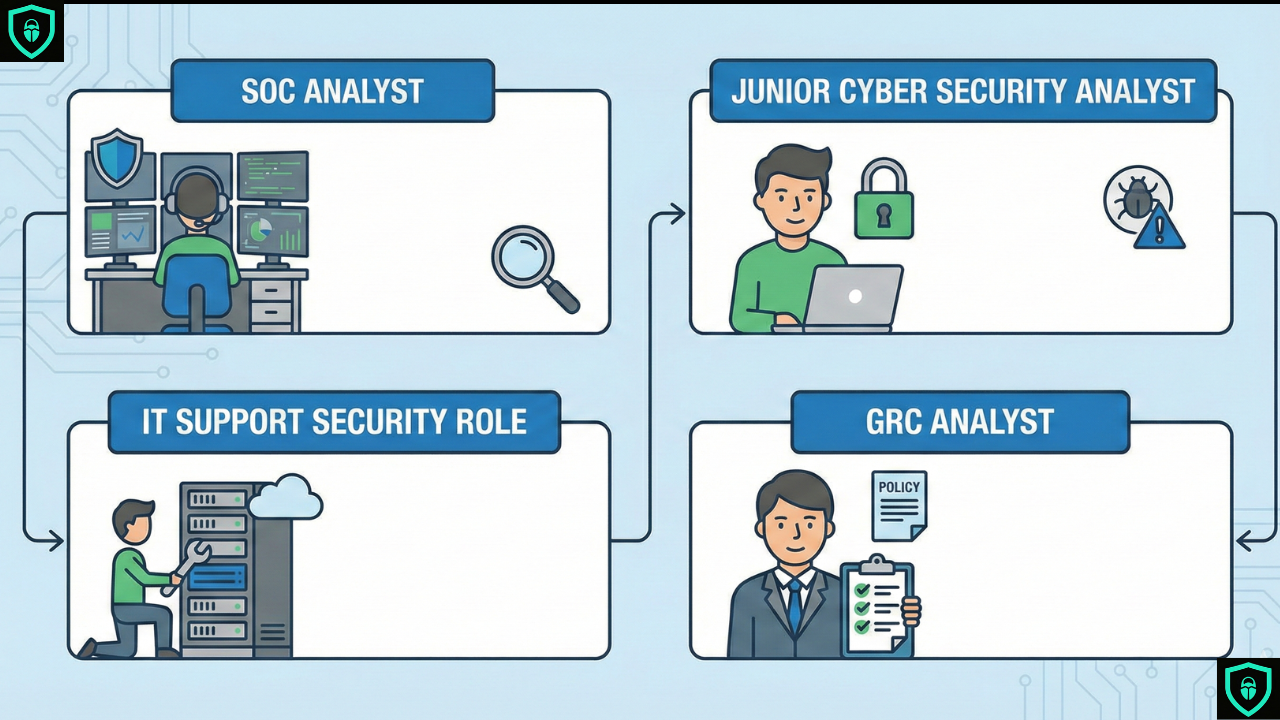
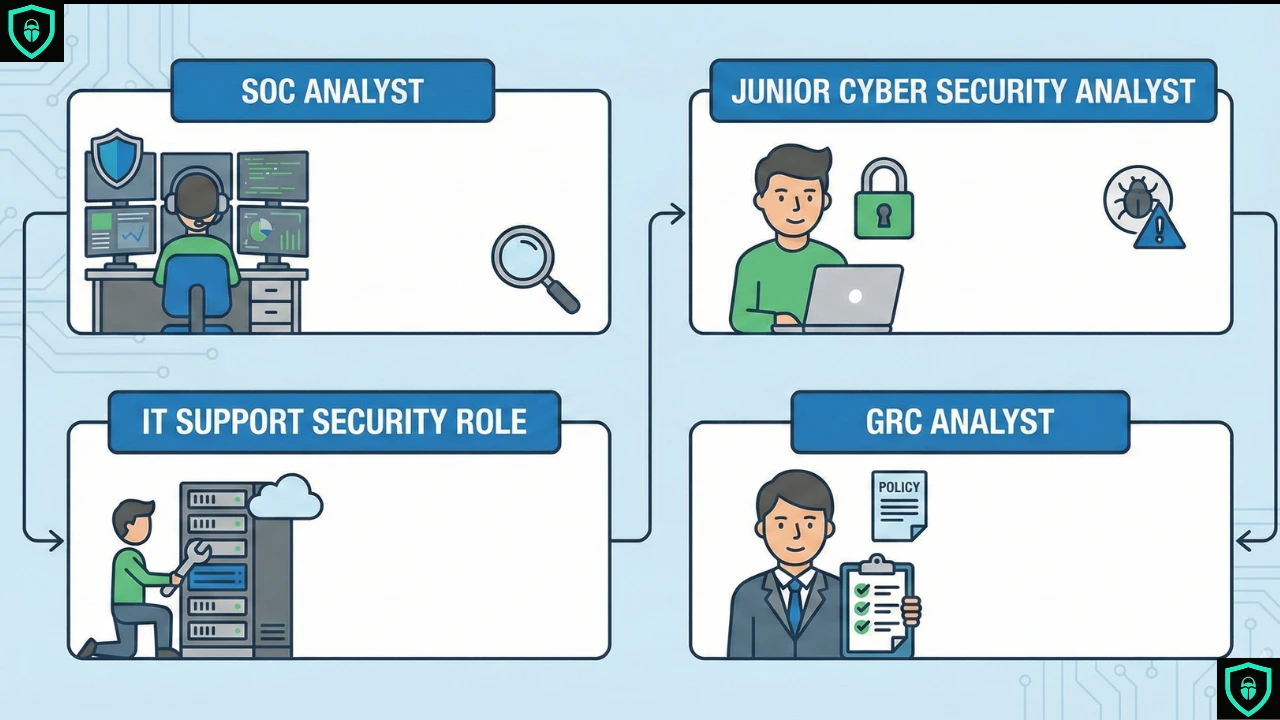
Here are the most beginner-friendly cybersecurity roles you should target:
1. Security Operations Center (SOC) Analyst – Tier 1
Best starting role globally
What you do:
Monitor security alerts
Analyze suspicious activity
Escalate incidents
Work with SIEM tools
Why it’s great for beginners:
Structured environment
Clear workflows
Heavy training
High demand
2. IT Support / Help Desk (Security-Focused)
A hidden entry point into cybersecurity.
What you do:
Reset passwords
Manage access controls
Troubleshoot security issues
Learn corporate systems
Many cybersecurity professionals start here and move up.
3. Junior Cyber Security Analyst
Often confused with SOC roles but slightly broader.
Tasks include:
Risk assessments
Log analysis
Policy enforcement
Vulnerability scanning
4. Information Security Assistant
More documentation and compliance focused.
Great if you’re not highly technical yet.
5. Junior GRC Analyst (Governance, Risk, Compliance)
Perfect for beginners who:
Like policies
Prefer analysis over hacking
Want corporate roles
How to Get an Entry-Level Job in Cyber Security (Step-by-Step)
This is the most important section of the article.
Step 1: Learn Cyber Security Fundamentals
You must understand:
What is malware?
What is phishing?
What is encryption?
What is authentication vs authorization?
What is a firewall?
You don’t need advanced skills — clarity beats complexity.
Step 2: Build Basic Technical Skills
Focus on:
Networking basics (TCP/IP, DNS, HTTP)
Operating systems (Windows & Linux)
Basic command line usage
Understanding logs
Step 3: Pick a Beginner-Friendly Path
Avoid overwhelming yourself.
Choose one:
SOC Analyst path
Blue Team path
GRC path
Cloud security basics
Entry level cyber security jobs reward focus, not randomness.
Step 4: Practice With Hands-On Labs
Theory alone won’t get you hired.
Practice using:
Free labs
Simulated attacks
Log analysis exercises
Vulnerability scans
📌 Employers love hands-on learners, even without experience.
Step 5: Build a Beginner Portfolio
Your portfolio can include:
Incident response write-ups
Lab screenshots
Mini projects
Blog posts explaining attacks
This replaces “experience”.
Step 6: Apply Smart, Not Blind
Don’t apply randomly.
Target:
“Junior”
“Entry level”
“Associate”
“Tier 1”
Customize resumes for entry level cyber security jobs specifically.
How Do I Get a Job in Cybersecurity With No Experience?

This is the #1 fear beginners have.
Here’s the truth:
No experience ≠ no skills
What Hiring Managers Actually Look For
Willingness to learn
Basic understanding
Communication skills
Curiosity
Consistency
How to Compensate for No Experience
Projects > certificates
Labs > degrees
Blogs > silence
Community activity > isolation
Many people land entry level cyber security jobs without prior IT jobs by showing proof of effort.
Is 25 Too Late for Cyber Security?
Absolutely not.
Not even close.
Cyber security is not age-dependent.
People enter this field at:
18
25
30
40+
Even 50+
Why Age Doesn’t Matter in Cyber Security
Skills matter more than age
Technology evolves for everyone
Lifelong learning is expected
Companies value maturity
If anything, career switchers often perform better in security roles.
📌 25 is early, not late.
Is AI Replacing Cyber Security Jobs?

Answer: No.
AI is changing cyber security, not replacing it.
What AI Can Do
Detect patterns
Automate alerts
Speed up analysis
What AI Cannot Do
Make judgment calls
Understand business context
Handle complex incidents
Replace human intuition
AI actually creates more entry level cyber security jobs, especially in:
Monitoring
Analysis
Tool management
If you learn how to work with AI, your value increases.
What Is the 90/10 Rule in Cyber Security?
The 90/10 rule means:
90% of cybersecurity breaches are caused by human error, not technology.
Examples:
Clicking phishing links
Weak passwords
Misconfigured systems
Social engineering attacks
That’s why entry level cyber security jobs focus heavily on:
Awareness
Monitoring
Policy enforcement
User behavior analysis
What Is 90% of Cyber Attacks?
Over 90% of cyber attacks start with:
Phishing emails
Social engineering
Credential theft
Not Hollywood-style hacking.
This is why:
Entry level roles are crucial
Human defense is critical
Training matters more than tools
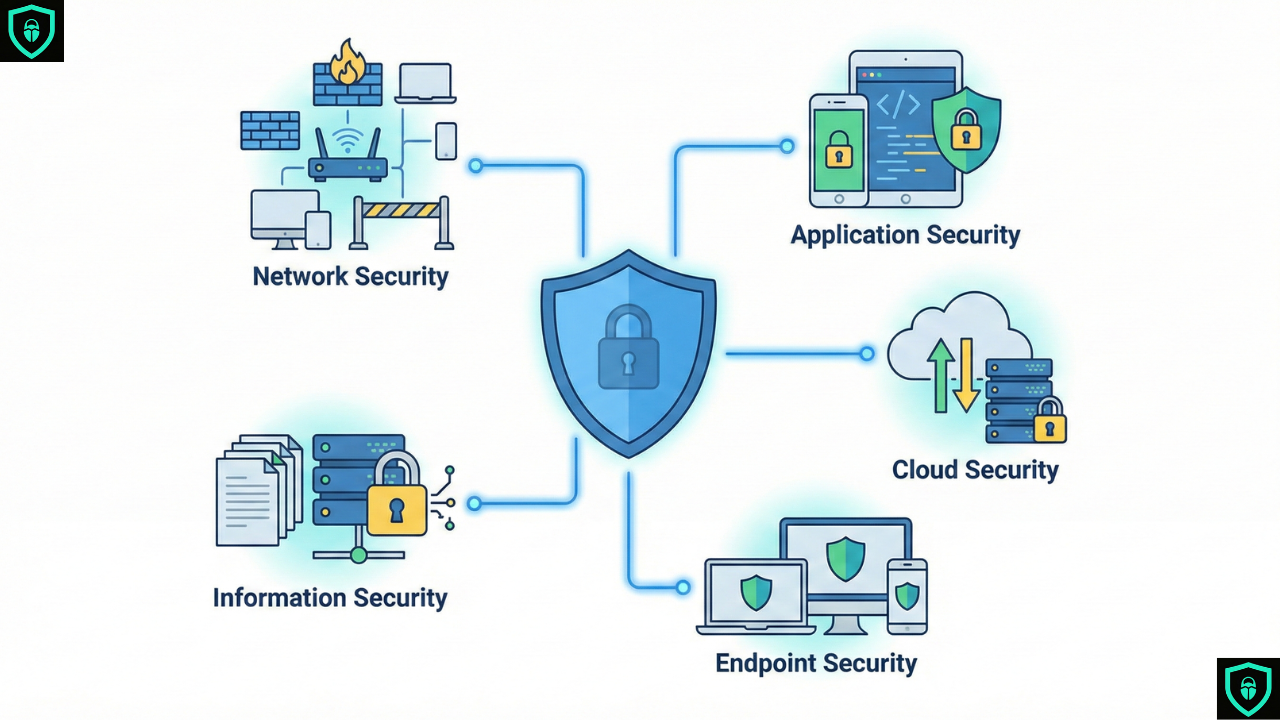
What Are the 5 Types of Cyber Security?
Understanding this helps beginners choose a path.
1. Network Security
Protects internal networks and traffic.
2. Application Security
Secures software and web apps.
3. Cloud Security
Protects cloud platforms like AWS and Azure.
4. Endpoint Security
Secures laptops, servers, and devices.
5. Information Security
Protects data integrity, confidentiality, and availability.
Entry level cyber security jobs exist in all five areas.
What Are the 4 Pillars of Cyber Security?
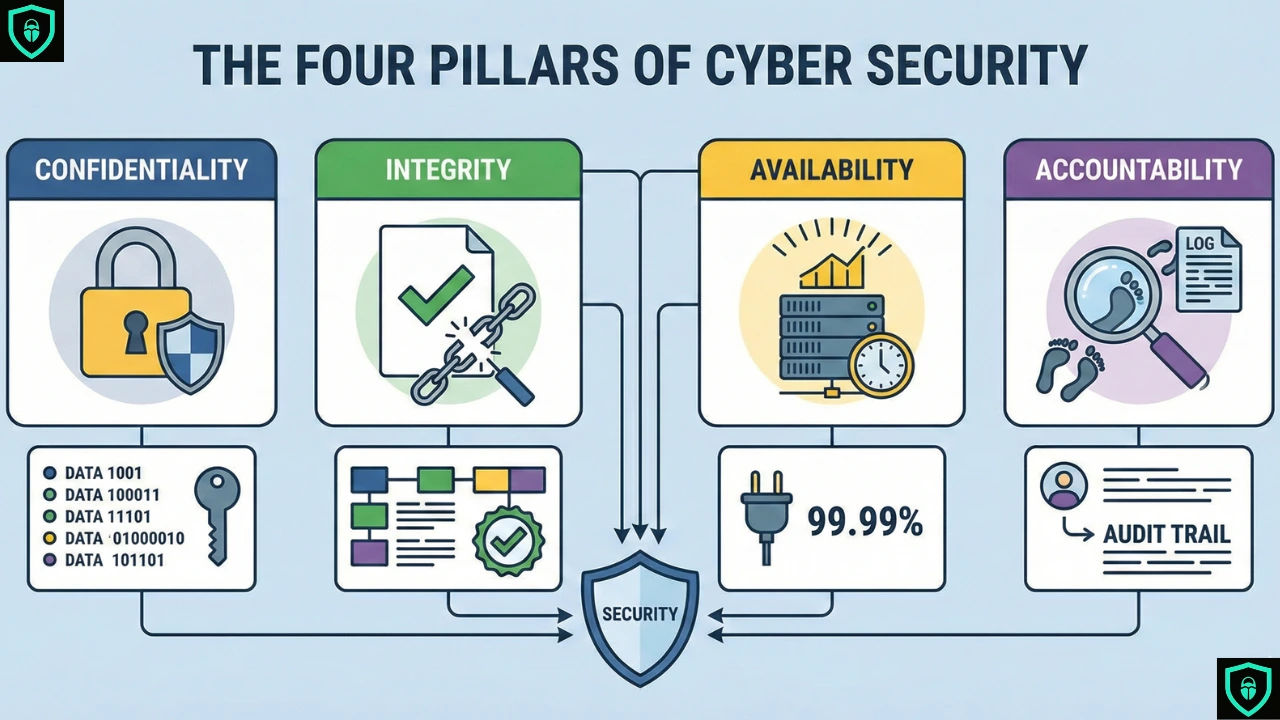
These pillars guide every security decision.
1. Confidentiality
Only authorized users access data.
2. Integrity
Data remains accurate and unaltered.
3. Availability
Systems remain accessible when needed.
4. Accountability
Actions are traceable and auditable.
Every entry level role supports these pillars.
Common Mistakes Beginners Make (Avoid These)
Trying to learn everything at once
Chasing advanced hacking too early
Ignoring fundamentals
Not practicing hands-on
Waiting to be “ready” before applying
📌 Entry level cyber security jobs reward action, not perfection.
Salary Expectations for Entry Level Cyber Security Jobs (Global)
While salaries vary by country:
Entry level roles pay above average
Cyber security grows faster than most careers
Pay increases rapidly with experience
Focus on learning first, money follows quickly.
Your First 90 Days in an Entry Level Cyber Security Job
Expect to:
Feel confused (normal)
Learn tools slowly
Ask many questions
Make small mistakes
Improve every week
Everyone starts somewhere.
Free Cyber Security Roadmap (Beginner to Job-Ready)
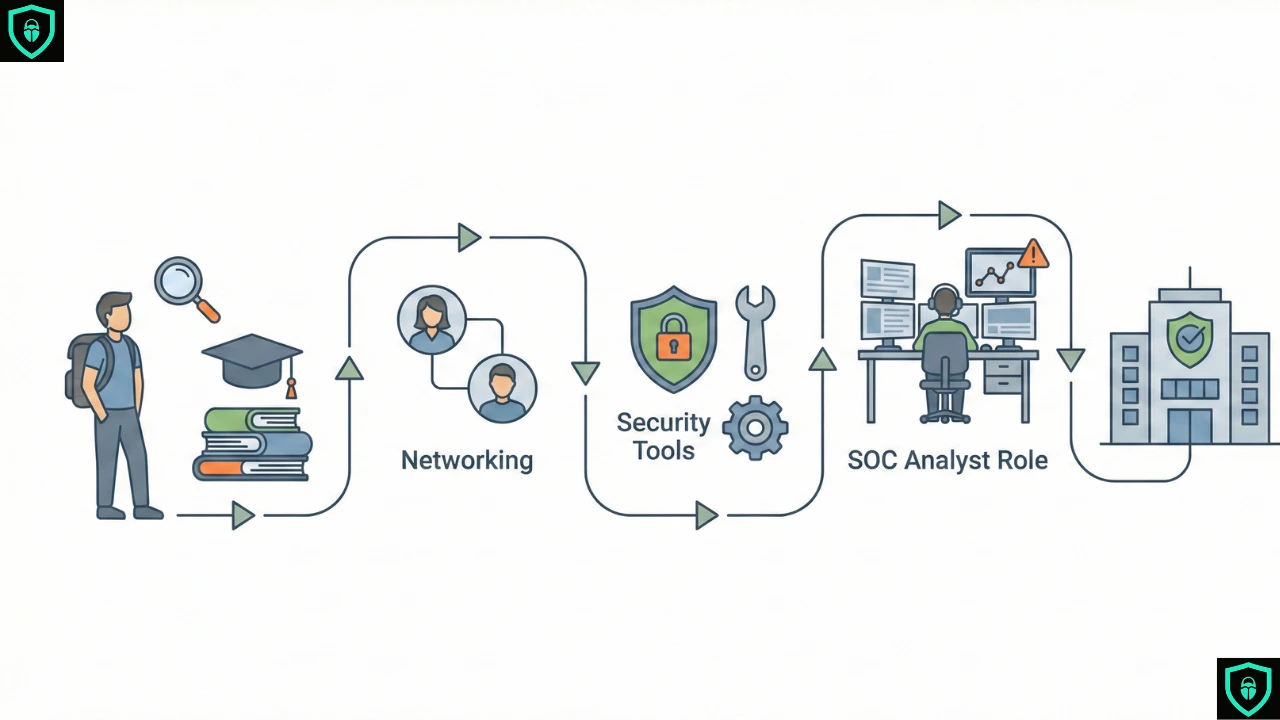
To help beginners even more, we recommend downloading a:
📘 Free Cyber Security Roadmap PDF
Step-by-step learning path
Beginner tools list
Job role breakdown
Skills checklist
Resume guidance
👉 Perfect companion to this guide.
Final Thoughts: Entry Level Cyber Security Jobs Are for You
Cyber security is not reserved for:
Genius hackers
Degree holders
Tech elites
It’s for:
Curious learners
Problem solvers
Consistent beginners
People who don’t give up
If you start today, stay focused, and build proof — entry level cyber security jobs are absolutely achievable.
Frequently Asked Questions
Entry level cyber security jobs are beginner-friendly roles designed for people with little or no professional experience. These jobs focus on monitoring systems, handling security alerts, assisting senior analysts, and learning security processes on the job.
The most common entry-level cyber security job is a SOC Analyst (Tier 1). This role involves monitoring security alerts, analyzing suspicious activity, and escalating incidents, making it ideal for beginners starting their cyber security career.
Yes, you can get an entry level cyber security job with no experience by learning fundamentals, practicing hands-on labs, building small projects, and showing proof of skills through portfolios or blogs. Many employers prioritize skills and learning ability over experience.
To get a job in cybersecurity with no experience, start by learning core concepts, practice real-world labs, focus on one beginner role like SOC analyst or GRC, build a simple portfolio, and apply to junior or entry-level positions consistently.
For most beginners, it takes 3 to 9 months of focused learning and hands-on practice to become job-ready for entry level cyber security jobs. The timeline depends on consistency, learning approach, and career focus.
No, a degree is not mandatory for entry level cyber security jobs. Many professionals enter the field through self-learning, certifications, labs, and practical projects instead of formal education.
Entry level cyber security jobs are challenging but beginner-friendly. They focus more on learning, monitoring, and following processes rather than advanced hacking. With consistent practice, beginners can succeed without feeling overwhelmed..
No, 25 is not too late to start a cyber security career. Cyber security values skills, curiosity, and continuous learning over age, and many professionals successfully enter the field in their late 20s, 30s, or even 40s.
AI is not replacing entry level cyber security jobs. Instead, AI helps automate alerts and analysis while increasing the demand for human analysts who can interpret results, make decisions, and respond to security incidents.
Entry level cyber security jobs require basic networking knowledge, understanding of operating systems, security fundamentals, log analysis, problem-solving skills, and strong communication abilities.